
In an emergency, a paper napkin can work as a coffee filter, though your results will vary.
You’ll get more sediment in the cup and possibly a slight paper taste, but it gets the job done when you’re caught without a proper filter. Use multiple layers and keep your expectations realistic.
Can You Use A Napkin As A Coffee Filter? The Advantages And Disadvantages
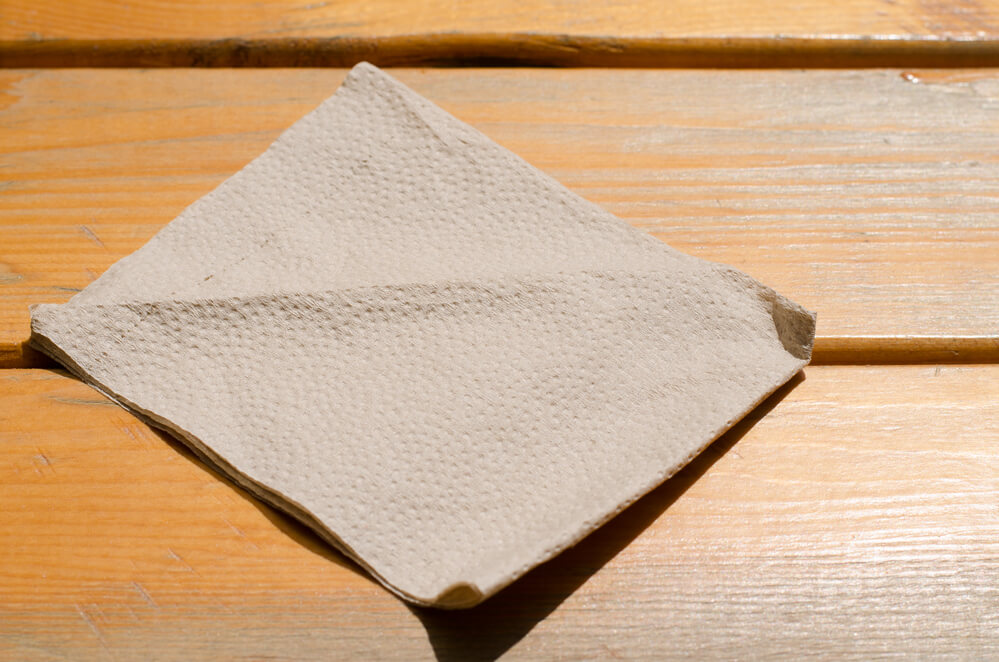
A napkin — or in a pinch, a paper towel — should be your first instinct when you’re out of proper filters. The process is genuinely simple and doesn’t require any special technique. The biggest practical advantage is that you don’t have to change much about how you normally brew; you’re just swapping in a different material where the filter usually sits.
Using a napkin works much the same way as a standard coffee filter. The swap is the only real change — everything else in your routine stays the same.
One thing napkins actually do well: the finely woven fibres are surprisingly effective at catching coffee grounds, including the smaller particles that sometimes sneak through cheaper filters. I’ve had cups brewed through a napkin with almost no sediment at the bottom of the mug.
That said, there are real downsides. The main risk is that the napkin can’t handle the kind of water volume you’d normally pour through a filter without some structural protest — and when it gives way, you end up with soggy paper bits in your brew.
Napkins are built to absorb small amounts of liquid — a quick wipe, not a sustained slow pour. Used as a coffee filter, they can tear under pressure and leave fragments in your cup. If you’re going this route, use the thickest, highest-quality napkin you can find.
How To Use A Napkin As A Coffee Filter
Here’s the step-by-step I’ve settled on after a bit of trial and error:
1. Take the napkin and lay it flat on a clean surface.
2. Fold it vertically in half.
3. Fold it again until you have a square shape.
4. Line your drip basket with the folded napkin and set it over your mug.
5. Add two tablespoons of your usual ground coffee.
6. Pour slowly and gradually — a cup of lukewarm water is plenty. Don’t rush this part; a slow pour gives the napkin the best chance of staying intact.
7. Once the water seeps through, lift the drip basket away from the mug and discard both the napkin and the grounds.
Know The Differences
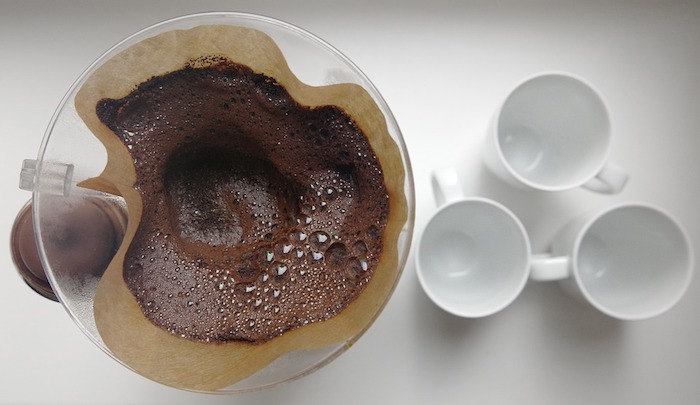
Before you go ahead with the substitution, it’s worth knowing what you’re actually working with. Coffee filters are made from woven mesh cloth stretched across a perforated metal frame inside the machine — designed specifically to handle repeated water flow at pressure and temperature.
A napkin, by contrast, is a sheet of absorbent cellulose pulp dried on paper sheets. It’s designed for surface wiping, not for sitting in a basket while hot water passes through it repeatedly. That mismatch is exactly where things can go wrong.
Also worth noting: any napkin that’s been bleached may add an off-flavor to your cup. And if your napkins have any embroidery, glitter, or decorative elements — skip them entirely and reach for a plain paper towel instead.
A Few Practical Notes
Having done this in a genuine pinch more than once, here’s what I wish I’d known earlier:
Pouring slowly is the single most important thing you can do. Water temperature matters too — I’ve found that anything close to boiling makes the napkin more likely to fall apart. Let your water sit for 30 seconds after boiling and then pour in small increments. It’s fiddly, but it keeps the napkin intact.
The grind matters more than you’d think with this method. A coarser grind flows through more easily and puts less stress on the napkin. Fine grinds can cause the water to pool and overflow before it filters through — which rather defeats the purpose.