
Coffee packaging affects freshness. These 10 types range from basic bags to nitrogen-flushed containers.
One-way valves let CO2 escape without letting oxygen in. Vacuum sealing removes air but cannot handle fresh-roasted beans that still off-gas.
1. Paper Bags
Though a paper bag may seem paltry compared to other packaging options, it’s actually perfect for storing fresh-roasted, whole beans in the short term.
A paper bag allows for degassing, which is important if you’re dealing with fresh-roasted beans. At the same time, it protects your coffee from moisture and light. With a paper bag, you can keep fresh-roasted beans fresh for three to five days, but after that, you’ll probably want a more substantial option.
2. Stand-Up Pouches
Many boutique coffee shops sell small bags of ground or whole beans in stand-up pouches. These are triangular pouches that may have a resealable zipper. The zipper can help keep coffee fresh, and because the bag stands, it’s easy to store.
However, usually, stand-up pouches only hold small amounts of coffee. So, for coffee lovers, they’re not always a viable option.
3. Flat Bottom Bags
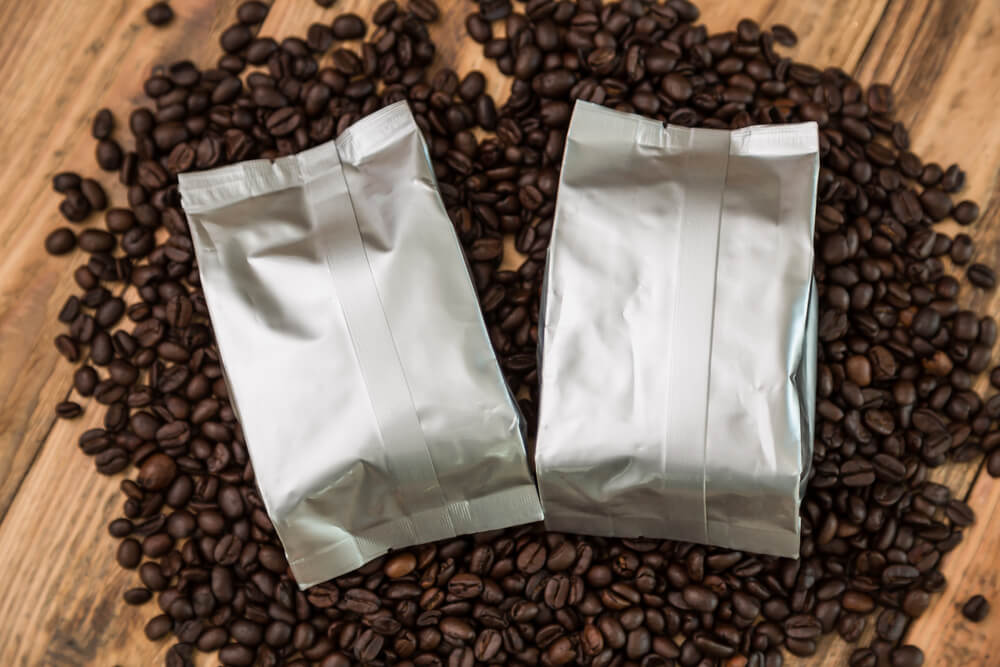
Flat bottom bags are similar to stand-up pouches, but they usually have side gussets. That allows them to hold more beans. You’ll find flat bottom bags in most grocery stores with either whole or ground coffee inside.
Often, these bags will have a valve that allows fresh-roasted beans to off-gas. Ideally, they’ll also have a resealable zipper to keep the beans fresh.
4. Large Side Gusset Bags
Large side gusset bags are like flat bottom bags but much bigger. They often hold up to five pounds. They’re strong, durable, and good at protecting beans from light and moisture. However, they usually lack a zipper closure.
Instead, you have to fold them shut using adhesive tape. Unfortunately, this sealing method isn’t ideal, and coffee can go stale. If you purchase your coffee in bulk using a large side gusset bag, you might want to consider transferring the beans to another storage option.
5. Vacuum Packs
If you’re purchasing ground coffee or need to store your coffee long-term, one of the best options is to buy it in a vacuum pack. Vacuum packs prevent almost all air from getting in, which delays unwanted chemical reactions and helps keep coffee fresh.
Vacuum packs are especially great if you want to freeze your coffee beans for later use. They won’t let the air in, which causes freezer burn. Of course, the second you open a vacuum pack, you let air in, and you’ll need to consume the coffee within a few days if you want it to retain peak freshness.
6. Metal Cans
Coffee cans are a common storage method. They’re sturdy, easy to store and prevent moisture or light from getting in. They’re ideal for pre-ground or whole bean coffees when you need a long shelf life.
However, they don’t allow for off-gassing, which means coffee that comes in cans has to be completely off-gassed before packaging. In turn, you’ll lose some of the coffee’s most desirable traits, including some of its flavor.
7. Glass Jars
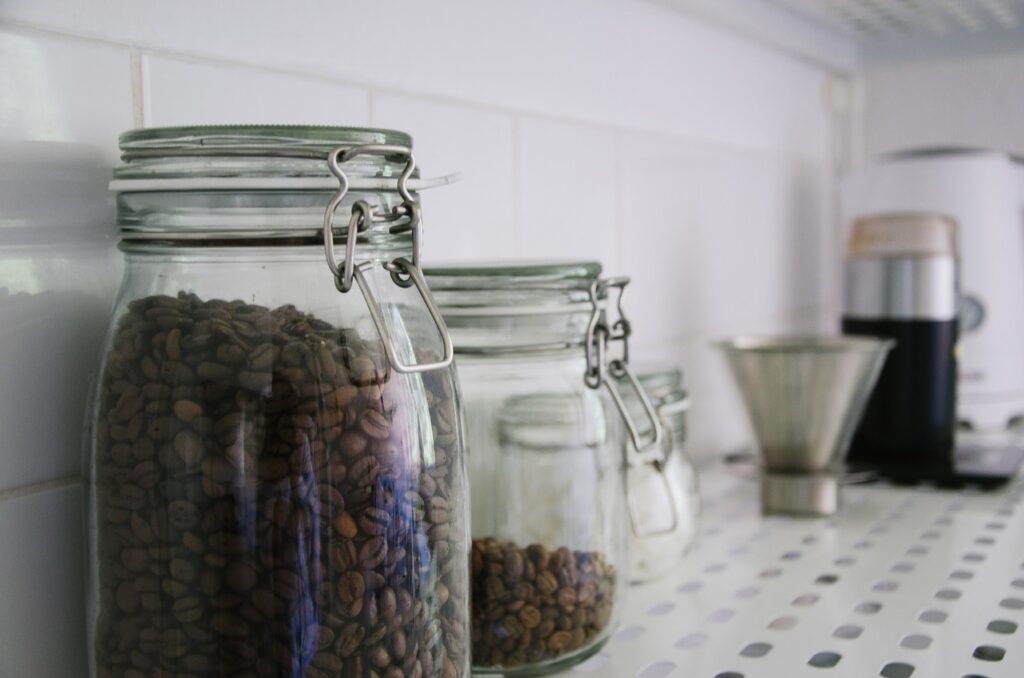
If you want to store coffee beans or recently ground coffee in a glass jar, that’s perfectly acceptable. With a tight seal, you’ll keep most air and moisture out. However, clear glass jars can let in light, which degrades beans. So, if you’re using a glass jar for storage, be sure to put it in a dark location.
8. Plastic Containers
Many coffee consumers put their freshly ground or just-bought beans in a plastic container for easy storage or when traveling. Plastic containers aren’t bad, per se, but they’re not that great at keeping air out. Coffee in plastic Tupperware will go stale in about five days, sometimes less.
9. Ceramic Containers
Ceramic containers are great for storing coffee beans or fresh grounds. They have a strong air seal and can prevent light and moisture from getting in. They’re not completely air-tight, though, so beans can still de-gas.
In a sturdy ceramic container, you can expect your beans to last about two weeks.
10. Plastic Bags
At one point or another, we’ve all tried storing coffee beans or grounds in a plastic bag. Plastic bags are convenient, readily available, and easy to seal, but they’re not ideal for storing coffee.
Plastic bags allow light in, and they’re not air-tight. Beans and grounds will go stale in a matter of days or even hours. If you need to use one for an overnight trip, you might get away with it. Longer than that, though, and you’ll want a different packaging option.
The Bottom Line
Here’s the practical takeaway after researching and testing this extensively:
Theory is great, but real-world application is messier. We’ve found that understanding the ‘why’ behind coffee science helps you troubleshoot when things go wrong—and they will. Your water, your beans, your grinder, and even humidity levels create variables that no guide can perfectly account for.
Start with the fundamentals in this article, but don’t be afraid to experiment. Some of our best cups have come from “mistakes” that turned into happy accidents. Coffee brewing rewards curiosity.