
Coffee grows in the Bean Belt, a region between the Tropics of Cancer and Capricorn with specific climate requirements.
Altitude, rainfall, and temperature all affect flavor. Different origins produce distinct taste profiles based on their growing conditions.
Where Do Coffee Beans Come From?

Today, coffee farms are found all over the world.
Coffee first started growing on the continent of Africa in Ethiopian territory. From that time, coffee beans gradually spread to coffee plantations found in equatorial regions such as Central America, Yemen, Kenya South America, the Caribbean, and Southeast Asia. This is called the bean belt (or the coffee belt) and is home to much of the world’s coffee.
Now, some of the countries that grow the most coffee in the world including Ethiopia, Colombia, Brazil, Indonesia, and Vietnam. For example, Brazil coffee growers produce more than 5 billion pounds of coffee annually on their own! Furthermore, it has been one of the top coffee producers in the world for more than 150 years.
Now that coffee has spread to multiple locations all over the world, coffee plants themselves have evolved. Because coffee plants evolve differently depending on the environmental conditions to which they are exposed, we can enjoy multiple varieties of coffee today including espresso!
What Plants Grow Coffee Beans?

In general, there are two large categories of coffee plants that produce coffee beans.
The first example is the genus Coffea Robusta, with one common subtype being Coffea Canephora. If you enjoy coffee that has long, earthy notes, this is probably Robusta. This is a coffee plant that starts boldly.
It may taste bitter and a bit grainy at the beginning. Then, it has a smooth finish that tastes like peanut butter.
The other category of the coffee plant is called Arabica, which comes from the Coffea Arabica plant. If you don’t like the harsh, sharp taste that comes from the Robusta plant, then you may enjoy Arabica beans a bit more. Beans from the Arabica plant are softer, sweeter, and have notes of sugar to them.
Some people even say that Arabica coffee has a fruit taste. Because of the berry flavor of Arabica coffee, the acidity is also a bit lower.
Do Coffee Beans Grow on Plants or Trees?
Coffee beans are actually seeds that grow inside of a coffee cherry. It typically requires a young coffee tree between two and four years before they produce coffee beans that are ripe enough to harvest. When placed in proper growing conditions, a coffee plant can grow up to 40 feet in height.
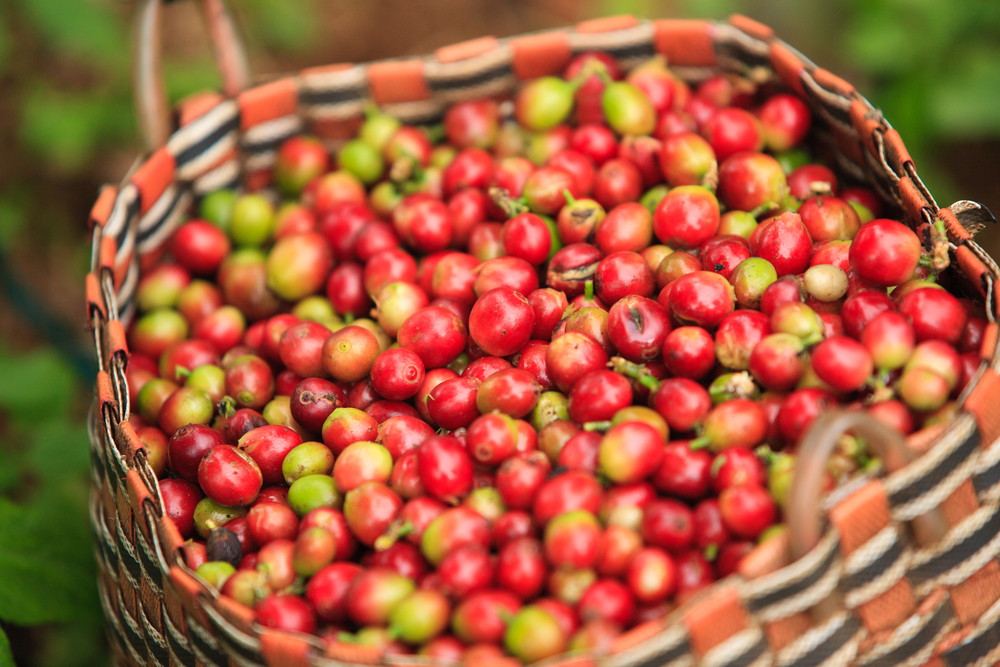
A coffee plant that has a trunk that is wider than three inches in diameter is considered a coffee tree. When coffee tree trunks reach this diameter, they are typically 20 feet tall (or more).
How Are Coffee Beans Harvested?
When coffee plants mature, they are harvested by hand. This is a difficult, labor-intensive process. In some locations, this process has been automated.
If the land is flat enough, there are machines that replace manual labor during the roasting process.
After the beans have been removed from the plants, they are placed in one of two categories for coffee production. These include:
The Dry Method
If there is not a lot of water, the freshly picked coffee cherries are spread out. Then, they are placed in the sun where they dry. Next, harvesters will rotate them throughout the day to make sure they dry evenly. At night, they are covered to prevent them from getting wet if it rains.
The Wet Method
With this method, the pulp of the coffee cherry is removed after it is harvested. This exposes the bean, drying it out until only the parchment is left on the coffee bean itself.
After this, the coffee beans go through a mulling process. The parchment layer is removed. Then, the bean is polished to remove any skin that might be left over.
Next, the beans are graded and sorted based on their weight and size. Any defective coffee beans are removed. Finally, the bags of coffee are exported to places like the United States where they are purchased.
Final Word on Where Does Coffee Beans Grow
Coffee berries are grown all over the world. They originated in Africa, likely in Ethiopia. Since that time, coffee beans have spread all over the world.
They are commonly found in places such as Brazil, Colombia, Guatemala, and Vietnam. Because these countries have different environmental conditions, numerous types of coffee plants have emerged. The two most common types of coffee plants are Coffea Robusta and Coffea Arabica.
Robusta coffee has a bold, sharp, earthy flavor. Arabica coffee is less acidic and has notes of sugar and fruit.
Coffee has to go through an intense process before it reaches grocery store shelves. Coffee beans are graded and sorted by weight and size. Defective coffee beans are removed so that we only enjoy the highest quality coffee beans! Learn more about what coffee beans grown on.
FAQs on Where Does Coffee Beans Grow
What is the difference between Robusta and Arabica coffee?
How long does it take for a coffee plant to mature?
The Bottom Line
Here’s the practical takeaway after researching and testing this extensively:
Theory is great, but real-world application is messier. We’ve found that understanding the ‘why’ behind coffee science helps you troubleshoot when things go wrong—and they will. Your water, your beans, your grinder, and even humidity levels create variables that no guide can perfectly account for.
Start with the fundamentals in this article, but don’t be afraid to experiment. Some of our best cups have come from “mistakes” that turned into happy accidents. Coffee brewing rewards curiosity.