
Argentine Cortado. Two words that should be stitched into the inside of every serious home barista’s wrist like a warning label. Not a reminder — a warning. Because once you’ve pulled one correctly, once you’ve held that small, thick glass and watched the crema settle against the warm milk in a ratio so deliberate it looks like a contract, you’ll start resenting every 14-ounce behemoth your local third-wave shop handed you in a paper cup with a sleeve and a smiley face drawn on the lid.
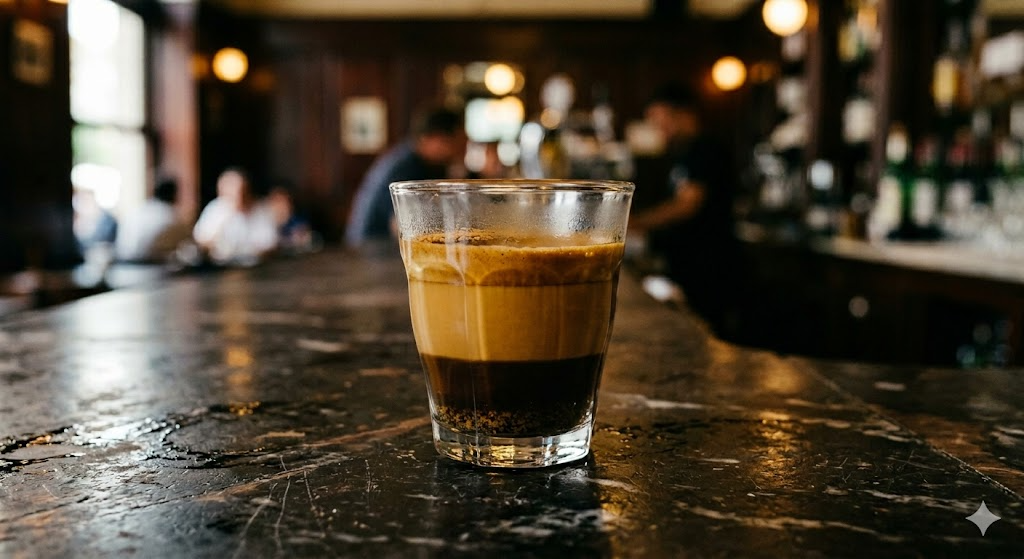
Buenos Aires doesn’t do coffee as a suggestion. Walk into any confitería — doesn’t matter if it’s the chandelier-haunted Café Tortoni on Avenida de Mayo or a formica-countered hole-in-the-wall in Villa Crespo — and you will get an Argentine Cortado in a glass. Not ceramic. Not paper. Glass. You get to see what you’re drinking. It matters. The visual is part of the drink.
I’ve been chasing this thing down for three years. (Started because I had a genuinely bad experience with a $22 pour-over in Seattle that tasted like dishwater with aspirations, and I rage-booked a flight to Buenos Aires two weeks later. That’s how it happens with me.) What I found there — in a country where the average café pulls espresso at temperatures that would make most specialty roasters’ eyebrows fuse to their skulls — was a drink of radical simplicity done with almost fanatical consistency.
This is everything I know about making an Argentine Cortado at home. If you want validation, look elsewhere. If you want the thing itself — read on.
The Argentine Cortado isn’t half-espresso, half-milk. It’s espresso that has been argued with. The milk doesn’t dilute it. It negotiates with it.
Industrial Sludge vs. the Real Thing: What’s Actually in Your Cup
Let’s get the taxonomy out of the way, because the internet has done something criminal to the word “cortado” — turned it into an umbrella term for anything that involves espresso and dairy in proportions smaller than a latte. You’ll find “cortados” at chain coffee shops that are basically micro-lattes with a cute name, sitting at 1:3 or even 1:4 espresso-to-milk ratios, texturized to a glossy microfoam that coats your throat like a monoglyceride suspension.
That’s not what we’re making.
The Argentine Cortado — sometimes called café cortado in the Buenos Aires tradition — is a strict 1:1. One part espresso, one part warm (not foamed, not steamed into a lather) milk. The milk doesn’t transform into a microfoam foam-art vehicle. It warms. It softens. That’s the entire mandate. The Maillard reaction that happened in that roasting drum weeks or months ago isn’t yours to undo with steam wand theatrics.
Argentine Cortado Target Parameters:
Espresso dose: 18–20g in / 36–40g out (1:2 ratio)
Brew temp: 199–201°F (93–94°C)
Extraction time: 27–32 seconds
Milk temp: 130–140°F (54–60°C) — no foam, no velvet, just warm
Milk volume: Equal to espresso output by weight
Vessel: 3–4 oz / 90–120ml small glass
TDS target: 8–10%
The Spanish cortado, for comparison, runs similarly but often with cold or room-temperature milk in warmer regions, and with more flexibility on the milk texture. The Italian macchiato is a stain, not a cut. The Argentine version sits between these two — it’s a committed ratio with warm, relatively still milk — and it’s served in glass specifically so you can see the line where espresso ends and milk begins before you swirl them together.
That visual layer? Not decorative. It’s diagnostic. If the milk has visible foam sitting on top like a cumulus cloud, something went wrong. If the espresso has no visible crema and looks like motor oil, something went wrong earlier. The glass tells you.
The Only Espresso Variables That Actually Matter Here
The Argentine Cortado does you no favors. There’s nowhere to hide. The milk is warm enough to integrate but not abundant enough to bury the espresso’s character under texture and volume. Whatever your shot is — bright, bitter, funky, chalky from an under-extracted first-of-the-morning pull, syrupy from a grinder you forgot to calibrate — it’s going to be right there, sharing a 90ml glass with a thin warm layer of dairy that does almost nothing to mask it.
This is a feature. I recognize it doesn’t sound like one.
For this drink, I obsess over one thing above all others: the body of the shot. Not the brightness, not the finish, not the aromatics that your roaster’s tasting notes waxed about (“notes of blackcurrant jam and Darjeeling first flush” — relax). The body. The viscosity. You want a shot that leaves a tacky, almost resinous residue on the shot glass if you tilt it. That’s your lipid-film baseline. That’s what interacts with the milk and creates something with enough structure to hold the 1:1 ratio without instantly collapsing into a homogeneous beige liquid.
Roast and Origin Notes for the Argentine Cortado:
Buenos Aires tradition: medium-dark to dark roasts, often blends (Brazilian santos + Colombian)
At home: medium roasts with low acidity — natural-process Ethiopian or Brazilian work well
Avoid: light-roast single-origins at high extraction — the Argentine Cortado turns them strident
Grind: finer than you think. Aim for 25–30 microns.
Reference: Coffee Review for roaster vetting
(I spent two months testing this with a medium-dark Colombian from a small roaster in Portland. My notes — written at 6am on a legal pad I can barely read now — just say “BODY YES ACID NO” circled three times. That’s the whole methodology.)
One more thing that gets zero discussion but matters enormously: the age of your beans. Fresh-off-roast espresso, 24–48 hours old, has so much dissolved CO₂ that the shot will bloom and heave in the cup, producing a rocky, unstable crema that dissipates in 90 seconds. For an Argentine Cortado, where the crema is part of the surface presentation, you want beans that are 7–14 days post-roast. Gassed-off enough to pull clean, fresh enough to still have something to say. Write the roast date on a piece of tape on the bag. Don’t guess.
Argentine Cortado — Classic Buenos Aires Recipe
The Argentine Cortado: a disciplined 1:1 shot of strong espresso cut with warm, still milk. Served in glass. Non-negotiable.
Yield: 1 cortado | Active time: 4 minutes | Vessel: 3–4 oz glass | Skill level: Intermediate
Ingredients
- 18–20g freshly ground espresso (medium-dark blend, 7–14 days post-roast)
- 36–40g espresso output (pull to 1:2 ratio)
- 36–40g whole milk (equal to your espresso output by weight)
- Filtered water at 199–201°F for brew
- One small glass, 3–4 oz / 90–120ml — chilled in the freezer for 2 minutes is optional but correct
Equipment
- Espresso machine (any home semi-auto — the Breville Barista Express handles this well)
- Burr grinder — mandatory. Blade grinders produce sediment that ruins the glass presentation.
- Small steam pitcher, 12 oz max — you cannot texture milk accurately in a large pitcher for 40g portions
- Digital scale accurate to 0.1g
- Thermometer, or a practiced hand on the pitcher
Method
- Dial in your grind the day before. Pull a test shot — aiming for 18g in, 36g out in 28–30 seconds at 200°F. Taste it. If it’s chalky or sour, grind finer. If it’s bitter and muddy with sediment at the bottom of the portafilter, go coarser. Do not skip this. The Argentine Cortado has nowhere to hide bad extraction.
- Measure your milk by weight, not volume. Pour 40g of cold whole milk into your small pitcher. Set it aside. (If you use 2% you’ll get a thinner, more watery integration — it works but you’ll feel the absence of the fat layer. Oat milk behaves differently: it steams into a persistent foam you don’t want here. Use whole milk unless you have a genuine reason not to.)
- Chill the glass. Set your 3–4 oz glass in the freezer for 2 minutes. This isn’t about temperature — it’s about contrast. The faint condensation on the outside of a cold glass when your hot shot hits it is a sensory detail that costs nothing and changes everything. Do it.
- Pull the shot. Dose, distribute, tamp at approximately 30 lbs of pressure. Lock in. Pull. You’re aiming for that first 3–5 seconds of reddish-brown honey drip before the flow blondes out. Watch the crema — it should settle into a reddish-brown, tiger-striped surface, not a pale tan foam. If it looks like meringue, something is wrong upstream.
- Warm the milk — do not foam it. This is the most violated rule in the Argentine Cortado tradition. You are not making a flat white. You are not making a latte art canvas. Submerge the steam wand tip just below the milk surface and introduce the absolute minimum amount of air — a half-second, maybe one second of that hissing intake at the start. Then drop the tip deeper and spin the milk with rotational heat only. Target: 135°F (57°C). The surface should be glossy and still, with maybe a single bubble ring at the edge of the pitcher. No peaks. No drift foam. If you can see distinct foam layering in the pitcher, you’ve over-aerated. Start over.
- Pour the milk in one controlled motion. Hold the pitcher low — 1 inch above the glass — and pour the warm milk directly onto the center of the espresso surface. Do not swirl. Do not pour in a latte art pattern. You want the milk to sink slightly through the crema and sit below it, creating a visible warm-milk layer under the espresso surface. Some integration will happen at the edges. That’s fine. That’s how the drink tastes as it cools: first the crema, then the cut milk underneath, then — toward the bottom — the concentrated espresso.
- Serve immediately, without a spoon. If the person you’re serving picks up the spoon and starts stirring before taking a sip, that’s their prerogative. Say nothing. (But know they’re wrong.)
Notes: The Argentine Cortado is not a drink you adjust for sweetness mid-cup. If it needs sugar, add one teaspoon of raw cane sugar stirred in before pouring the milk — Buenos Aires style, sometimes served with a small paper packet of sugar on the saucer, never pre-sweetened. Some café versions come with a small glass of still water on the side to clear the palate. This is correct. Do it at home if you want to feel something.
The Milk Question: Warm, Not Transformed
Most people ruin the Argentine Cortado at the steam wand. Not with bad technique, necessarily — with good technique applied to the wrong target. They’ve watched enough barista competition footage that their fingers automatically reach for that full microfoam texture, that silky rolled vortex, that pillow-soft integration that makes a flat white taste like a dessert. And it’s a beautiful skill. It’s just completely wrong here.
What you want is the flash-chilled Japanese method’s opposite cousin: milk that’s been heated gently and uniformly to 135°F — warm enough to remove the raw, faintly sour edge of cold dairy, cool enough that the lactose hasn’t begun caramelizing (which starts around 170°F and produces that slightly sweet, cooked-milk flavor that’s delicious in a latte and out of place here). The milk should feel warm in the glass. It should taste like milk that was just sitting near a hot cup. Nothing else.
The structural reason this matters: at 1:1 ratio, the Argentine Cortado doesn’t have the volume to sustain a foam layer without the drink becoming top-heavy and stratified in an ugly way — foam sitting on top like insulation, espresso lurking at the bottom, no integration point in between. You take a sip and you get mouthfeel without flavor, then you get flavor without texture. The warmth of the milk is what creates integration without foam. It’s physics, not preference.
(There’s a version some porteños make at home with a stove-warmed pot and no steam wand at all — just milk heated to temp on the lowest burner setting, poured carefully. The surface sediment from the milk solids is slightly more pronounced. It works. It’s actually kind of beautiful in its low-tech insistence.)
What Whole Milk Does That Nothing Else Replicates
Whole milk at 135°F has a fat content of approximately 3.5–4% that creates a casein-and-fat emulsion which, when it contacts the lipid-film surface of a correctly pulled espresso shot, produces a very specific mouthfeel: smooth without being silky, warm without being heavy. The fat suspends the bitter aromatic compounds from the espresso in a way that doesn’t mute them — it frames them. You still taste the Maillard-derived caramel and carbon compounds from the roast. You still taste whatever the origin brought to the table. But they arrive without the aggressive acidic punch that the same espresso, black, would deliver.
That’s the cut. That’s the cortado. Not suppression. Negotiation. Read about the chemistry behind this at ScienceDirect’s Food Chemistry resource on coffee — it’s actually fascinating, in a grim and joyless way that will ruin casual coffee consumption for you permanently.
5 Secrets Buenos Aires Baristas Don’t Post About
Secret 1 — The Argentine Cortado Glass Has to Be the Right Size or the Ratio Is a Lie
The Argentine Cortado depends on a vessel of 90–120ml maximum. If you pour this drink into a 6 oz glass or, god help you, a standard coffee mug, the ratio perception collapses. The espresso spreads thin, the milk loses its warmth before it integrates, and you end up with a lukewarm, visually chaotic beverage that tastes like neither espresso nor cortado. Buy the right glass. It costs $4 at any restaurant supply store.
Secret 2 — The Temperature Drop Is Your Timer
Serve and drink the Argentine Cortado within 90 seconds of pulling the shot. The drink changes — in real time, in your hand — as it cools. At pour: bright crema dominance, milk warmth underneath. At 45 seconds: integration deepens, bitterness softens. At 2 minutes: the fat in the milk begins to feel heavier as it cools, the espresso acidity comes forward again, and the experience loses its point. It’s not undrinkable at 3 minutes. It’s just not the thing anymore.
Secret 3 — The Grinder Is More Important Than the Machine
A $2,000 espresso machine paired with a cheap blade grinder will lose to a $400 machine with a quality burr grinder every single time, in an Argentine Cortado specifically. The particle distribution from a burr grinder — even an entry-level Baratza Encore — creates a puck with uniform resistance and predictable extraction. A blade grinder produces bimodal particle distribution: some powder-fine, some boulder-coarse, extracting at wildly different rates simultaneously. The result in your cup has both over-extracted bitterness and under-extracted sourness co-existing in the same shot. You then pour warm milk on top of this and you’ve just wasted 40g of good beans.
(I have a Niche Zero. I know. I know. It’s not reasonable. But after three years of calibrating cortados at 6am while my partner was still asleep, I made peace with it. It’s cheaper than therapy. Marginally.)
Secret 4 — Water Quality Is the Variable You’ve Been Ignoring
Buenos Aires tap water, depending on the barrio, runs moderate mineral content — enough to give espresso some buffering without hitting the scale-building disaster levels of, say, certain neighborhoods in London. At home, you want water in the 75–150 ppm Total Dissolved Solids range. Below that, your espresso will taste thin and sour — there aren’t enough mineral ions to facilitate proper extraction. Above 200 ppm, you’ll start tasting the water itself, and your machine will thank you with limescale deposits. Get a Third Wave Water packet, add it to distilled water, and stop arguing with your municipal supply. Thirty seconds of effort, dramatic improvement.
Secret 5 — Consistency Is the Whole Point of the Argentine Cortado
The reason the Argentine Cortado became a café culture staple in Buenos Aires isn’t because it’s the most complex drink to produce. It’s because it’s the most reproducible drink to produce well. Same glass. Same ratio. Same temperature. Every morning. The ritual IS the coffee. There’s no customization culture in the traditional Argentine café. You don’t ask for oat milk. You don’t ask for an extra shot. You order a cortado and you get a cortado and there’s something deeply calming about knowing exactly what you’re going to receive and receiving it.
That reproducibility is a practice. Weigh your doses. Track your brew times. Note the ambient temperature in your kitchen — espresso extracts slightly differently at 65°F versus 75°F room temp, and if you’re using a home machine without PID temperature control, this matters more than you want it to. Keep a log. A real one, on paper. Phones are distracting and coffee belongs to the analog world.
What the Bad Ones Taste Like and How to Avoid Them
A cortado made wrong — over-extracted, under-temped, foamed when it shouldn’t be — tastes like a wet ashtray trying to apologize with dairy. The bitterness doesn’t soften; it spreads horizontally across your palate and sits there, chalky and persistent, while the foam on top contributes a texture that belongs in a cappuccino and is deeply alienating here.
You know the bad version by its foam. You know it by its color — pale tan crema that looks like dish soap bubbles, indicating a shot that pulled too fast or too hot. You know it by the glass it’s served in: anything over 5 oz is a confession that the ratio wasn’t trusted.
The Argentine Cortado doesn’t forgive compromise. That’s also why it’s worth the effort. There’s no foam layer to absorb your mistakes. No 12 ounces of milk to dilute them. It’s 90ml and the truth.
Buenos Aires doesn’t serve coffee as comfort food. It serves it as a reckoning. The Argentine Cortado is two ingredients in a glass, and one of them is going to win.
Resources for Going Further Down This Particular Rabbit Hole
- Specialty Coffee Association (SCA) — extraction standards, water chemistry resources, barista certification pathways
- Barista Hustle — the most technically rigorous free espresso education on the internet. Read the milk texturing module twice.
- James Hoffmann’s blog — obsessive, evidence-based, and the closest thing to peer review that home espresso has
- Perfect Daily Grind — Argentine Coffee Culture — brief explainer on the Buenos Aires café tradition
- National Coffee Association — brewing standards and consumer data
Go make the Argentine Cortado. Make it wrong the first two times. Make it right the third time. Make it ten more times until it’s boring in the best possible way — the boring of something you can execute without thinking, so your thinking can be about something else entirely.
That’s the whole point of a good coffee ritual. The Argentine Cortado just happens to be the most efficient vehicle for it.