
My first chai that wasn’t from a powder packet came from a tiny stall outside a train station in Ahmedabad. It cost about 10 rupees and made everything I’d been drinking in the US taste like colored hot water. Strong, spicy, milky, almost too sweet. I spent the rest of that trip trying to figure out what made it different.
It starts with the tea. The brands you can actually buy in America vary widely in how close they get to that experience. Here’s what’s worth knowing about each one.
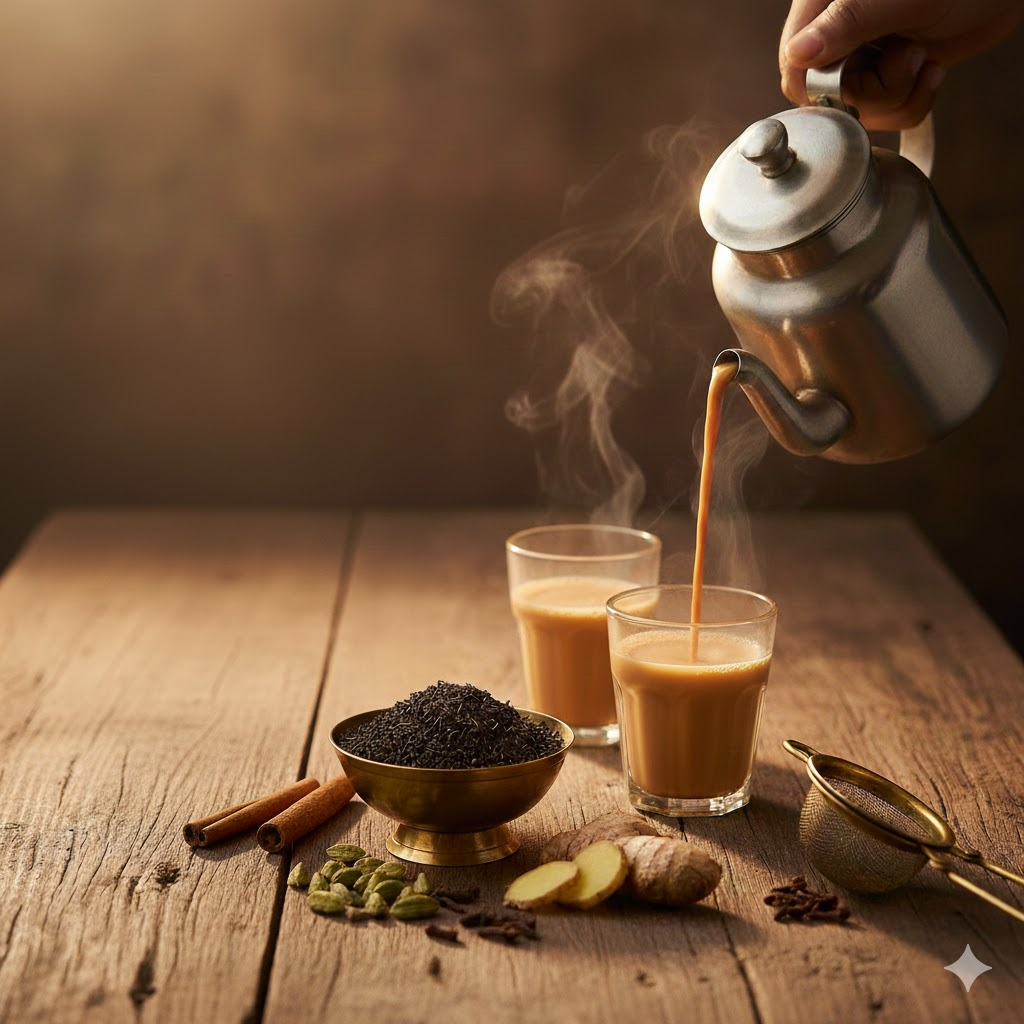
Wagh Bakri: The Everyday Champion
Gujarat-based brand, been around since 1892. Their Premium Leaf Tea creates a strong, malty base that holds up when you add milk and spices. What actually makes Wagh Bakri useful day-to-day is consistency — every cup tastes like the last, which matters at 6am when you’re not paying close attention to what you’re doing.
Their masala chai blend comes pre-mixed with cardamom, ginger, and cinnamon. It’s not as layered as building your own spice blend, but on busy mornings it’s a reasonable shortcut. The base tea is strong enough to handle the milk without disappearing into it, which is the actual test.
Taj Mahal Tea: The Smooth Operator
Brooke Bond’s Taj Mahal tea is what most Indian households treat as the baseline for comparison. Smoother and less astringent than other brands, with natural sweetness that lets you use less sugar. The leaves are selected for brightness rather than just strength.
This is the guest tea — the one you pull out when you want the chai to make an impression. Works well with the traditional stovetop method where you simmer everything together until it turns a rich caramel color. Don’t rush that simmer; the flavor needs the time.
Society Tea: The Hidden Gem
Society Tea doesn’t have name recognition outside India, but it’s well-known in Mumbai. Their Premium Dust tea is very finely ground, which releases flavor fast and creates the thick, robust chai that street vendors are known for. The texture is different from leaf tea — slightly creamier, and it develops foam when you pour it from height in the traditional way.
If you want something closer to what you’d get at a Mumbai tapri, Society Dust is probably your closest option. Harder to find outside Indian grocery stores, but worth looking for.
Organic India Tulsi Chai: The Wellness Choice
This one is different from the others. Organic India combines chai spices with tulsi (holy basil) instead of black tea. No caffeine, which makes it work for evening drinking. The tulsi adds herbal complexity that’s genuinely interesting rather than just medicinal-tasting.
USDA organic and fair trade certified. The taste is lighter than traditional black tea chai, but the spice balance is good — ginger, cardamom, and black pepper all come through clearly. If you want something closer to a chai-spiced herbal tea than proper masala chai, this fits that category well.
Girnar: The Instant Solution
Sometimes you have thirty seconds, not ten minutes. That’s Girnar instant chai’s entire reason for existing. It’s pre-sweetened and you can’t adjust that — a dealbreaker for some people, a non-issue for others. The cardamom comes through quite strongly, which is polarizing.
Is it authentic? No. Is it surprisingly decent for an instant product? Yes. The gap between Girnar instant and proper stovetop chai is significant, but the gap between Girnar instant and the average chai latte from a US coffee shop is much smaller than you’d think.
What to Look For
Strong black tea that won’t dissolve into the milk. That’s the primary requirement. CTC (crush, tear, curl) processed teas are the traditional choice because they release flavor fast and create the robust base that survives the addition of spices and milk. Broken or whole leaf teas brew differently and produce a different result.
Freshness matters more than most people realize. Buy from stores with good turnover. Check the packaging date when ordering online. Tea that’s been sitting in a warehouse loses the volatile aromatics that make chai distinctive, and no amount of simmering gets those back.
Making It Your Own
Any of these brands gets better with fresh spices. Crushed cardamom pods (not powder), grated fresh ginger, a cinnamon stick, a few whole black peppercorns if you want some heat. These aren’t optional if you’re trying to get close to the real thing — the pre-ground spices in most masala blends are a starting point, not a finish line.
The simmer time matters too. You’re not just heating the tea — you’re extracting the spices and integrating them with the milk. Three to five minutes of actual simmering, not just bringing it to a boil and calling it done. That’s where the depth comes from.