
I love a good espresso martini as much as the next person. But after making roughly 300 of them over the past two years, I started wondering: is this really the only coffee cocktail worth drinking? Spoiler — it is absolutely not.
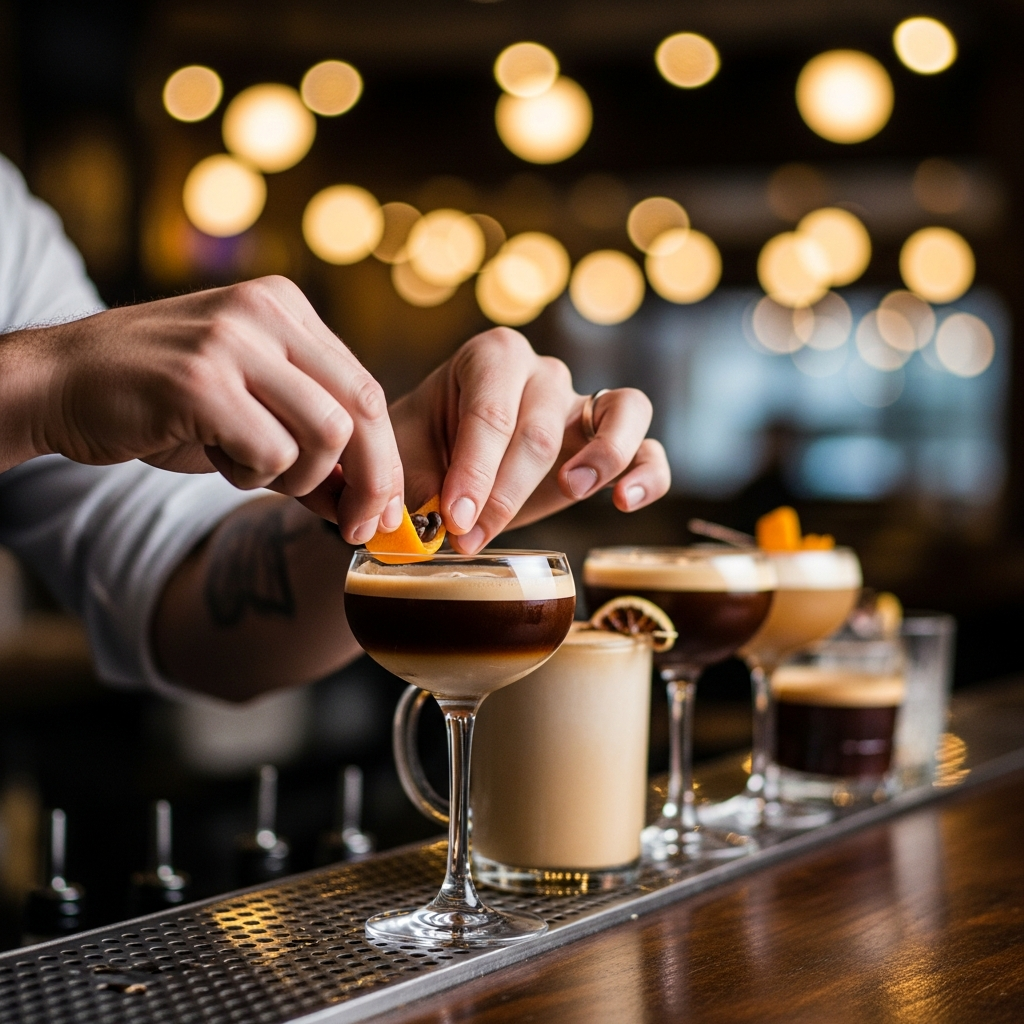
The coffee cocktail world is massive, spanning continents and centuries. From the layered Barraquito born in the Canary Islands to the deceptively simple espresso tonic that Europeans have been quietly enjoying all summer, there are drinks here that will make you forget the espresso martini even exists. I have personally made every single one of these for dinner parties, weekend brunches, and random Tuesday evenings when I felt like experimenting.
Here are 10 coffee cocktails that deserve a permanent spot in your rotation — each one tested, tweaked, and approved by someone who takes both coffee and cocktails way too seriously.
1. Carajillo (Licor 43 + Espresso)
The carajillo has been absolutely blowing up on TikTok, and for good reason — it is one of the most elegant two-ingredient cocktails you will ever make. I have been making these for every dinner party this year, and they never fail to impress. The combination of Licor 43 (a Spanish vanilla-citrus liqueur) with freshly pulled espresso creates something that tastes far more complex than it has any right to be.
Ingredients:
- 1.5 oz Licor 43
- 1 shot freshly pulled espresso (about 1 oz)
- Ice cubes
Steps:
- Fill a rocks glass with ice cubes — large format ice works best to slow dilution.
- Pour 1.5 oz of Licor 43 over the ice.
- Pull a fresh shot of espresso and pour it slowly over the back of a spoon onto the Licor 43. This creates the beautiful layered effect.
- Give it a gentle stir after admiring the layers, or drink it layered — both ways are excellent.
Glassware: Rocks glass or a small tumbler.
Pro tip: The espresso needs to be freshly pulled and hot. The temperature contrast between the hot espresso and cold Licor 43 is what creates those Instagram-worthy layers. If your espresso is lukewarm, the layers will blend immediately. I have a complete carajillo deep-dive if you want to master the technique.
2. Irish Coffee (The Classic Done Right)
Most people have had a bad Irish coffee — the kind made with drip coffee, a mountain of spray whipped cream, and bottom-shelf whiskey. A properly made Irish coffee is a completely different experience. I spent an embarrassing amount of time perfecting my technique, and the secret is floating the cream rather than mixing it in.
Ingredients:
- 6 oz hot brewed coffee (medium roast, freshly brewed)
- 1.5 oz Irish whiskey (Jameson, Tullamore D.E.W., or Powers)
- 1 tablespoon brown sugar or demerara sugar
- Heavy cream, lightly whipped (not stiff peaks — pourable but thick)
Steps:
- Preheat your Irish coffee glass by filling it with hot water for 30 seconds, then dump it out.
- Add the brown sugar and a splash of hot coffee. Stir until the sugar dissolves completely.
- Add the Irish whiskey and the remaining hot coffee. Stir once.
- Lightly whip heavy cream until it is just thick enough to pour but holds together — about 30 seconds of whisking. Pour it over the back of a spoon so it floats on top of the coffee.
Glassware: A stemmed Irish coffee glass, or any clear heatproof glass mug.
Pro tip: Do not stir the cream in. You drink the hot, sweet, whiskey-laced coffee through the cold cream layer. That temperature and texture contrast is the entire point of the drink.
3. Coffee Old Fashioned (Bourbon + Cold Brew + Bitters)
This is my go-to “impress someone who knows cocktails” drink. The coffee old fashioned takes the most respected classic cocktail and makes it better with cold brew. I have tested two methods extensively — cold brew infused bourbon and direct pour — and both are spectacular in different ways. The bourbon and coffee share so many flavor notes (vanilla, caramel, oak) that they were practically destined to be combined.
Ingredients:
- 2 oz bourbon (Buffalo Trace or Maker’s Mark work beautifully)
- 1 oz cold brew concentrate
- 0.25 oz simple syrup (or 0.5 oz if you like it sweeter)
- 2 dashes chocolate bitters (or Angostura if that is what you have)
- Orange peel for garnish
Steps:
- Combine bourbon, cold brew concentrate, simple syrup, and bitters in a mixing glass with ice.
- Stir for 20-30 seconds. Stirring (not shaking) keeps the drink silky and clear.
- Strain into a rocks glass over a single large ice cube.
- Express an orange peel over the drink by holding it over the glass and giving it a firm squeeze — you will see the oils mist across the surface. Drop the peel in.
Glassware: Rocks glass with a large format ice cube.
Pro tip: Chocolate bitters are a game-changer here — they bridge the coffee and bourbon flavors better than Angostura. If you want to take this even further, I have a full breakdown of the cold brew and coffee concentrate methods that apply to cocktails too.
4. Espresso Tonic (The European Summer Drink)
If you told me five years ago that I would be pouring espresso into tonic water, I would have questioned your judgment. But espresso tonic is massive in Scandinavia, Spain, and increasingly across Europe — and once you try it, you understand why. The bitterness of the espresso pairs with the quinine in the tonic water in a way that somehow creates something refreshing, complex, and utterly addictive.
Ingredients:
- 1 shot espresso (freshly pulled, about 1 oz)
- 5-6 oz tonic water (Fever-Tree Indian Tonic is ideal — less sweet than Schweppes)
- Ice cubes
- Optional: orange peel or a sprig of rosemary for garnish
Steps:
- Fill a tall glass with ice cubes to the top.
- Pour the tonic water over the ice.
- Pull a fresh shot of espresso. Let it cool for about 15 seconds (this prevents the tonic from going flat on contact).
- Pour the espresso VERY slowly over the back of a spoon onto the tonic. This creates the mesmerizing cascading effect as the dark espresso sinks through the clear tonic.
Glassware: A tall highball glass — you want the height for the visual effect.
Pro tip: This drink is naturally non-alcoholic, which makes it perfect for when you want something more interesting than a soda but are not drinking. For an adult version, add 1 oz of gin before the tonic — the botanicals play incredibly well with the coffee.
5. Barraquito (Canary Islands Layered Coffee)
The Barraquito is Tenerife’s signature drink, and it is one of the most visually stunning coffee cocktails I have ever made. Five distinct layers in a glass — it looks like a sunset in liquid form. The flavor profile combines condensed milk sweetness, Licor 43 warmth, espresso bitterness, and foamed milk creaminess into something that tastes like it should cost $18 at a rooftop bar.
Ingredients:
- 1 tablespoon sweetened condensed milk
- 1 oz Licor 43
- 1 shot espresso
- Steamed milk (about 2 oz)
- A sprinkle of cinnamon
- A small piece of lemon peel
Steps:
- Pour condensed milk into the bottom of a clear glass.
- Slowly pour Licor 43 over the back of a spoon to create the second layer.
- Add a small piece of lemon peel (this is the traditional touch).
- Slowly pour the espresso over the back of a spoon to create the third layer. Patience is everything here.
- Top with steamed, frothy milk and a sprinkle of cinnamon.
Glassware: A small clear glass (4-6 oz) — the layers are the whole show.
Pro tip: Each layer must be poured at a different temperature and density for the layers to hold. Condensed milk is heaviest, then Licor 43, then espresso, then foamed milk. If your layers collapse, you are pouring too fast. If you enjoy Licor 43 in your carajillo, you will love what it does here.
6. White Russian (The Updated Version)
The White Russian has a reputation problem. Thanks to The Big Lebowski, most people associate it with a drink that is basically boozy coffee milk. But an updated White Russian — made with cold brew instead of Kahlua, or at least with good Kahlua and fresh cream — is a legitimately sophisticated after-dinner cocktail. I have been serving this version at dinner parties and nobody has once mentioned The Dude.
Ingredients:
- 2 oz vodka
- 1 oz Kahlua (or substitute 1 oz cold brew concentrate + 0.5 oz simple syrup for a fresher version)
- 1 oz heavy cream
- Ice
Steps:
- Fill a rocks glass with ice.
- Pour in the vodka and Kahlua (or cold brew + simple syrup).
- Stir briefly.
- Float the heavy cream on top by pouring it slowly over the back of a spoon. Serve with a stir stick and let your guest decide how much to mix.
Glassware: Rocks glass.
Pro tip: Replace the heavy cream with oat milk for a lighter version that still has that creamy mouthfeel. Oat milk’s natural sweetness actually complements the coffee and vodka better than you would expect.
7. Coffee Negroni (Cold Brew + Campari + Sweet Vermouth)
This is the cocktail for people who genuinely love bitter flavors. The coffee Negroni takes the already-bitter Negroni template and adds cold brew, creating a drink that is complex, slightly bitter, and deeply savory. It is not for everyone — but if you are the kind of person who drinks black coffee and orders Negronis, this was made for you.
Ingredients:
- 1 oz gin (or cold brew-infused gin for double coffee impact)
- 1 oz Campari
- 1 oz sweet vermouth
- 0.5 oz cold brew concentrate
- Orange peel for garnish
Steps:
- Combine gin, Campari, sweet vermouth, and cold brew in a mixing glass with ice.
- Stir for 30 seconds — this drink should be stirred, never shaken.
- Strain into a rocks glass over a large ice cube.
- Garnish with an expressed orange peel.
Glassware: Rocks glass with large ice cube, or served up in a coupe.
Pro tip: To make coffee-infused gin, add 1/4 cup of coarsely ground coffee beans to a bottle of gin and let it steep for 4 hours at room temperature. Strain through a coffee filter. This method gives a more integrated coffee flavor than adding cold brew directly.
8. Cafe de Olla Cocktail (Mexican Spiced Coffee + Tequila)
Cafe de Olla is traditional Mexican coffee made with piloncillo (unrefined cane sugar), cinnamon, and sometimes cloves. Adding tequila to it is not traditional, but it is brilliant. The warm spices, dark sweetness, and earthy tequila notes create something that tastes like the best parts of Mexico in a glass. I first had a version of this at a mezcal bar in Oaxaca and have been recreating it at home ever since.
Ingredients:
- 6 oz hot brewed coffee (dark roast works best)
- 1.5 oz reposado tequila
- 1 tablespoon piloncillo or dark brown sugar
- 1 cinnamon stick
- 2 whole cloves
- A strip of orange peel
Steps:
- In a small saucepan, heat the coffee with the piloncillo, cinnamon stick, cloves, and orange peel over medium heat. Stir until the sugar dissolves and let it simmer for 3-4 minutes.
- Strain into a heatproof mug or clay cup.
- Add the reposado tequila and stir.
- Garnish with the cinnamon stick from the pot.
Glassware: A clay mug (traditional) or any sturdy coffee mug.
Pro tip: Reposado tequila is the best choice here because it has spent time in oak barrels, giving it vanilla and caramel notes that harmonize with the coffee and spices. Blanco tequila will taste sharper and less integrated. If you enjoy spiced coffee drinks, check out our Nespresso Vertuo recipes for more warm and spiced inspiration.
9. Vietnamese Iced Coffee with Rum
Vietnamese iced coffee (ca phe sua da) is already one of the most delicious coffee preparations on the planet — strong, sweet, and creamy from the condensed milk. Adding dark rum turns it into a cocktail that tastes like a tropical vacation. The richness of the condensed milk tames the rum beautifully, and the strong coffee keeps it from becoming cloyingly sweet.
Ingredients:
- 2 tablespoons sweetened condensed milk
- 4 oz strongly brewed dark roast coffee (or 2 oz from a phin filter)
- 1.5 oz dark rum (Goslings, Appleton Estate, or similar)
- Ice cubes
Steps:
- Add condensed milk to the bottom of a tall glass.
- Brew coffee using a Vietnamese phin filter directly over the glass (or brew separately and pour in). Let it drip through completely — about 4-5 minutes.
- Add the dark rum and stir everything together until the condensed milk is fully incorporated.
- Fill the glass with ice and stir again. The drink should be deeply brown and opaque.
Glassware: A tall glass (12-16 oz).
Pro tip: If you do not have a phin filter, use a moka pot or an AeroPress with a fine grind to get similarly strong coffee. The key is concentration — regular drip coffee is too weak and the drink will taste watery once the ice melts. For a non-alcoholic version, this is already incredible without the rum — it is essentially traditional ca phe sua da. For more drinks that pair caffeine with spirits, we have covered those too.
10. Cold Brew Margarita
This sounds like it should not work, but I promise you it does. A cold brew margarita takes the bright, citrusy, salty framework of a margarita and adds the deep, roasty dimension of cold brew. It is essentially what happens when brunch and happy hour collide — in the best possible way. I stumbled into this recipe while trying to use up leftover cold brew and it has become one of my most requested drinks.
Ingredients:
- 1.5 oz blanco tequila
- 1 oz cold brew concentrate
- 0.75 oz fresh lime juice
- 0.5 oz agave syrup (or simple syrup)
- 0.5 oz orange liqueur (Cointreau or Grand Marnier)
- Tajin or sea salt for the rim
Steps:
- Run a lime wedge around the rim of a rocks glass and dip it in Tajin or sea salt.
- Combine tequila, cold brew, lime juice, agave syrup, and orange liqueur in a shaker with ice.
- Shake vigorously for 15 seconds.
- Strain into the rimmed glass over fresh ice.
Glassware: Rocks glass with a Tajin rim.
Pro tip: Tajin (chile-lime salt) on the rim is not optional here — it ties the coffee, lime, and tequila together. Regular salt works but Tajin elevates this from good to truly memorable.
Non-Alcoholic Alternatives for Every Drink
Every cocktail on this list can be made without alcohol and still taste excellent. Here are the swaps I recommend:
- Carajillo: Replace Licor 43 with vanilla syrup (1 oz) and a squeeze of orange — surprisingly close.
- Irish Coffee: Skip the whiskey, add an extra teaspoon of brown sugar and a drop of vanilla extract.
- Coffee Old Fashioned: Cold brew + chocolate bitters + simple syrup + orange peel. Bitters contain trace alcohol but are used in dashes.
- Espresso Tonic: Already non-alcoholic. You are all set.
- Barraquito: Replace Licor 43 with vanilla syrup and a squeeze of lemon juice for the citrus note.
- White Russian: Cold brew + oat milk + vanilla syrup over ice. Basically a fancy iced latte.
- Coffee Negroni: This one is tough to replicate without alcohol. Try cold brew + non-alcoholic Campari (like Wilfred’s) + pomegranate juice.
- Cafe de Olla: Just skip the tequila — traditional Cafe de Olla is already a masterpiece without it.
- Vietnamese Iced Coffee: The classic version without rum is already one of the best coffee drinks in existence.
- Cold Brew Margarita: Cold brew + lime juice + agave + sparkling water + Tajin rim. Refreshing and complex.
For more ideas on creating coffee-based drinks that skip the alcohol entirely, we have plenty of recipes that focus on flavor and creativity without the spirits.
Essential Equipment for Coffee Cocktails
You do not need a full bar setup to make great coffee cocktails, but a few tools make a significant difference:
- A cocktail shaker: The Boston shaker (two-piece) is what professionals use and is easier to clean than a cobbler shaker.
- A mixing glass and bar spoon: For stirred drinks like the Coffee Old Fashioned and Coffee Negroni. Stirring keeps drinks clear and silky.
- Large format ice molds: Those big 2-inch ice cubes melt slowly and look impressive in a rocks glass. A silicone mold costs about $10.
- A jigger: Measuring matters in cocktails. Eyeballing leads to unbalanced drinks every time.
- An espresso machine or moka pot: Several of these drinks require actual espresso or strong concentrated coffee. A moka pot ($25-40) will get you 90% of the way there.
Frequently Asked Questions
Can I use instant coffee for these cocktails?
For most of these, no. Cocktails that call for espresso (carajillo, Barraquito, espresso tonic) need the intensity and crema that only real espresso provides. For cold brew-based drinks (Coffee Old Fashioned, Cold Brew Margarita), you need actual cold brew concentrate. The one exception is the Dalgona-style whipped coffee topping — that requires instant coffee specifically.
What is the best coffee roast for cocktails?
Medium to medium-dark roast works best for most coffee cocktails. Light roasts can taste sour when combined with spirits, and very dark roasts can taste burnt and ashy. A good medium roast gives you chocolate, caramel, and nutty notes that pair beautifully with most spirits.
How far in advance can I batch these?
Cold brew-based cocktails batch beautifully — make the full recipe minus the ice, store in a jar in the fridge, and they will keep for 3-5 days. Hot espresso drinks should be made to order. The Coffee Old Fashioned and Coffee Negroni are especially great for batching: multiply the recipe, combine everything in a jar, and just pour over ice when ready to serve.
Do I need expensive spirits for coffee cocktails?
Not really. Coffee is a strong flavor that masks a lot of subtlety, so there is no point using your top-shelf stuff. Mid-range spirits (Buffalo Trace bourbon, Jameson Irish whiskey, a decent blanco tequila) are the sweet spot. The exception is Licor 43 — there is no substitute for it in the carajillo, and thankfully it is reasonably priced at around $25 for a bottle that will make 15+ drinks.
Can I make these with decaf?
Absolutely. If you are making evening cocktails and do not want to be wired at 2 AM, decaf espresso and decaf cold brew work perfectly in every recipe here. The flavor difference between good decaf and regular in a cocktail context (where spirits and sweeteners are in play) is negligible. I often switch to decaf for anything I am making after 6 PM.