
I used to make overnight oats with milk and fruit — the standard Pinterest recipe everyone has seen a thousand times. Then I replaced the milk with cold brew concentrate, and I have not gone back. Coffee overnight oats are breakfast and caffeine in one jar, and they take about five minutes to assemble the night before.
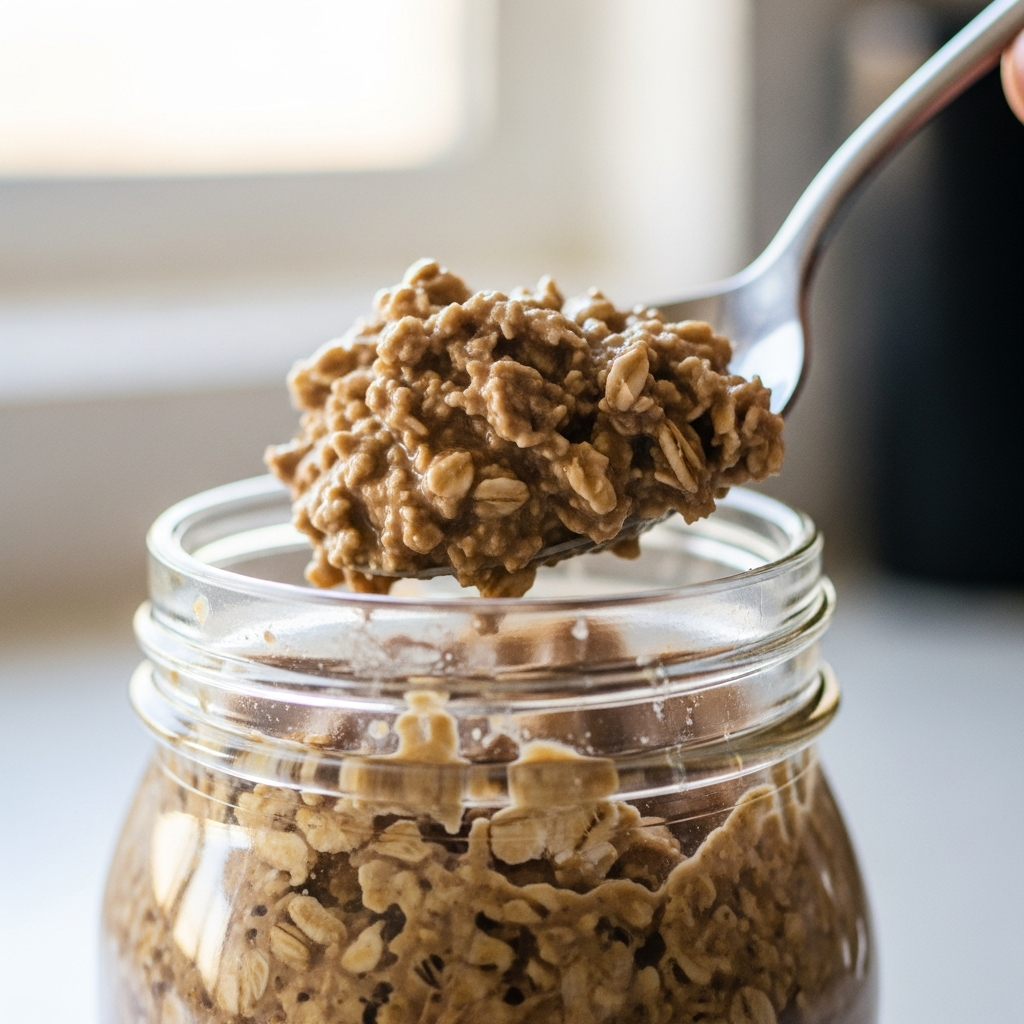
Over the past two months, I have tested five flavor variations, optimized for high protein content (each recipe has at least 25g of protein), and figured out the exact method that keeps them from getting watery, mushy, or bland. This is the complete guide — base method, five recipes with full macros, and a meal prep system that gives you grab-and-go breakfasts Monday through Wednesday.
The Base Method: Cold Brew + Oats
Every recipe below follows the same foundational method. Master this once and you can riff endlessly.
Base Ingredients (1 serving):
- 1/2 cup old-fashioned rolled oats (not quick oats — they dissolve into mush)
- 1/2 cup cold brew concentrate (not regular cold brew — concentrate is key)
- 1/4 cup Greek yogurt (full-fat for creaminess, nonfat for lower calories)
- 1 tablespoon chia seeds (adds thickness and 5g fiber)
- 1 scoop protein powder (flavor matches the variation)
- Sweetener of choice: 1 tablespoon maple syrup, honey, or sugar-free alternative
Base Method:
- Add oats, cold brew concentrate, yogurt, chia seeds, protein powder, and sweetener to a mason jar or container with a lid.
- Stir thoroughly with a fork — not a spoon. A fork breaks up chia seed clumps and protein powder lumps better than anything else. Stir for a solid 30 seconds.
- Add any flavor-specific mix-ins (detailed in each recipe below).
- Seal the container and refrigerate for at least 6 hours — overnight is ideal. The oats absorb the cold brew and expand, the chia seeds gel, and everything melds together.
- In the morning, give it one more stir. Add a splash of milk (1-2 tablespoons) if the consistency is thicker than you prefer. Add toppings and eat cold, straight from the jar.
Why Cold Brew Concentrate, Not Regular Coffee?
Cold brew concentrate is coffee brewed at a high coffee-to-water ratio — typically 1:4 or 1:5 instead of the standard 1:15. It is much stronger, which matters because the oats and yogurt dilute whatever liquid you use. Regular brewed coffee (hot or cold) makes the oats taste vaguely coffee-adjacent. Concentrate makes them taste like actual coffee.
Cold brew is also less acidic than hot-brewed coffee, which means it plays nicer with dairy. Hot coffee can curdle yogurt — cold brew will not.
Can You Use Hot Coffee?
Yes, but let it cool completely first — at minimum to room temperature, ideally to fridge temperature. Hot coffee will partially cook the oats on contact, changing the texture from creamy to gluey. It can also curdle the yogurt and denature the protein powder (making it gritty). If you brew a hot espresso or French press in the evening, just stick it in the fridge for 30 minutes before assembling your oats.
Recipe 1: Mocha Overnight Oats
The most popular variation in my house — chocolate and coffee is a combination that never misses.
Add to base:
- 1 tablespoon unsweetened cocoa powder
- Use chocolate protein powder
- 1 tablespoon mini chocolate chips (stir half in, save half for topping)
Toppings: Reserved chocolate chips, a drizzle of almond butter, sliced banana
The cocoa powder blooms in the cold brew overnight, developing a deeper chocolate flavor than you would get from just the protein powder alone. The mini chocolate chips that get stirred in will soften into little fudgy pockets. The ones you add on top in the morning stay slightly firm and provide crunch contrast.
Nutrition per serving: 425 calories | 32g protein | 48g carbs | 12g fat | 8g fiber
Recipe 2: Vanilla Latte Overnight Oats
For the vanilla latte lovers — sweet, creamy, and the least intense coffee flavor of the five.
Add to base:
- Use vanilla protein powder
- 1 teaspoon vanilla extract
- 1 tablespoon maple syrup (use this as your sweetener)
- Pinch of cinnamon
Toppings: Granola, a drizzle of maple syrup, fresh berries
The double vanilla hit (extract plus protein powder) creates a custard-like sweetness that balances the cold brew bitterness. The maple syrup is better than honey here — it has a more complex sweetness that complements coffee. The cinnamon is subtle but essential — it bridges the vanilla and coffee flavors together.
Nutrition per serving: 410 calories | 28g protein | 52g carbs | 10g fat | 7g fiber
Recipe 3: Peanut Butter Coffee Overnight Oats
The most filling option. Peanut butter adds sustained energy and makes these taste like a peanut butter cup met a cold brew.
Add to base:
- 2 tablespoons PB2 (powdered peanut butter) stirred into the oat mixture
- 1/2 banana, sliced
- Use chocolate or vanilla protein powder
Toppings: 1 tablespoon natural peanut butter (the real stuff, on top), banana slices, a sprinkle of cocoa nibs
I use PB2 in the base because it adds peanut flavor without the heaviness of full-fat peanut butter, which can make the oats overly thick. Then I add a tablespoon of real peanut butter on top in the morning — it sits on the surface and gives you a rich, creamy first bite. The banana breaks down overnight and adds natural sweetness, reducing how much maple syrup you need. These keep me full until noon, every time.
Nutrition per serving: 445 calories | 33g protein | 50g carbs | 14g fat | 8g fiber
Recipe 4: Tiramisu Overnight Oats
The most indulgent variation — layers of coffee-soaked oats and a mascarpone cream layer that tastes like actual tiramisu. This one takes an extra 3 minutes to assemble because of the layering, but it is worth it.
Add to base:
- Use vanilla protein powder
- Replace the Greek yogurt with 2 tablespoons mascarpone cheese + 2 tablespoons Greek yogurt (mixed together)
Mascarpone cream layer:
- 2 tablespoons mascarpone cheese
- 1 tablespoon powdered sugar
- 1 tablespoon heavy cream
Assembly: Add half the oat mixture to the jar. Whisk mascarpone, powdered sugar, and cream together and spread over the oat layer. Add the remaining oat mixture on top. Dust with unsweetened cocoa powder. Seal and refrigerate overnight.
Topping: Another dusting of cocoa powder in the morning, plus a few ladyfinger crumbs if you have them
The mascarpone cream layer stays distinct overnight — it does not fully mix into the oats, which gives you alternating bites of coffee oats and creamy, sweet mascarpone. It is dessert for breakfast, and I am not apologizing for it. If you want to keep the protein count high, use Greek yogurt for the base layer and save the mascarpone for the cream layer only.
Nutrition per serving: 480 calories | 26g protein | 46g carbs | 20g fat | 6g fiber
Recipe 5: Protein-Packed Power Oats (40g Protein)
This is the performance version — engineered for maximum protein with minimum fuss. I developed this for gym mornings when I need fuel and caffeine simultaneously.
Add to base:
- 1/4 cup low-fat cottage cheese (blended smooth or used as-is for texture)
- 1.5 scoops protein powder (vanilla or chocolate — up from the standard 1 scoop)
- 1 tablespoon ground flaxseed
- Use nonfat Greek yogurt instead of full-fat
Toppings: Sliced almonds, hemp seeds, fresh berries
The cottage cheese is the protein hack most people do not know about. Blended smooth, it disappears into the oat mixture and adds 7g of protein with almost no impact on taste or texture. Combined with 1.5 scoops of protein powder and nonfat Greek yogurt, you hit 40g+ of protein in a single jar. The ground flaxseed adds omega-3s and additional fiber without changing the flavor.
If you are hitting the gym, eat this 60-90 minutes before your workout. The combination of complex carbs (oats), caffeine (cold brew, roughly 80-100mg), and high protein makes it an almost ideal pre-workout meal.
Nutrition per serving: 460 calories | 42g protein | 48g carbs | 10g fat | 9g fiber
Meal Prep System: Make Sunday, Eat Mon-Wed
Here is the exact system I use every week:
Sunday Evening: Assembly (15-20 minutes for 3 jars)
- Line up three wide-mouth mason jars (16 oz size — the wide mouth is essential for stirring and eating from the jar).
- Measure the base ingredients into each jar. I usually make two of the same flavor and one different to avoid monotony.
- Add flavor-specific ingredients to each.
- Stir each jar thoroughly with a fork. Add lids and refrigerate.
How Long Do They Last?
Three days in the fridge is the sweet spot. Here is what I have found through direct testing:
- Day 1 (Monday): Perfect texture — oats are soft but still have some bite, flavors are fresh
- Day 2 (Tuesday): Slightly softer oats, flavors have melded more — many people actually prefer this day
- Day 3 (Wednesday): Still good, but the oats are noticeably softer and the chia seeds have fully expanded. This is the last day I would eat them.
- Day 4+: The texture gets mushy and the cold brew flavor starts to develop a sour edge. Not recommended.
The exception is the Tiramisu variation — the mascarpone layer starts to break down on day 3. Eat that one within 2 days.
Can You Freeze Overnight Oats?
Technically yes, but the texture changes significantly. The oats become mushier after thawing, and the chia seeds lose their gel structure. I have tried freezing every variation and none of them were as good as fresh. If you want to prep further ahead, measure dry ingredients into jars and add the wet ingredients 6+ hours before you want to eat. The dry components keep indefinitely.
Equipment Notes
- 16 oz wide-mouth mason jars: The gold standard. Wide enough to eat from, tall enough to hold everything, glass is non-reactive and does not absorb flavors. Ball or Kerr brand, about $12 for a pack of 12.
- Measuring cups and spoons: Worth being precise, especially with protein powder and chia seeds. Too much chia makes it gloopy; too little and the oats are thin.
- Fork for stirring: Better than a spoon for breaking up clumps. Trust me.
- Cold brew concentrate: Make your own (coarse grounds + water, steep 12-18 hours, filter) or buy pre-made. Chameleon Cold-Brew concentrate is my go-to store-bought option.
Frequently Asked Questions
How much caffeine is in coffee overnight oats?
Using 1/2 cup of cold brew concentrate, each serving contains roughly 80-100mg of caffeine — equivalent to about one regular cup of coffee. This varies depending on your concentrate strength. If you are caffeine-sensitive, use half cold brew and half regular milk, or switch to decaf cold brew.
Do coffee overnight oats taste bitter?
Not with this method. Cold brew is naturally smoother and less bitter than hot-brewed coffee. The yogurt adds creaminess, the sweetener balances any residual bitterness, and the oats absorb and mellow the flavor overnight. If you find them bitter, add an extra teaspoon of maple syrup or try a lighter roast for your cold brew.
Can I heat these up?
You can, but they are designed to be eaten cold. Microwaving for 60-90 seconds works — the texture becomes more like porridge. The chia seeds lose their gel structure when heated. If you prefer warm oats, you might enjoy them more as stovetop oats made with brewed coffee instead of the overnight method.
What is the best protein powder for overnight oats?
Whey protein blends into the oat mixture most smoothly. Plant-based protein powders (pea, rice) can be gritty — if using plant protein, choose one specifically formulated for smoothies, as these tend to be ground finer. Avoid casein protein; it thickens dramatically overnight and can turn your oats into a solid brick.
If you are looking for more coffee-infused breakfast and snack ideas, our coffee protein balls use some of the same base ingredients and take even less time to make. And for a drinkable option, our coffee smoothie without banana is another high-protein coffee breakfast that comes together in under five minutes. For a broader look at what foods pair well with your morning cup, check out snacks that go with coffee.