
Here’s the thing — you don’t need an ice cream machine for this. Three ingredients, a hand mixer, maybe 15 minutes of actual work. Then you just wait for the freezer to do its thing.
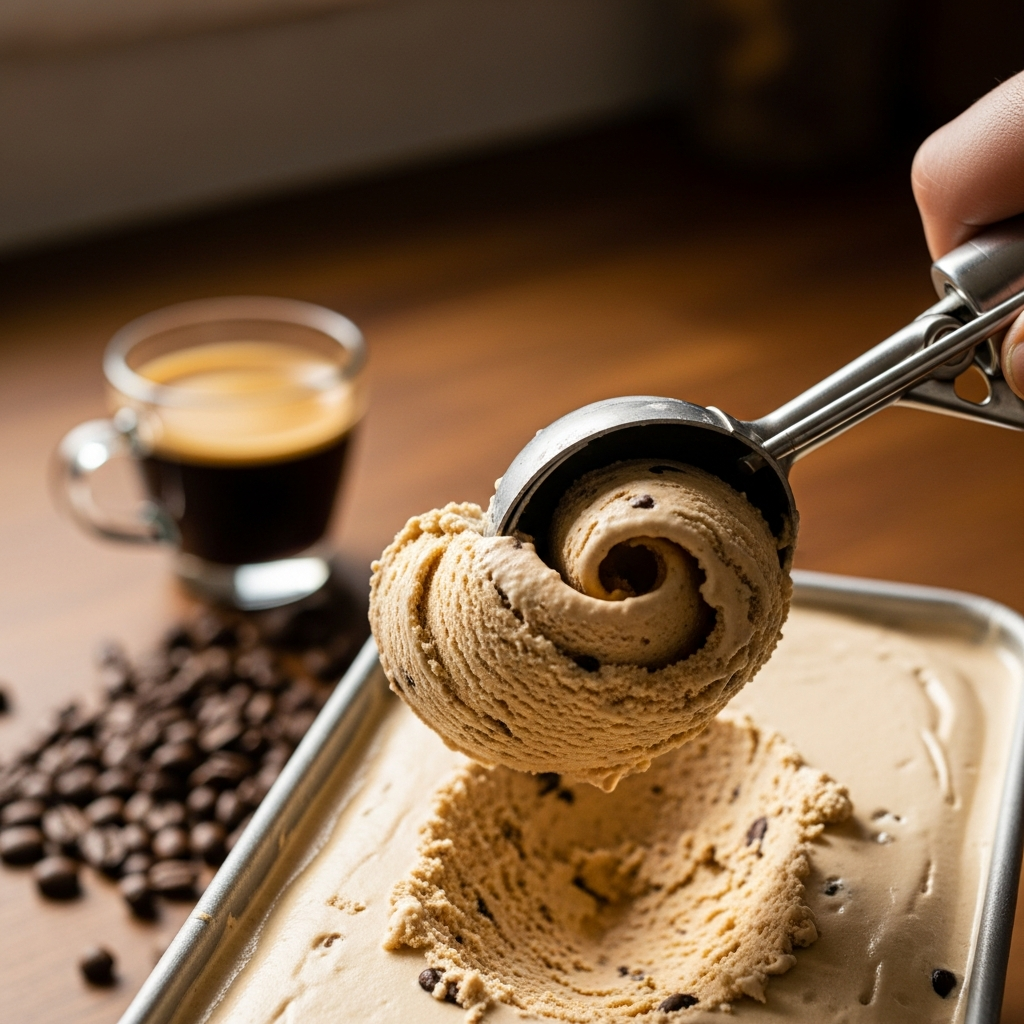
I’ve tested this no-churn method against machine-churned versions side by side, and most people genuinely cannot tell the difference. After twenty-something batches, I’ve stopped buying store-bought coffee ice cream entirely. This is better, it’s cheaper, and I can make it in my pajamas. What’s not to love?
The 3-Ingredient Base Recipe
Makes: about 1 quart | Active time: 15 minutes | Freeze time: 6 hours minimum | Total time: 6+ hours
Ingredients
- 2 cups heavy whipping cream (must be heavy cream, at least 36% fat — light cream or half-and-half will not whip to stiff peaks)
- 1 can (14 oz) sweetened condensed milk
- 3 tablespoons instant espresso powder (or 2 tablespoons dissolved in 1 tablespoon warm water)
Equipment
- Large mixing bowl (chilled in the freezer for 10 minutes if possible)
- Electric hand mixer or stand mixer with whisk attachment
- Spatula
- Freezer-safe container with a lid (a 9×5 loaf pan works great)
- Plastic wrap
Step-by-Step Instructions
Step 1: Dissolve the espresso. If you’re using instant espresso powder, dissolve it in 1 tablespoon of warm (not hot) water. Stir until there are zero granules left. Let it cool to room temperature. I know it’s tempting to skip this and just dump the powder in with the cream, but don’t — you’ll get grainy little specks throughout your ice cream. Not the vibe.
Step 2: Whip the cream. Pour the heavy cream into a large, cold bowl. Hand mixer on medium-high, whip until stiff peaks form — that means when you lift the beaters, the cream holds a firm peak that doesn’t droop. Takes about 3-4 minutes. Don’t over-whip though. If the cream starts looking grainy or separating, you’ve crossed into butter territory. And there’s no coming back from that. Start over with fresh cream if it happens.
Step 3: Combine condensed milk and espresso. Separate bowl. Whisk the sweetened condensed milk and dissolved espresso together until it’s a uniform coffee-brown color. Dead simple.
Step 4: Fold together. This is the step that actually matters. Pour about one-third of the espresso-condensed milk mixture into the whipped cream. Grab a spatula and fold — not stir, fold — by cutting down through the center, scooping along the bottom, and folding back over the top. Rotate the bowl 90 degrees, repeat. Add the rest of the espresso mixture in two more rounds, folding gently each time.
Why does this matter so much? All that air you whipped into the cream is what makes the ice cream light and creamy. Stirring kills the bubbles. Folding keeps them alive. When you’re done, you should have an even light-brown mixture with no white streaks.
Step 5: Transfer and freeze. Pour into your freezer-safe container. Smooth the top with a spatula. Now press a piece of plastic wrap directly onto the surface of the ice cream. This isn’t optional. It stops ice crystals from forming on top, which is the number one texture killer in homemade ice cream. Lid goes on top of the plastic wrap.
Step 6: Freeze for at least 6 hours. Overnight is better. And resist the urge to peek — every time you crack that freezer door, the temperature swings and promotes ice crystal formation. Just forget about it.
Step 7: Serve. Pull it out 5-8 minutes before scooping. No-churn ice cream freezes harder than the store-bought stuff since it doesn’t have commercial stabilizers. Those few minutes at room temp make all the difference. Running your scoop under hot water helps too.
Why This Method Works: The Science
Traditional ice cream machines freeze and churn at the same time — incorporating air while preventing big ice crystals. The no-churn method gets you to the same place through a totally different route:
- Whipped cream provides the air. Whipping cream to stiff peaks folds in millions of tiny air bubbles. That’s what makes ice cream light instead of dense. In a machine, the dasher does this work. Here, your mixer handles it upfront.
- Sweetened condensed milk prevents ice crystals. All that sugar lowers the freezing point, which means smaller crystals form. Smaller crystals means smoother texture. Same principle behind adding corn syrup or alcohol to commercial bases.
- High fat content provides creaminess. Heavy cream at 36%+ fat coats your tongue and carries flavor. The fat also traps the air bubbles, keeping things light even after hours in the freezer.
Why Instant Coffee Works Better Than Brewed
I know, I know — instant coffee? In a recipe? Hear me out, because this one surprised me too.
Brewed coffee is mostly water. Add a quarter cup of brewed coffee to your ice cream base and you’re adding a quarter cup of water, which freezes into ice crystals and makes the whole thing icy. Instant espresso powder dissolved in just 1 tablespoon of water delivers the same punch — stronger, actually — with a fraction of the liquid.
Here’s the pro secret: instant espresso powder (Medaglia d’Oro is the classic) delivers more concentrated coffee flavor per tablespoon than any other form. It dissolves completely, no grit. Professional pastry chefs keep a jar in their pantry at all times. It lasts essentially forever. If you bake or make frozen desserts with any regularity, just buy a jar and keep it around.
Tips for the Smoothest Texture
Twenty-plus batches taught me a few things. Here’s what actually moves the needle:
Chill everything. Cold bowl, cold cream, cold beaters. The colder the cream when you start whipping, the faster you hit stiff peaks and the more stable they are. I throw my mixing bowl in the freezer for 10 minutes before starting.
Whip the cream all the way but not past. Stiff peaks, not soft peaks. Soft peaks collapse the second you fold in that heavy condensed milk, and you lose all the airiness. But if the cream starts looking chunky or watery? That’s butter. Game over.
Fold gently. Fold completely. Aggressive stirring destroys bubbles. But sloppy folding leaves white streaks of plain whipped cream that freeze into flavorless patches. Take your time — about 20-25 fold motions usually does it.
Plastic wrap on the surface. I cannot stress this enough. Air exposure causes that crunchy, icy layer on top of old ice cream. Plastic wrap pressed directly onto the surface creates a barrier. Parchment paper works too, just doesn’t conform as tightly.
— /wp:paragraph –>Don’t refreeze after thawing. Once ice cream partially melts and refreezes, the texture is permanently wrecked. Large crystals form in the refrozen areas. Scoop what you need and get the container back in the freezer fast.
Variation 1: Mocha Chip
Coffee plus chocolate plus chocolate chips. This is the one I make most often, honestly.
Additional ingredients:
- ½ cup mini chocolate chips
- 2 tablespoons cocoa powder added to the condensed milk mixture
Method: Follow the base recipe. Sift cocoa powder into the condensed milk along with the dissolved espresso. After folding everything together, gently fold in the mini chocolate chips as the very last step. Use mini chips — regular ones are too big, and they turn into hard little rocks when frozen. Not fun to bite into.
The cocoa deepens the color to a rich dark brown and adds this subtle chocolate undertone that just works. Those chocolate chips scattered through every scoop give it real textural interest.
Variation 2: Affogato Swirl
Inspired by the Italian classic — espresso poured over vanilla ice cream — this version has ribbons of concentrated espresso swirled right through.
Additional ingredients:
- 2 tablespoons additional espresso powder dissolved in 2 tablespoons warm water (this is the swirl)
Method: Make the base recipe. Pour half into the container. Drizzle half the extra espresso over the top. Add the remaining ice cream, drizzle the rest. Take a knife and make 2-3 broad swirls — don’t go crazy or you’ll lose the visual effect. Those espresso swirl pockets freeze slightly softer than the cream base, so you get these unexpected hits of intense coffee as you eat.
This is the most coffee-forward variation by a mile. For the full affogato experience, pull a fresh shot and pour it over a scoop — the hot espresso melts the edges while the center stays frozen. Ridiculous. If you have a Nespresso, check out our Nespresso Vertuo recipe collection for the best capsules to use.
Variation 3: Vietnamese Coffee Ice Cream
Vietnamese iced coffee is basically a drinkable dessert already — sweetened condensed milk, strong coffee, ice. So turning it into actual ice cream just felt… inevitable.
Modifications to base:
- Increase sweetened condensed milk to 1.5 cans (21 oz total)
- Use 4 tablespoons instant espresso powder instead of 3 (stronger coffee to balance the extra sweetness)
- Add ⅛ teaspoon chicory powder (optional — adds the characteristic earthy note of Vietnamese coffee)
This one’s sweeter and denser than the base. The extra condensed milk pushes the texture almost toward caramel, and cranking the espresso up ensures the coffee flavor still cuts through. The chicory is subtle — most people won’t name it, but it adds an earthiness that anyone who’s had real Vietnamese coffee will recognize immediately.
Serve it with a drizzle of condensed milk on top and a sprinkle of espresso powder. Looks gorgeous.
Variation 4: Dairy-Free Coffee Ice Cream
For the dairy-free crowd, coconut cream is the way to go. It whips up similarly to heavy cream, has enough fat to keep things smooth, and the coconut flavor actually complements coffee really well.
Substitutions:
- 2 cans (13.5 oz each) full-fat coconut cream, refrigerated overnight (use only the solid cream, not the liquid)
- 1 can (14 oz) coconut condensed milk (Nature’s Charm makes a good one) instead of regular sweetened condensed milk
- 3 tablespoons instant espresso powder, dissolved in 1 tablespoon warm water
Method: Scoop the solid coconut cream from the refrigerated cans — toss the watery liquid or save it for smoothies. Whip it with a hand mixer until fluffy and smooth. It won’t hit true “stiff peaks” like dairy cream, but it’ll be noticeably thicker and aerated. Fold in the coconut condensed milk and dissolved espresso using the same technique. Freeze as directed.
Fair warning: the coconut flavor is noticeable. This tastes like coconut-coffee ice cream, not straight coffee ice cream. Personally, I think that’s a feature. The texture is a touch denser than the dairy version but still creamy and scoopable. And the plastic-wrap-on-the-surface trick is even more critical here — coconut-based frozen desserts are more prone to ice crystal issues.
Serving Suggestions
Coffee ice cream is versatile enough to be dessert all by itself. But these combos keep pulling me back:
- Affogato style: One scoop in a cup, hot espresso poured on top. Classic for a reason.
- With espresso brownies: A scoop on a warm brownie. If you haven’t tried our coffee-paired snack recipes, espresso brownies are the natural starting point.
- Ice cream sandwich: Press a scoop between two espresso shortbread cookies. Freeze 30 minutes to set. Unreal.
- Float: Drop a scoop into a glass of cold brew. Ice cream float for grownups.
- With caramel sauce: Salted caramel over coffee ice cream is a top-five dessert combo, full stop. Drizzle it right before serving.
- Alongside a carajillo: Coffee-and-Licor-43 cocktail next to coffee ice cream. Elegant way to end a dinner party.
How Long Does It Keep?
About 2 weeks in the freezer at peak quality. After that, ice crystals form regardless of the plastic wrap, and the texture starts going downhill. Still edible for up to a month, but the difference between week 1 and week 4 is pretty obvious.
For the best experience, eat it within the first week. This has literally never been a problem in my house — a quart rarely survives past day 5.
Frequently Asked Questions
Can I use brewed coffee instead of instant espresso?
You can, but honestly the results aren’t as good. Brewed coffee adds water, water creates ice crystals. If you absolutely must, brew a double espresso (about 2 oz), let it cool completely, and use that. Even then, the flavor will be milder than instant espresso powder. Trust me — the instant stuff is the move here.
Why is my ice cream icy instead of creamy?
Three usual suspects: you didn’t whip the cream to stiff peaks (not enough air), you skipped the plastic wrap on the surface (hello, ice crystals), or your freezer temperature bounces around from opening the door too much. Fix all three and you should be golden.
Can I add mix-ins besides chocolate chips?
Go wild. Crushed Oreos, caramel swirl, toffee bits, chopped nuts, cookie dough chunks — all fair game. Add them after you’ve folded the cream and condensed milk together, as the very last step. Just keep total mix-ins to about ½-¾ cup per batch. More than that and they tend to sink to the bottom during freezing.
How much caffeine is in a serving?
With 3 tablespoons of instant espresso powder split across about 8 servings, each scoop has roughly 30-40mg of caffeine — about a third of a regular cup of coffee. The Vietnamese Coffee variation runs a bit higher, around 40-50mg per serving. Probably won’t keep most adults up if you eat it at dinner, but worth knowing.
Can I make this sugar-free?
Not really, no. The sweetened condensed milk isn’t just there for flavor — the sugar is what keeps the ice cream soft and scoopable and prevents those big ice crystals. Pulling it out would mean a total reformulation with alternative sweeteners and stabilizers. If you want less sugar, try using about ⅔ of a can of condensed milk instead of a full one. It’ll be a bit harder but still workable.
For more coffee dessert ideas that don’t need freezing or baking, our coffee protein balls come together in 15 minutes flat. And if you’re putting together a full coffee snack arsenal, our guide to snacks that go with coffee covers everything from no-bake to frozen.