
The carajillo has been blowing up everywhere — TikTok, Instagram reels, cocktail menus at restaurants that have no business serving cocktails. And honestly? The hype is deserved. It’s one of the simplest, most satisfying coffee cocktails you can make, and it takes about 90 seconds from start to glass.
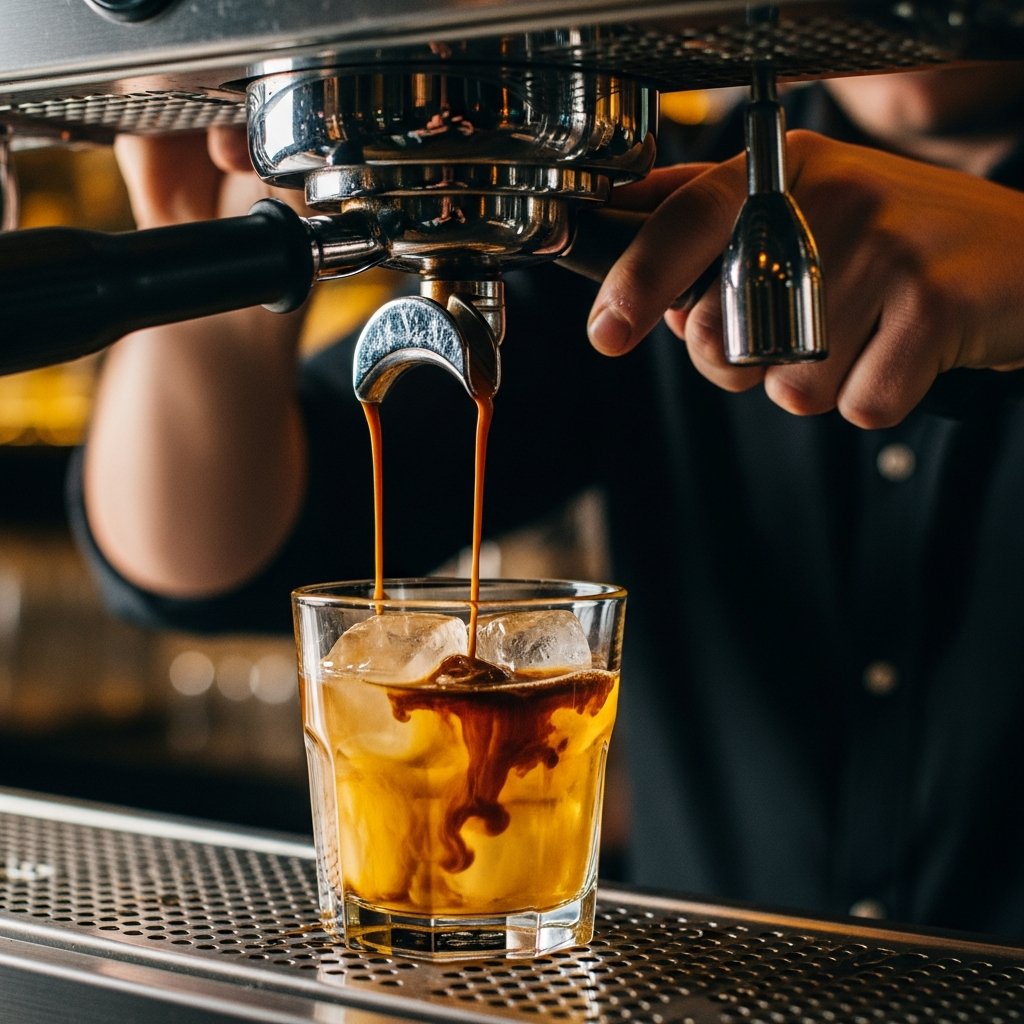
I’ve been making carajillos at home for the better part of a year now. I’ve tested the classic Mexican version with Licor 43, the traditional Spanish version with brandy, and a handful of modern variations that range from crowd-pleasing to genuinely surprising. Below, I’ll walk you through the authentic recipe plus five variations, and I’ll answer every question I’ve been asked about this drink — including what Licor 43 actually is and what to use if you can’t find it.
If you’re already a carajillo fan, you’ll want to check out my original carajillo guide for even more background on the drink’s history and the traditional preparation method.
The Classic Carajillo (The Mexican Way)
This is the version that went viral — the Mexican carajillo served at restaurants in Mexico City, Tulum, and basically every upscale Mexican restaurant in the US by now. It’s the combination of Licor 43 and espresso over ice, and it’s the version you should master first.
Ingredients
- 45ml (1.5 oz) Licor 43
- 1 shot (30ml) freshly pulled espresso
- Ice cubes (3-4 large cubes or a handful of regular cubes)
Equipment
- Espresso machine, Moka pot, or Nespresso (any method that produces concentrated coffee — drip coffee is too weak)
- Rocks glass or old-fashioned glass
- No shaker needed — this is built directly in the glass
Step-by-Step Instructions
- Pull your espresso. You want a standard single shot — about 30ml. If you’re using a Moka pot, use the first 30ml that comes out of the pot (the strongest part). If you’re using a Nespresso, use an espresso capsule, not a lungo.
- Fill a rocks glass with ice. Large cubes are better than small ones — they melt slower, which means your drink stays cold and undiluted longer. If you have one of those big square ice cube molds, use it here.
- Pour the Licor 43 over the ice. Let it settle for a moment.
- Pour the hot espresso directly over the ice and Licor 43. This is the magic moment — the hot espresso hitting the cold ice creates a beautiful layering effect and a temperature shock that melds the flavors instantly.
- Stir gently once or twice. That’s it. You’re done. Drink it immediately while the temperature contrast is still dramatic.
The whole thing takes about 90 seconds. No cocktail shaker, no muddling, no simple syrup, no garnish. Just two ingredients and ice. That’s why I love this drink — the simplicity is the point.
What Is Licor 43?
Licor 43 (also called Cuarenta y Tres) is a Spanish liqueur made from a blend of 43 different botanicals — citrus, vanilla, spices, and herbs. It’s sweet, golden-colored, and tastes primarily of vanilla and citrus with warm spice undertones. The vanilla note is what makes it pair so perfectly with espresso — it softens the bitterness and adds a warm sweetness without being cloying.
Where to buy it: Most well-stocked liquor stores carry Licor 43. Total Wine, BevMo, and similar chains almost always have it. It’s usually in the liqueur section near the Kahlúa and Baileys. A standard 750ml bottle costs $25-30 and will make roughly 16 carajillos — about $1.75 per drink in liqueur cost.
Substitutes if you can’t find it: No substitute is perfect, but Galliano (vanilla-forward Italian liqueur) is the closest match. Vanilla-flavored vodka with a splash of simple syrup works in a pinch but loses the botanical complexity. Tuaca (vanilla-citrus Italian liqueur) is another decent option if you can find it. Avoid using Kahlúa as a substitute for Licor 43 — it’s a completely different flavor profile (Kahlúa is coffee-flavored, which creates a one-dimensional drink when combined with espresso).
5 Carajillo Variations
1. The Spanish Original (Hot, With Brandy)
Before the Mexican carajillo went viral, there was the Spanish original. The carajillo originated in Spain, and the traditional version is served hot with brandy — no ice, no Licor 43. It’s a completely different drinking experience: warm, boozy, and built for cold evenings.
Ingredients
- 45ml (1.5 oz) Spanish brandy (Brandy de Jerez is traditional — Torres 10 is excellent and widely available)
- 1 shot (30ml) freshly pulled espresso
- 1 teaspoon sugar (optional — some Spaniards add it, some don’t)
- Lemon peel (optional garnish — the traditional touch)
Instructions
- If using sugar, add it to a small heat-safe glass or cup first.
- Pour the brandy into the glass. If you want to be theatrical (as some Spanish bartenders are), briefly flame the brandy by tilting the glass near a lighter — this caramelizes the sugar and burns off some alcohol. This step is optional and honestly a bit dangerous at home, so feel free to skip it.
- Pull your espresso shot and pour it directly into the glass with the brandy.
- Stir once. Add a twist of lemon peel if desired.
- Drink while hot.
This version is more about warmth and the brandy’s oak-and-fruit character than the vanilla sweetness of the Mexican version. It’s a nightcap, an after-dinner drink, something you sip slowly rather than toss back.
2. Kahlúa Carajillo (The Crowd-Pleaser)
If you’re making carajillos for people who don’t normally drink cocktails, this is the version to serve. Kahlúa is sweeter and more familiar than Licor 43, and the double-coffee flavor (Kahlúa is already coffee-flavored) makes this intensely coffee-forward. It’s the training-wheels carajillo, and I mean that as a compliment.
Ingredients
- 45ml (1.5 oz) Kahlúa
- 1 shot (30ml) freshly pulled espresso
- Ice cubes
- Splash of cream (optional — makes it even more approachable)
Instructions
- Fill a rocks glass with ice.
- Pour the Kahlúa over the ice.
- Pull your espresso and pour it over the Kahlúa and ice.
- If adding cream, pour it gently over the back of a spoon so it floats on top.
This is the version I served at a dinner party last month, and every single person asked for the recipe. The Kahlúa’s sweetness means you don’t need any added sugar, and the coffee-on-coffee flavor is more intense than the Licor 43 version.
3. Mezcal Carajillo (Smoky and Trending)
This is the variation bartenders in Mexico City and Austin have been pushing hard in 2025 and into 2026. Mezcal’s smoky character combined with espresso’s bitterness creates something that tastes like a campfire in the best possible way. It’s not for everyone, but if you like mezcal, you’ll love this.
Ingredients
- 30ml (1 oz) mezcal (joven/young — not aged, and not too smoky. Del Maguey Vida is perfect.)
- 15ml (0.5 oz) Licor 43
- 1 shot (30ml) freshly pulled espresso
- Ice cubes
- Orange peel for garnish
Instructions
- Fill a rocks glass with ice.
- Pour the mezcal and Licor 43 over the ice. The Licor 43 provides the sweetness and vanilla that the mezcal needs to balance its smokiness.
- Pull your espresso and pour it directly over the spirits and ice.
- Express an orange peel over the glass (squeeze it over the drink to release the citrus oils, then drop it in).
The orange peel is important here — the citrus bridges the smoky mezcal and the bitter espresso. Without it, the drink is a bit disjointed. With it, everything clicks. If you’re curious about mezcal cocktails in general, this is a gateway drink — it’s simpler than most mezcal cocktails and showcases the spirit beautifully.
4. Non-Alcoholic Carajillo (All the Flavor, No Booze)
I developed this version for a friend who’s sober but kept looking enviously at my carajillos. The trick is replicating what Licor 43 brings to the drink — vanilla sweetness, citrus, and warm spice — without any alcohol. It’s not identical, but it’s genuinely delicious on its own terms.
Ingredients
- 1 shot (30ml) freshly pulled espresso
- 30ml vanilla syrup (use real vanilla — not the neon-yellow artificial stuff)
- ¼ teaspoon ground cinnamon
- Tiny pinch of ground clove (very tiny — clove is powerful)
- Squeeze of fresh orange juice (about 15ml)
- Ice cubes
Instructions
- Make the vanilla spice syrup: combine the vanilla syrup with the cinnamon and clove in a small cup. Stir until the spices are dispersed. (If you want to make this in bulk for multiple drinks, simmer vanilla syrup with a cinnamon stick and 2 whole cloves for 5 minutes, then strain and cool.)
- Fill a rocks glass with ice.
- Pour the spiced vanilla syrup over the ice, followed by the orange juice.
- Pull your espresso and pour it over the top. Stir once.
The result is a sweet, spiced, cold coffee drink that hits a lot of the same notes as a real carajillo. The orange juice is what really sells it — it provides the citrus brightness that Licor 43 normally contributes. Serve this at a party alongside the alcoholic versions and nobody will feel left out.
5. Iced Carajillo Pitcher (Batch Recipe for Parties)
Making individual carajillos for 8 people is tedious. This batch version lets you make a pitcher in advance so you can actually enjoy your own party instead of playing bartender all night.
Ingredients (Serves 8)
- 360ml (12 oz) Licor 43
- 240ml (8 oz) espresso or very strong coffee, cooled to room temperature
- 120ml (4 oz) cold water
- Ice (lots — fill the pitcher halfway before adding liquid)
Instructions
- Brew your espresso or strong coffee well in advance. You need it completely cooled to room temperature — hot coffee in a pitcher of ice will melt the ice immediately and water everything down. I brew mine 2-3 hours before the party, or even the night before and refrigerate it.
- Fill a large pitcher halfway with ice.
- Pour in the Licor 43, cooled coffee, and cold water. Stir gently.
- Serve immediately, pouring into individual rocks glasses filled with fresh ice.
Timing tip: Assemble the pitcher no more than 30 minutes before serving. The ice melts over time and dilutes the drink. If you need to prepare further ahead, keep the Licor 43 and cooled coffee in separate containers and combine them with ice right before guests arrive.
Scaling up: The ratio per person is 45ml Licor 43 + 30ml espresso + 15ml water. Multiply by the number of guests. For 12 people: 540ml Licor 43 + 360ml espresso + 180ml water.
Carajillo vs. Espresso Martini: What’s the Difference?
I get asked this constantly, so let’s settle it. The carajillo and the espresso martini are both coffee cocktails, but they’re fundamentally different drinks for different occasions.
The Espresso Martini
- Ingredients: Vodka, Kahlúa, espresso, sometimes simple syrup
- Preparation: Shaken hard with ice in a cocktail shaker, double-strained into a martini glass
- Texture: Frothy, foamy top (from the shaking)
- Serving: Chilled martini glass, served “up” (no ice in the glass)
- Effort: Requires a shaker, strainer, and martini glass. Takes 2-3 minutes per drink.
- Vibe: Fancy, going-out, “I’m at a cocktail bar” energy
The Carajillo
- Ingredients: Licor 43 and espresso. That’s it.
- Preparation: Built directly in the glass — no shaker, no strainer
- Texture: Clean, no foam (unless you pour the espresso aggressively)
- Serving: Rocks glass with ice
- Effort: 90 seconds, one glass, zero bar tools required
- Vibe: Casual, effortless, “I know exactly what I want” energy
If you want to impress at a dinner party and don’t mind the extra effort, make espresso martinis. If you want something equally delicious with a fraction of the effort, make carajillos. Personally, I make carajillos 9 times out of 10 because the simplicity is the whole point. Two ingredients. No shaker. Done.
Tips for Making a Better Carajillo
- Use fresh espresso, not cold coffee. The temperature contrast between hot espresso and cold ice is part of the experience. It also creates a slight emulsion as the hot liquid hits the cold, which improves the texture. Cold brew works in a pinch (especially for the pitcher version), but fresh espresso is the standard.
- Use large ice cubes. Small ice cubes melt fast and water down the drink in under 5 minutes. Large cubes (the 2-inch square kind) melt slowly and keep the drink cold and concentrated for 15+ minutes.
- Don’t over-pour the Licor 43. The drink should taste like coffee first, Licor 43 second. If you’re heavy-handed with the liqueur, it becomes a vanilla drink with a hint of coffee. The standard ratio is 1.5 oz Licor 43 to 1 oz espresso. Stick with it.
- Quality espresso matters. A carajillo only has two ingredients, so each one carries the drink. Weak, under-extracted, or burnt espresso will produce a weak, under-extracted, or burnt carajillo. If your espresso is good enough to drink straight, it’s good enough for a carajillo. If you’re using a Nespresso, check out my Nespresso recipe guide for the best capsule choices.
Frequently Asked Questions
Can I make a carajillo with regular drip coffee?
Technically yes, but the result is significantly weaker and more watery. Drip coffee doesn’t have the concentration or intensity to stand up to the Licor 43. If drip coffee is all you have, use half the normal amount of water when brewing (essentially making double-strength coffee) and use 60ml instead of the normal 30ml of espresso.
Is a carajillo a strong drink?
Moderately. Licor 43 is 31% ABV (62 proof), which is lower than most spirits (vodka, rum, whiskey are typically 40% ABV). A standard carajillo with 45ml of Licor 43 contains about the same alcohol as a light beer. You’ll feel a pleasant warmth, not a sledgehammer. That said, it’s easy to drink and the caffeine masks the alcohol’s effects, so pace yourself.
What does “carajillo” mean?
The word comes from the Spanish word “coraje” meaning courage. The story goes that Spanish soldiers in Cuba would add brandy to their coffee for “courage” before battle. Whether that’s historically accurate is debatable, but the name stuck. In Mexico, the drink evolved from brandy to Licor 43, and the modern iced version was born. For the full history, see my complete carajillo guide.
Can I use decaf espresso?
Yes. A decaf carajillo tastes identical to a regular one — all the flavor comes from the roast and the Licor 43, not the caffeine. I make decaf carajillos after 7 PM so I can still sleep. The only caveat: make sure your decaf espresso is well-extracted. Decaf beans can be harder to dial in, and a weak decaf shot makes a weak carajillo.
What food pairs with a carajillo?
The carajillo is traditionally an after-dinner drink. It pairs excellently with chocolate desserts (the vanilla and coffee complement dark chocolate beautifully), flan, churros, or cheese plates. In Mexico, it’s commonly served alongside or after a heavy meal — the caffeine and digestif qualities help you feel less stuffed.
Final Thoughts
The carajillo’s appeal is its simplicity. In an era of 14-ingredient cocktails with hand-carved ice and dehydrated fruit garnishes, the carajillo says: two ingredients, one glass, 90 seconds. And the result competes with (or beats) drinks that take five times as long to make.
Start with the classic Mexican version — Licor 43 and espresso over ice. If you like it (and you will), explore the variations. The mezcal carajillo is my personal favorite for weekends, the Kahlúa version is what I serve to guests, and the non-alcoholic version proves you don’t need booze to enjoy the flavor profile.
If this is your first time making a carajillo, my original carajillo guide covers additional background, history, and traditional preparation methods that complement everything in this article. Between the two guides, you’ll know more about carajillos than most bartenders.