
Our chocolate coffee protein balls recipe has become one of the most popular posts on Full Coffee Roast — and for good reason. They’re quick, portable, and actually taste good. But after making the same recipe for months, I wanted more variety.
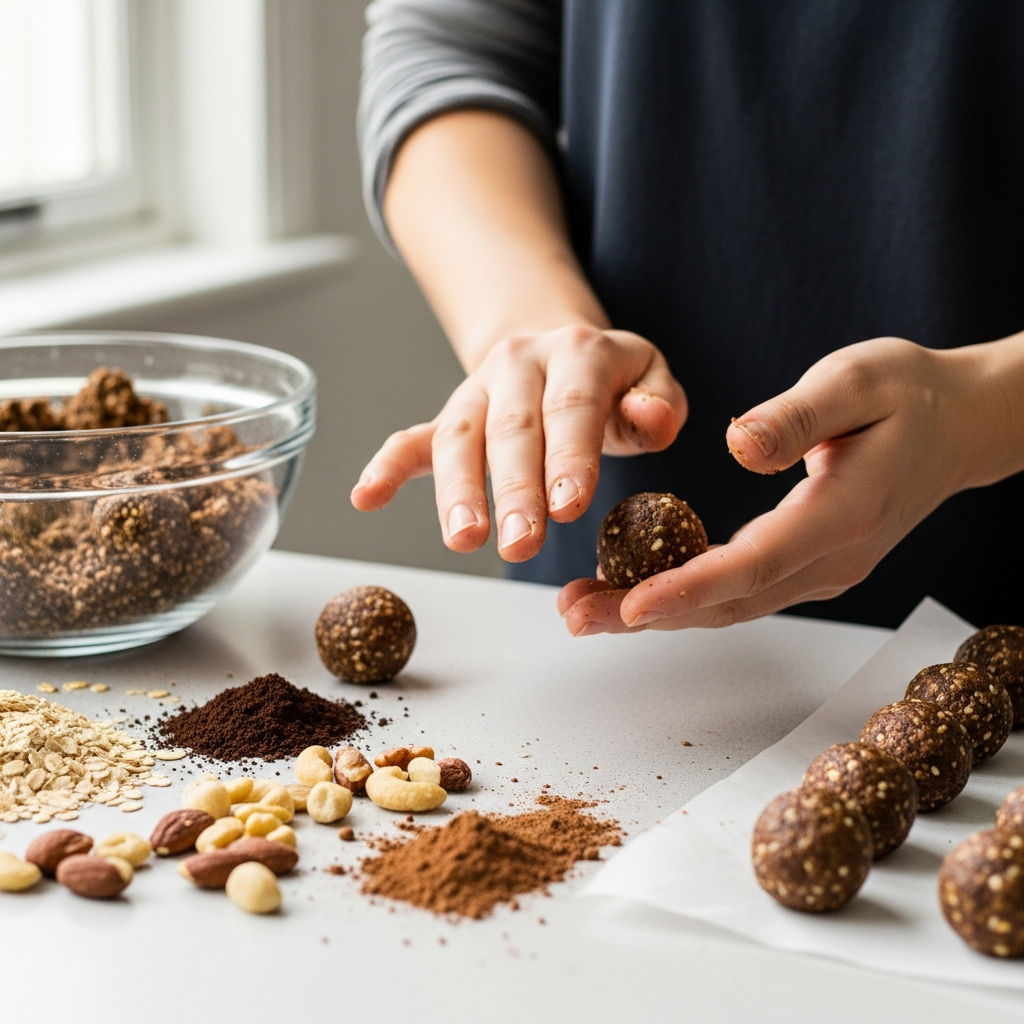
So I spent six weeks developing eight distinct flavors, all built on the same no-bake base. Every variation uses oats, nut butter, honey, and espresso powder as the foundation, then branches off in a different direction. I’ve included full macros for each flavor, a complete meal prep guide, and the specific techniques that make the difference between energy balls that hold together and ones that crumble in your bag.
The Base Recipe: Master This First
Every flavor variation below starts with this base. Once you’ve made it once, you can riff on it endlessly.
Base Ingredients:
- 1 1/2 cups old-fashioned rolled oats (not quick oats — they get mushy)
- 1/2 cup natural nut butter (almond, peanut, or cashew — all work)
- 1/3 cup honey or maple syrup
- 2 tablespoons espresso powder
- 1 scoop protein powder (about 30g — vanilla or chocolate depending on flavor)
- Pinch of sea salt
Base Method:
- Combine all base ingredients in a large bowl. Stir with a sturdy spatula or wooden spoon until evenly mixed. The mixture should be sticky enough to hold when pressed together, but not wet.
- If too dry: add honey, one teaspoon at a time. If too wet: add oats, one tablespoon at a time.
- Add your flavor-specific mix-ins (detailed below for each variation).
- Refrigerate the mixture for 15-20 minutes. This firms up the nut butter and makes rolling much easier.
- Roll into balls using about 1.5 tablespoons of mixture each. Press firmly — the tighter you pack them, the better they hold. You should get 16-18 balls per batch.
Texture troubleshooting: The single biggest variable is your nut butter. Natural nut butters (the kind you stir) produce a stickier, more pliable dough. Commercial nut butters with added oils (like Jif or Skippy) are drier and may need an extra tablespoon of honey. I prefer natural almond butter for the best texture.
Flavor 1: Classic Mocha
This is where most people should start — it’s the most universally loved flavor and the easiest to nail on your first try.
Add to base:
- 2 tablespoons unsweetened cocoa powder
- 2 tablespoons mini chocolate chips
- Use chocolate protein powder for the base
The combination of espresso powder and cocoa creates a flavor that’s unmistakably mocha without being overwhelmingly chocolate or coffee. The mini chocolate chips add pockets of melted chocolate when the balls come to room temperature — full-size chips work but tend to make rolling harder.
Nutrition per ball (makes 16): 125 calories | 5g protein | 15g carbs | 6g fat | 3g fiber
Flavor 2: Vanilla Latte
For people who prefer their coffee drinks sweet and creamy, this is the energy ball equivalent of a vanilla latte.
Add to base:
- 1 scoop vanilla protein powder (use this as your base protein)
- 1 teaspoon vanilla extract
- 2 tablespoons white chocolate chips
- Increase espresso powder to 3 tablespoons for a bolder coffee hit
The vanilla protein and vanilla extract double up on that latte sweetness, while the extra espresso powder keeps it from being one-dimensional. The white chocolate chips are optional but worth it — they add richness that ties the vanilla and coffee together.
Nutrition per ball (makes 16): 118 calories | 6g protein | 14g carbs | 5g fat | 2g fiber
Flavor 3: Peanut Butter Cup
If Reese’s made a coffee version, this is what it would taste like. Rich peanut butter, chocolate, and a background hum of espresso.
Add to base:
- Use peanut butter as your base nut butter
- 2 tablespoons cocoa powder
- 2 tablespoons peanut butter chips
- Use chocolate protein powder
The trick here is using chunky peanut butter if you want texture, or creamy for a smoother ball. I go creamy for the base and then add the peanut butter chips for crunch — gives you the best of both worlds. These are consistently the first to disappear when I bring a mixed batch to the office.
Nutrition per ball (makes 16): 135 calories | 6g protein | 14g carbs | 7g fat | 2g fiber
Flavor 4: Coconut Cream
A tropical twist that works surprisingly well with espresso. Think of it as a Mounds bar meets your morning coffee.
Add to base:
- 1/3 cup unsweetened shredded coconut
- 2 tablespoons white chocolate chips
- Use vanilla protein powder
- Replace nut butter with coconut butter (or use cashew butter for a milder flavor)
Roll the finished balls in extra shredded coconut for a coating that prevents sticking and looks great. The coconut also adds a pleasant chewiness to the outside while the inside stays soft. These have the most distinct flavor profile of all eight — people either love them or think the coconut is too much. I’m firmly in the love camp.
Nutrition per ball (makes 16): 130 calories | 4g protein | 14g carbs | 7g fat | 3g fiber
Flavor 5: Matcha-Espresso Double Hit
This one is for the caffeine enthusiasts. Matcha plus espresso creates a complex, slightly earthy, deeply caffeinated energy ball.
Add to base:
- 1 tablespoon culinary-grade matcha powder
- Keep the full 2 tablespoons espresso powder
- 2 tablespoons white chocolate chips
- Use vanilla protein powder
Don’t use ceremonial-grade matcha here — it’s wasted in a recipe with this many competing flavors. Culinary grade is designed for cooking and baking and costs a fraction of the price. The green color fades once mixed with the oats and espresso powder, but you get these beautiful green-brown speckled balls. The caffeine content per ball is notably higher than the other varieties — about 40-50mg each — so keep that in mind before eating three as a snack.
Nutrition per ball (makes 16): 120 calories | 5g protein | 14g carbs | 5g fat | 2g fiber
Flavor 6: Cinnamon Roll
All the warm, comforting flavor of a cinnamon roll in a no-bake energy ball. The cream cheese drizzle on top is optional but transformative.
Add to base:
- 1 1/2 teaspoons ground cinnamon
- 1/4 teaspoon ground nutmeg
- 2 tablespoons brown sugar (in addition to the honey)
- Use vanilla protein powder
Cream cheese drizzle (optional):
- 2 oz cream cheese, softened
- 2 tablespoons powdered sugar
- 1 tablespoon milk
Whisk the cream cheese, powdered sugar, and milk until smooth and drizzleable. After rolling the balls, drizzle over the top in thin lines. The drizzle sets in the fridge and creates a sweet, tangy contrast to the warm spices. These are my personal favorite for fall mornings — the cinnamon-espresso combination tastes like a coffeehouse seasonal special.
Nutrition per ball without drizzle (makes 16): 122 calories | 5g protein | 16g carbs | 5g fat | 2g fiber
With drizzle: Add approximately 15 calories per ball
Flavor 7: Trail Mix
The most substantial option — loaded with nuts, dried fruit, and espresso. These are genuine meal replacements when you need something portable and filling.
Add to base:
- 1/4 cup mixed nuts (almonds, cashews, walnuts), roughly chopped
- 2 tablespoons dried cranberries, chopped
- 2 tablespoons dark chocolate chips
- 1 tablespoon sunflower seeds
- Use vanilla or unflavored protein powder
Chop everything to roughly the same size — pea-sized or smaller. Larger pieces make rolling difficult and the balls will crack. These have the highest calorie count of the eight flavors, but they also have the most staying power. Two of these plus a cup of coffee is a legitimate breakfast when I’m running out the door. They go perfectly alongside any traditional coffee snack pairing.
Nutrition per ball (makes 16): 148 calories | 5g protein | 16g carbs | 8g fat | 3g fiber
Flavor 8: Brownie Batter
The most indulgent option. These taste like raw brownie batter — fudgy, intensely chocolatey, with espresso amplifying everything.
Add to base:
- 3 tablespoons cocoa powder (extra cocoa is the key to brownie flavor)
- 2 tablespoons chocolate chips
- 1 tablespoon coconut oil, melted
- Use chocolate protein powder
- Reduce oats to 1 1/4 cups for a fudgier, denser texture
The coconut oil is the secret weapon — it keeps these soft and fudgy at fridge temperature rather than firm and dry. The extra cocoa powder (3 tablespoons instead of the usual 2) creates that deep brownie darkness. Roll these smaller than the others — about 1 tablespoon each — because they’re rich enough that a smaller portion satisfies.
Nutrition per ball (makes 20 smaller balls): 105 calories | 4g protein | 12g carbs | 5g fat | 2g fiber
Complete Meal Prep Guide
I meal prep energy balls every Sunday, and after months of experimentation, here’s the system that works best:
Batch Making Strategy
Make two flavors per week — one sweeter (Mocha, Brownie Batter, Peanut Butter Cup) and one lighter (Vanilla Latte, Trail Mix, Matcha-Espresso). Variety prevents flavor fatigue. A double batch of each gives you about 32-36 balls, which lasts one person an entire week at 4-5 balls per day.
Storage: Fridge vs. Freezer
Refrigerator: All eight flavors keep well for 7 days in an airtight container. Separate layers with parchment paper to prevent sticking. Pull them out of the fridge 5 minutes before eating for the best texture — straight from the fridge they can be a bit firm.
Freezer: All flavors freeze well for up to 3 months. Flash freeze first — spread balls on a parchment-lined baking sheet, freeze for 2 hours until solid, then transfer to a freezer bag. This prevents them from clumping into one frozen mass. Thaw in the fridge overnight or at room temperature for 15-20 minutes.
Flavor Stability Over Time
Most flavors are best on days 1-5. By day 6-7, the oats soften further and the texture gets a bit mushy. The Trail Mix variation holds up the longest thanks to the nuts adding structural integrity. The Brownie Batter variation degrades the fastest because of the coconut oil — eat those within 4-5 days for the best texture.
Equipment You Actually Need
Here’s the complete list of equipment for making energy balls. You probably already have everything:
- Large mixing bowl — Wide enough to stir comfortably
- Sturdy spatula or wooden spoon — The dough is thick; a flimsy spatula will bend
- Measuring cups and spoons — Precision matters for consistency
- Small cookie scoop (1.5 tablespoon size) — Optional but makes uniform balls and saves time. A tablespoon works fine.
- Parchment paper and baking sheet — For the initial chill before storing
- Airtight containers — Glass containers with snap lids are best; they don’t absorb odors
Frequently Asked Questions
Can I use instant coffee instead of espresso powder?
Yes, but use about 50% more. Instant coffee is less concentrated than espresso powder. Crush any large granules first — you don’t want gritty bits in your balls. Medaglia d’Oro instant espresso is my go-to and works perfectly.
What if my energy balls won’t stick together?
The nut butter is the binder, so this usually means your nut butter was too dry. Add honey one teaspoon at a time until the mixture holds when squeezed. You can also try adding a tablespoon of melted coconut oil — it acts as a secondary binder and solidifies in the fridge.
Can I make these nut-free?
Absolutely. Replace nut butter with sunflower seed butter (SunButter is a good brand) or tahini. Sunflower seed butter is the closest in texture and binding properties to peanut butter. Note: sunflower seed butter can turn green when combined with baking soda or certain protein powders — it’s a harmless chlorophyll reaction but can look odd. Stick to chocolate-coated variations to mask it.
How much caffeine is in each ball?
With 2 tablespoons of espresso powder divided across 16 balls, each ball contains roughly 15-20mg of caffeine. That’s about one-fifth of a regular cup of coffee. The Matcha-Espresso variation is higher at roughly 40-50mg per ball due to the double caffeine source. For context, a cup of brewed coffee has about 95mg.
Do I need protein powder?
No. The protein powder adds structure and nutrition, but you can omit it. If you do, add 1/4 cup more oats to compensate for the lost dry volume. The balls will have a softer, more oat-forward texture and lower protein content (about 2-3g per ball instead of 4-6g).
If you’re looking for more coffee snack ideas beyond energy balls, I’ve put together a roundup of snacks that go perfectly with coffee — everything from store-bought to homemade, savory to sweet. And if you prefer your coffee in drinkable form, our coffee smoothie recipe (no banana needed) uses some of the same base ingredients as these energy balls in liquid form.