
This coffee rub for steak is the best dry rub I’ve ever put on beef. Finely ground coffee, brown sugar, smoked paprika, and a kick of cayenne create a bark that looks like it came off a competition smoker — except you made it in a cast iron skillet in under 10 minutes. I tested this rub on three different cuts to find the absolute best pairing, and the results surprised me.
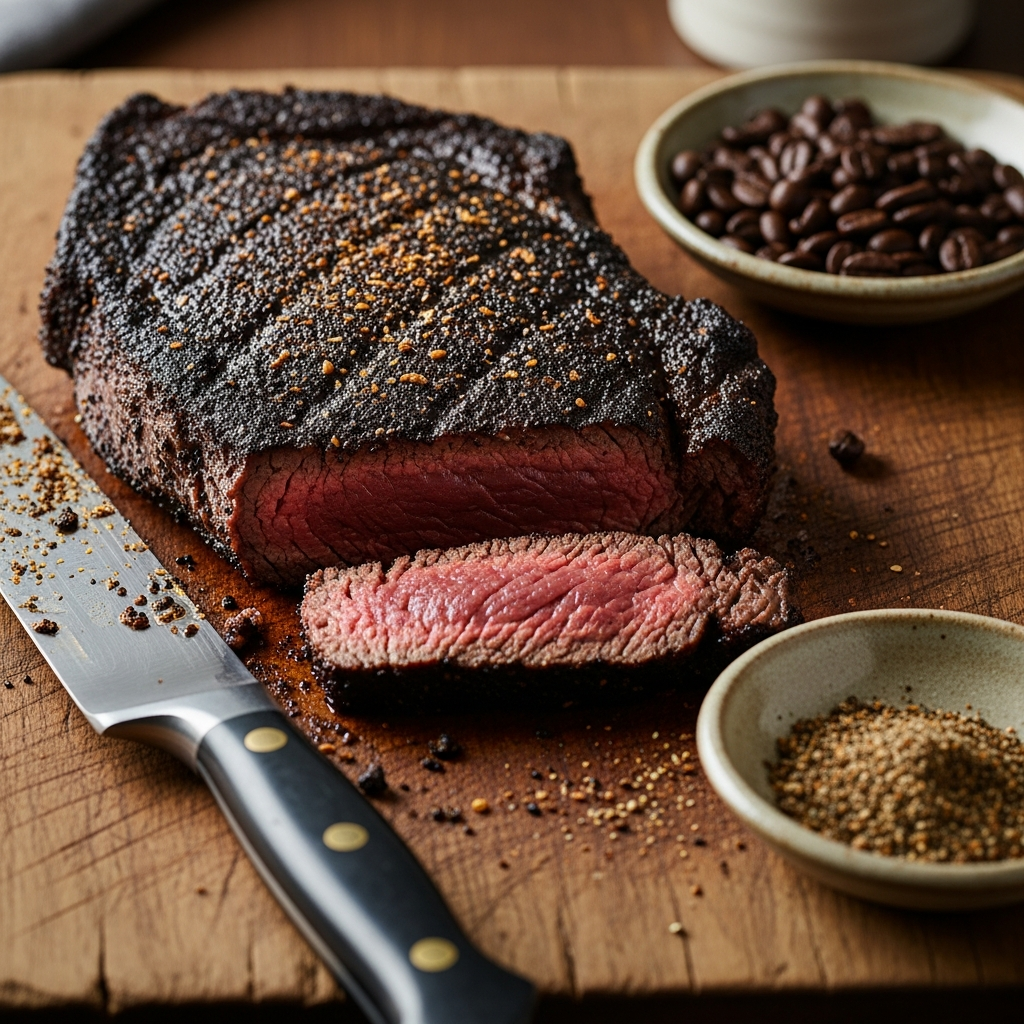
Skip the steak house. This one’s better.
The Coffee Rub Recipe
This makes enough rub for 2 large steaks or 3 smaller ones. Double it if you’re feeding a crowd — it stores beautifully in a sealed jar for up to 3 months.
- 2 tablespoons medium-ground coffee (not fine, not coarse — more on that below)
- 1 tablespoon dark brown sugar, packed
- 1 tablespoon smoked paprika
- 1 teaspoon garlic powder
- 1 teaspoon freshly ground black pepper
- 1 teaspoon kosher salt
- ¼ teaspoon cayenne pepper (bump to ½ if you like heat)
Mix everything in a bowl. That’s it. The brown sugar is doing heavy lifting here — it caramelizes during the sear and bonds with the coffee to create that thick, dark, crackling bark you see on the best briskets. The smoked paprika rounds out the flavor so the coffee doesn’t dominate.
What You’ll Need:
- Cast iron skillet (12-inch is ideal)
- Instant-read meat thermometer
- Tongs (not a fork — you don’t want to puncture the bark)
- High smoke-point oil (avocado oil is my go-to)
- Paper towels for patting steaks dry
How Grind Size Changes Everything
I tested three grind sizes and the difference was dramatic.
Fine grind (espresso grind): Burns. Every time. The tiny particles scorch in the cast iron before the steak gets a proper sear. You end up with a bitter, acrid coating instead of a bark. I tried lowering the heat to compensate, but then the steak didn’t sear properly. Fine grind is a lose-lose.
Coarse grind (French press grind): Doesn’t adhere to the meat. The big chunks fall off in the pan and burn on the skillet surface. You get uneven coverage — some bites have coffee flavor, others don’t. It looks messy on the plate too.
Medium grind (drip coffee grind): The sweet spot. It sticks to the meat, caramelizes evenly with the brown sugar, and creates a uniform bark. The particles are small enough to coat but large enough to avoid burning in the 3 minutes per side you need for a proper sear.
My recommendation: if you grind your own beans, aim for a standard drip setting. If you’re buying pre-ground, regular ground coffee from the grocery store works perfectly. Stay away from anything labeled “espresso grind” or “Turkish grind.” If you’re curious about how different brewing methods affect grind requirements, check out our Nespresso Vertuo recipes guide for more grind insights.
Ribeye Results
I started with a 1.25-inch thick bone-in ribeye, about 16 ounces. Patted it dry with paper towels, applied the rub generously on both sides, and let it sit at room temperature for 45 minutes.
The sear: 3 minutes per side in a screaming-hot cast iron with avocado oil at 450°F. Then 2 minutes on each edge to render the fat cap.
What happened: The fat in the ribeye created an incredible reaction with the rub. As the intramuscular fat rendered, it essentially fried the coffee-sugar mixture into a thick, crackling crust. The bark was the thickest of all three cuts — almost like a candy shell, but savory.
Flavor notes: Rich, smoky, slightly sweet. The coffee flavor completely disappears into something that tastes more like a high-end steakhouse seasoning blend. The fat carries the rub flavors deep into each bite. If someone served this to you blind, you’d never guess coffee was involved.
Downside: Some of the rub pooled in the fat pockets and created tiny bitter spots. Minor issue, but noticeable if you’re paying attention.
NY Strip Results
Next up: a 1.5-inch thick NY strip, about 14 ounces. Same prep — dry, rub, 40 minutes at room temp.
The sear: 3 minutes per side, same 450°F cast iron. Finished with a quick butter baste (I added a tablespoon of butter, fresh thyme, and a crushed garlic clove in the last 30 seconds).
What happened: The leaner surface of the strip gave the rub a more consistent platform. Without the irregular fat pockets of the ribeye, the bark formed in an even, uniform layer across the entire surface. It was gorgeous — deep mahogany, perfectly smooth.
Flavor notes: Cleaner than the ribeye. You taste more of the smoked paprika and pepper because the fat isn’t competing for attention. The coffee adds this background depth that makes the steak taste more expensive than it is. The butter baste at the end was a game-changer — it softened the bark slightly and added richness.
Downside: The bark was thinner than the ribeye’s because there’s less fat to help it set. Still excellent, just not as dramatic.
Skirt Steak Results
Finally, a 1-pound skirt steak, butterflied and pounded to about ½ inch thick. Room temp rest with the rub: 30 minutes (thinner cut needs less time).
The sear: 2 minutes per side — skirt steak is thin and cooks fast. Same 450°F cast iron.
What happened: The high surface-area-to-mass ratio of skirt steak means every single bite has bark on it. This was the most intensely flavored of the three cuts. The rub caramelized beautifully across the entire surface in just 2 minutes — the thinness actually worked in its favor here.
Flavor notes: Punchy. Bold. Every bite delivers the full coffee-sugar-paprika experience because there’s no thick center of plain meat diluting it. Sliced against the grain into thin strips, this was absolutely incredible in tacos with a quick pickled onion and cilantro.
Downside: Easy to overcook. At 2.5 minutes per side, it went from medium-rare to medium-well. You need to watch it like a hawk. Also, the rub can taste slightly more bitter on skirt steak because there’s less fat to mellow it out.
The Winner (and Why)
Ribeye wins.
The fat content is the deciding factor. That intramuscular marbling does three things that the other cuts can’t match:
- It creates the thickest bark because the rendering fat fries the rub in place
- It mellows any potential bitterness from the coffee
- It carries the rub flavors into the interior of the steak, not just on the surface
That said, if you’re making tacos or fajitas, skirt steak with this rub is unbeatable. And if you want the prettiest presentation for a dinner party, the NY strip’s even bark is stunning on a plate.
My ranking: Ribeye for flavor. Skirt steak for tacos. NY strip for looks.
If you love experimenting with coffee in unexpected ways, you should try our coffee smoothie recipe — it’s another great example of coffee working outside the mug. And for a sweet coffee snack to pair with your steak dinner, our chocolate coffee protein balls make an incredible dessert bite.
Tips for the Perfect Coffee-Rubbed Steak
Pat the steak bone-dry. Moisture is the enemy of bark. Use paper towels and press firmly. If the surface is wet, the rub turns into a paste instead of a crust.
Let the rub sit for at least 30 minutes. The salt in the rub draws out moisture initially, then the meat reabsorbs it along with all those flavors. I tested 10 minutes vs 30 minutes vs 2 hours. The 30-minute mark was where the biggest flavor jump happened. Beyond 2 hours, the salt starts curing the surface too much.
Get the skillet screaming hot. Put your cast iron on the burner at medium-high for a full 5 minutes before adding oil. When the oil shimmers and just barely starts to smoke, you’re ready. If the steak doesn’t sizzle aggressively the moment it hits the pan, your skillet isn’t hot enough.
Don’t move the steak. Set it down and leave it alone for 3 minutes. Every time you move it, you’re breaking the bark formation. Flip once. That’s it.
Rest for 5 minutes after cooking. The juices need to redistribute. If you cut into it immediately, those juices run out onto the cutting board instead of staying in the meat. Tent loosely with foil — don’t wrap it tight or you’ll steam the bark.
Use freshly ground coffee if possible. Pre-ground is fine, but freshly ground has more volatile oils that contribute to aroma and flavor. If you’ve got a burr grinder, use it. Set it to drip/medium.
For another way to enjoy coffee’s savory side, try our carajillo recipe — it’s an espresso cocktail that pairs beautifully as an after-dinner drink alongside coffee-rubbed steak.
FAQ
Does coffee rub make steak taste like coffee?
No. This is the number one question I get, and the answer is always the same: once the coffee hits the hot skillet and caramelizes with the brown sugar and spices, it transforms into something smoky, complex, and deeply savory. Nobody has ever tasted my coffee-rubbed steak and identified coffee as an ingredient without being told. It reads as “incredible seasoning,” not “coffee.”
Can I use decaf coffee for this rub?
Absolutely. The flavor comes from the roasted coffee compounds, not the caffeine. Decaf works identically. I’ve tested both side by side and couldn’t tell the difference in the finished steak. Use whatever you have on hand.
What’s the best type of coffee roast for a steak rub?
Dark roast, every time. The bolder, smokier character of a dark roast complements the other savory ingredients. Light roast has fruity, acidic notes that clash with the smoked paprika and garlic. Medium roast works in a pinch, but dark roast gives you the richest bark color and deepest flavor. If you enjoy making coffee drinks with bold roasts, our Keurig caramel iced coffee guide has great dark roast recommendations.
Can I use this rub on chicken or pork?
Yes, but reduce the coffee by about a third. Chicken and pork are milder than beef, so the coffee can overpower them if you use the full amount. I’ve had great results on thick-cut pork chops (bone-in, 1.5 inches) and skin-on chicken thighs. For chicken, sear skin-side down first to render the fat, then flip.
How do I store leftover coffee rub?
Keep it in an airtight jar or container at room temperature, away from light. It stays fresh for up to 3 months. The brown sugar might clump over time — just break it apart with a fork before using. Don’t refrigerate it; the moisture in the fridge will cause the sugar to dissolve and the spices to cake together.