
I’ve been making cold brew at home for over three years, and for most of that time, I was guessing on the ratio. A handful of coffee here, some water there, hope for the best. Sometimes it came out perfect. Sometimes it tasted like I was drinking motor oil. Sometimes it was basically brown water.
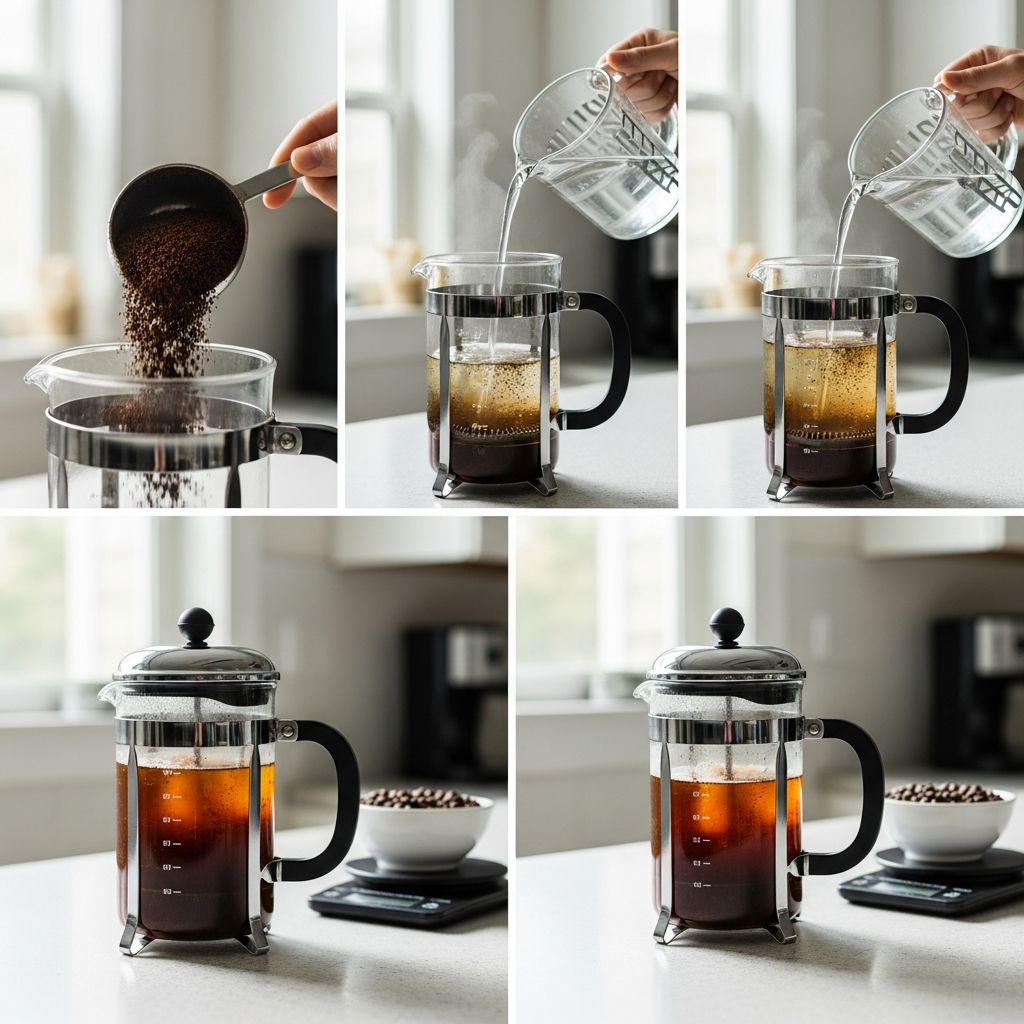
So I decided to end the guessing. I bought a bag of the same beans — a medium roast Ethiopian from my local roaster — and brewed five separate batches at five different coffee-to-water ratios, side by side. For each ratio, I also tested two different steep times (12 hours and 18 hours) to see how time affects the result. That’s 10 total test batches.
What I found is that there’s no single “best” ratio — but there IS a best ratio for how you plan to drink it. Below, I’ll walk you through all five ratios, what each one tastes like, and exactly when to use each. If you’re into cold coffee in general, my Nespresso iced coffee recipes are also worth checking out for a quicker (but different) approach.
What You Need (For All Ratios)
Equipment
- A large jar or pitcher (I use a 1-liter mason jar for single batches, or a 2-liter pitcher for larger ones)
- Coffee grinder (burr grinder preferred for consistent coarse grind)
- Fine mesh strainer or cheesecloth (or both — double-filtering gives the cleanest result)
- Kitchen scale (measuring by weight is far more accurate than volumetric scoops)
The Beans
For all five tests, I used the same medium roast Ethiopian single-origin. Medium roasts are ideal for cold brew because they balance sweetness, acidity, and body. Dark roasts can turn bitter and one-dimensional in cold extraction. Light roasts often taste sour because cold water doesn’t extract enough sweetness to balance their natural acidity.
Best origins for cold brew: Ethiopian (fruity, floral notes that cold extraction brings out beautifully), Colombian (chocolatey, nutty, a safe crowd-pleaser), and Brazilian (low acidity, smooth, heavy body). Avoid Kenyan or other high-acid origins unless you enjoy a tangy cold brew — most people don’t.
The Grind
Coarse grind. Always. Think sea salt or raw sugar — visibly chunky particles, not powder. I tested each ratio with both a coarse and medium grind, and the medium grind consistently produced bitter, muddy results regardless of ratio. Coarse grind is non-negotiable for clean-tasting cold brew.
If you’re buying pre-ground coffee, look for bags labeled “French press grind” or “coarse grind.” The standard drip-coffee grind sold in most stores is too fine for cold brew.
The 5 Ratios Tested
All ratios are expressed as coffee-to-water by weight. I brewed each one in a 1-liter mason jar at room temperature (about 20°C/68°F), testing both a 12-hour and 18-hour steep for each ratio.
Ratio 1: 1:4 (Extra Strong Concentrate)
Recipe: 200g coffee : 800ml water
This is as strong as cold brew gets before it becomes undrinkable straight. At 1:4, the coffee is extremely concentrated — dark, viscous, and intensely bitter if you try to drink it as-is. This is NOT meant to be consumed undiluted.
12-Hour Steep Results
Surprisingly good even at just 12 hours. The high coffee-to-water ratio compensates for the shorter steep time. The result was a thick, dark concentrate with strong chocolate and nut notes and moderate bitterness. Slightly under-extracted compared to the 18-hour version — some subtle fruity notes were missing — but perfectly usable.
18-Hour Steep Results
Fuller extraction. The fruity notes from the Ethiopian beans came through, and the body was heavier. However, there was a slight over-extracted bitterness at the back of the palate that wasn’t present at 12 hours. For this ratio specifically, 12-14 hours is the sweet spot.
Best use case: Diluting with equal parts water or milk for a standard cup. Making cold brew cocktails where you need coffee flavor to stand up against spirits. Storing in the fridge for quick cups throughout the week (it lasts up to 2 weeks refrigerated because the concentration is so high).
Dilution guide: Mix 1 part concentrate with 1 part water for a strong cup. Mix 1 part concentrate with 2 parts water for a standard-strength cup. Mix 1 part concentrate with 1 part milk for a cold brew latte.
Ratio 2: 1:5 (Standard Concentrate)
Recipe: 160g coffee : 800ml water
This is the ratio I recommend for most people making cold brew concentrate at home. It’s strong enough to dilute but not so concentrated that it’s harsh. If you only remember one ratio from this article, make it this one.
12-Hour Steep Results
Slightly under-extracted. The coffee was pleasant but lacked the full body and sweetness that longer steeping provides. If you’re in a hurry, 12 hours at 1:5 is acceptable but not ideal — you’ll get a lighter, more tea-like cold brew.
18-Hour Steep Results
The winner of this ratio. At 18 hours, the 1:5 concentrate was smooth, full-bodied, and sweet with chocolate and berry notes. No bitterness, no sourness — just a clean, well-rounded concentrate that diluted beautifully with water or milk. This is the combination I use for my weekly batch.
Best use case: The all-purpose ratio. Dilute with water for black cold brew, add milk for lattes, or use it as the coffee base in smoothies and protein shakes. This is also the ratio I use when making iced caramel coffee — the concentrate stands up well to caramel syrup without getting washed out.
Dilution guide: Mix 1 part concentrate with 1 part water for a standard cup. Add less water (3:2 ratio) for a stronger cup, or more water (1:2 ratio) for a lighter cup.
Ratio 3: 1:6 (Ready-to-Drink Strong)
Recipe: 130g coffee : 800ml water
This is the transition point between concentrate and ready-to-drink. At 1:6, you CAN drink it straight (over ice) if you like strong coffee. You can also dilute it lightly for a standard strength cup. It’s the most versatile ratio — it works both ways.
12-Hour Steep Results
Drinkable but thin. The flavor was there but the body wasn’t. It tasted like watered-down coffee rather than intentional cold brew. Not recommended at this ratio.
18-Hour Steep Results
Much better. The extra 6 hours made a significant difference — the body filled out, the sweetness developed, and the result was a strong but smooth cold brew that I was happy to drink over ice with nothing added. If you drink your cold brew black and like it strong, this is your ratio at 18 hours.
Best use case: Drinking straight over ice if you like strong coffee. Adding a splash of milk or cream for a lightly softened cup. This ratio doesn’t work well as a concentrate base for cocktails — it’s not punchy enough to stand up to spirits.
Dilution guide: Drink as-is for strong coffee, or add a splash (30-60ml) of water or milk to soften.
Ratio 4: 1:8 (Ready-to-Drink Medium)
Recipe: 100g coffee : 800ml water
This is what most coffee shops serve as “cold brew.” It’s ready to drink straight — no dilution needed. If you’re used to buying cold brew from Starbucks or your local cafe, this ratio will taste the most familiar.
12-Hour Steep Results
Under-extracted. At 1:8, there isn’t enough coffee to extract fully in just 12 hours. The result was thin, slightly sour, and missing the sweetness that makes cold brew appealing. Do not bother with 12 hours at this ratio.
18-Hour Steep Results
Solid. This produced a smooth, easy-drinking cold brew with medium body, gentle sweetness, and subtle fruit notes. It’s not as intense as the stronger ratios, but it’s extremely approachable — the kind of cold brew you could serve to someone who says they don’t like strong coffee.
Best use case: Drinking straight over ice, all day long. This is the ratio for casual drinking, not for mixing or diluting. It’s also great for people transitioning from iced coffee to cold brew — it’s gentler and less intimidating than concentrate ratios.
Dilution guide: Drink as-is. If you dilute this, it’ll taste watery.
Ratio 5: 1:10 (Light and Refreshing)
Recipe: 80g coffee : 800ml water
The lightest ratio I tested. At 1:10, you’re making cold brew that’s more about refreshment than caffeine intensity. Think of it as iced tea’s coffee cousin.
12-Hour Steep Results
Too weak. At 1:10 with only 12 hours, the result was essentially lightly coffee-flavored water. Not worth your time or your beans.
18-Hour Steep Results
Acceptable but very light. The flavor was there — clean, slightly sweet, with a delicate body — but it’s definitely the least “coffee-forward” of all the ratios. You have to be in the right mood for this. On a hot summer afternoon when you want something cold with a hint of coffee, this works. If you want actual coffee flavor, go stronger.
Best use case: Hot summer days when you want refreshment, not intensity. Mixing into sparkling water for a coffee soda (this is excellent — add a squeeze of lemon). People who are sensitive to caffeine but want a cold brew experience.
Dilution guide: Do not dilute. This is already at the light end.
My Recommendation: Start With 1:5, Steep for 18 Hours
If you’re making cold brew concentrate for the first time, the 1:5 ratio steeped for 18 hours is the most forgiving and versatile starting point. It’s concentrated enough to dilute however you like, it’s smooth enough that you can’t really mess it up, and it stores in the fridge for 10-14 days without losing quality.
Once you’ve made it a few times at 1:5, adjust to taste. If it’s too strong, try 1:6. If you want even more punch for cocktails or lattes, try 1:4. The important thing is to pick a ratio and be consistent — use a kitchen scale every time, use the same grind size, and steep for the same duration. Consistency is what separates people who “sometimes make good cold brew” from people who make great cold brew every single time.
Step-by-Step Instructions (Any Ratio)
These instructions work for all five ratios. Just change the coffee amount based on which ratio you’re brewing.
- Weigh your coffee. Use a kitchen scale. Volume measurements (cups, scoops) are wildly inconsistent because grind sizes vary — a “cup” of coarsely ground coffee weighs much less than a “cup” of finely ground coffee.
- Grind coarse. If you’re grinding at home, set your grinder to the coarsest setting. The particles should be visibly chunky, like rough sea salt. If you can’t feel individual particles between your fingers, it’s too fine.
- Combine coffee and room-temperature water in your jar or pitcher. Do NOT use hot water. The entire point of cold brew is slow, cold extraction. Hot water extracts bitter compounds quickly — cold water extracts sweet and smooth compounds slowly. Pour the water over the grounds and stir gently to make sure all the grounds are wet.
- Cover and steep at room temperature for your chosen time. I steep at room temperature (not in the fridge) for the most efficient extraction. Room temperature water extracts faster than refrigerator-temperature water. After steeping, you’ll strain and then refrigerate.
- Strain through a fine mesh strainer. Pour the cold brew through a fine mesh strainer into a clean jar or pitcher. For the clearest result, strain a second time through a cheesecloth or paper coffee filter. The double-filter method takes 10 extra minutes but produces a noticeably cleaner cup.
- Refrigerate and enjoy. Transfer to the fridge. Concentrate (1:4 and 1:5) lasts up to 2 weeks. Ready-to-drink ratios (1:6 through 1:10) last about 7-10 days. The flavor is best in the first week.
Common Mistakes (And How to Avoid Them)
Mistake 1: Grinding Too Fine
This is the number one cold brew mistake I see. Fine or medium grinds over-extract during a long steep, producing bitter, harsh, and sometimes muddy cold brew. They also make straining a nightmare — fine grounds clog mesh strainers and pass through cheesecloth. Always use a coarse grind. If your cold brew tastes bitter, the grind is almost certainly the problem.
Mistake 2: Not Steeping Long Enough
Under-steeped cold brew tastes sour, thin, and unsatisfying. At room temperature, you need a minimum of 12 hours for the stronger ratios (1:4, 1:5) and a minimum of 16-18 hours for the weaker ratios (1:6 through 1:10). If you’re steeping in the fridge (which some people prefer), add 4-6 hours to those times because extraction happens slower at lower temperatures.
Mistake 3: Using Hot Water
I’ve seen recipes that suggest starting with warm water to “jumpstart” extraction. Don’t do this. Hot water extracts bitter and acidic compounds rapidly. The whole reason cold brew tastes smooth is that cold water selectively extracts the sweet, chocolatey, and smooth compounds while leaving most of the bitter ones behind. Starting with hot water defeats the purpose.
Mistake 4: Using Stale Beans
Cold brew is very forgiving, but it can’t save stale coffee. If your beans have been sitting open in your pantry for 3 months, no ratio or steep time will make good cold brew. Use beans roasted within the last 4-6 weeks. The freshness matters less for cold brew than for hot pour-over, but it still matters.
Mistake 5: Over-Steeping
Going beyond 24 hours (at room temperature) starts to extract woody, astringent compounds that make the cold brew taste harsh. For most ratios, 16-20 hours at room temperature is the sweet spot. Setting a timer or steeping overnight (about 18 hours if you start at 8 PM and strain at 2 PM) works perfectly.
Best Beans for Cold Brew
After years of testing different beans in cold brew, here’s what I’ve learned about what works best:
- Roast level: Medium roast is the sweet spot. It has enough development for the sweet, chocolatey notes that cold extraction brings out, but not so much that it turns bitter like a dark roast can. Light roasts CAN work but tend to taste sour in cold brew.
- Origin: Ethiopian and Colombian are my top two. Ethiopian beans produce cold brew with fruity, floral complexity. Colombian beans produce a classic chocolate-and-nut profile that’s universally likable. Brazilian beans make smooth, low-acid cold brew that’s great for concentrate.
- Single-origin vs. blends: Single-origin beans let you taste the specific characteristics of that bean. Blends tend to produce a more generic (but still good) cold brew. For your first batches, a Colombian or Ethiopian single-origin is the best way to taste the difference.
- Pre-ground vs. whole bean: Whole bean, ground fresh right before brewing, is always better. But if you buy pre-ground, look for “coarse grind” or “French press grind.” Standard drip-grind coffee is too fine for cold brew.
Frequently Asked Questions
Is cold brew stronger than regular coffee?
It depends on the ratio. A cold brew concentrate (1:4 or 1:5) has significantly more caffeine per ounce than regular drip coffee — but you’re supposed to dilute it. A ready-to-drink cold brew (1:8 or 1:10) has roughly the same caffeine as drip coffee, ounce for ounce. The “cold brew has more caffeine” myth comes from people drinking concentrate without diluting it.
Can I make cold brew in the fridge instead of at room temperature?
Yes. Fridge steeping produces a slightly cleaner, brighter cold brew because the cold temperature slows extraction even further. The trade-off is time: add 4-6 hours to whatever steep time you’d use at room temperature. An 18-hour room temperature steep becomes a 22-24 hour fridge steep.
How long does cold brew last in the fridge?
Concentrate (1:4 and 1:5 ratios) lasts 10-14 days. Ready-to-drink ratios (1:6 through 1:10) last 7-10 days. After that, the flavor starts to degrade — it won’t make you sick, but it’ll taste flat and stale. I always label my jars with the brew date so I know when to make a fresh batch.
Can I heat up cold brew?
Absolutely. Cold brew heated up in the microwave or on the stove makes excellent hot coffee. It retains its smooth, low-acid character even when heated. This is actually my preferred method for hot coffee on days when I don’t feel like brewing — I just dilute some cold brew concentrate with hot water.
What’s the difference between cold brew and iced coffee?
Iced coffee is regular hot-brewed coffee poured over ice. Cold brew is coffee extracted with cold water over 12-24 hours. The result is chemically different: cold brew is about 67% less acidic than hot-brewed coffee, smoother, naturally sweeter, and has a different flavor profile. They’re not the same thing — and if you’ve been making iced coffee and calling it cold brew, you’re missing out.
Final Thoughts
The ratio debate is one of those things coffee people overthink. The reality is simpler than the internet makes it: use 1:5 for concentrate, use 1:8 for ready-to-drink, grind coarse, steep for 18 hours, and strain well. That’s it. That will produce cold brew that’s better than 90% of what you can buy in stores.
Once you have a batch of concentrate in your fridge, the possibilities open up. You can make a carajillo with it, use it as the base for protein shakes, dilute it with sparkling water for a coffee soda, or just pour it over ice and drink it straight. Cold brew concentrate is the most versatile coffee base you can have in your kitchen, and making it at home costs a fraction of buying those $5 bottles from the grocery store.
Start your first batch tonight. By tomorrow afternoon, you’ll have cold brew ready to go.