
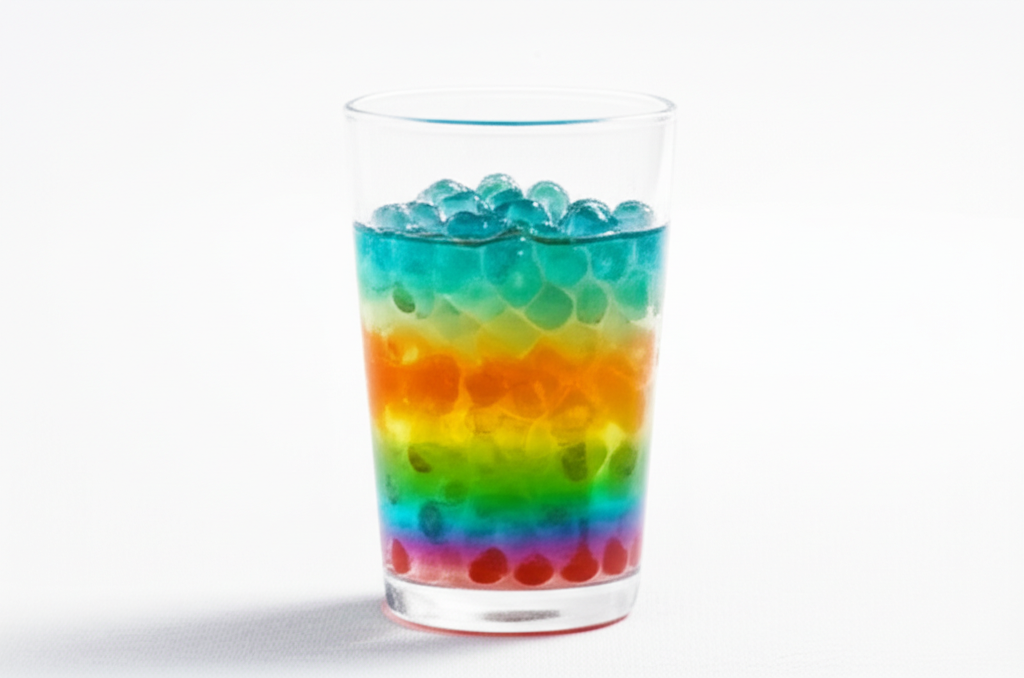
The colorful, translucent cubes at the bottom of your bubble tea aren’t tapioca—they’re rainbow jelly, and in 2026, they’ve become one of the most requested boba toppings in America. If you’ve ever wondered what rainbow jelly actually is and whether it’s worth the upcharge, here’s everything you need to know.
Unlike traditional boba pearls, rainbow jelly offers a completely different texture experience—and understanding the difference helps you order smarter at your local tea shop.
What Is Rainbow Jelly?
Rainbow jelly (also called “rainbow coconut jelly” or “nata de coco”) is a chewy, translucent topping made from fermented coconut water. Despite the name, it’s not always multicolored—some shops serve it clear or in single colors.
Key Characteristics:
- Texture: Firm, chewy, slightly bouncy—different from tapioca’s soft chewiness
- Flavor: Mildly sweet, absorbs drink flavors easily
- Appearance: Translucent cubes or rectangles, often colored
- Base ingredient: Coconut water fermented with bacteria (Acetobacter xylinum)

Rainbow Jelly vs. Tapioca Boba
| Feature | Rainbow Jelly | Tapioca Boba |
| Main Ingredient | Coconut water | Tapioca starch |
| Texture | Firm, bouncy, crisp | Soft, chewy, gummy |
| Calories | Lower (~70 per serving) | Higher (~150 per serving) |
| Flavor | Mild, absorbs drink flavor | Sweet (usually brown sugar) |
| Shape | Cubes | Spheres (pearls) |
How Rainbow Jelly Is Made
The production process is surprisingly scientific:
- Fermentation: Coconut water is combined with Acetobacter xylinum bacteria
- Cellulose formation: Bacteria produce cellulose layers over 2-3 weeks
- Harvesting: Thick cellulose sheets are removed and washed
- Cutting: Sheets are cut into cubes or desired shapes
- Flavoring: Cubes are soaked in sugar syrup and food coloring
This bacterial cellulose is what gives rainbow jelly its unique texture—firm yet yielding, unlike any plant-based gelatin.
Is Rainbow Jelly Healthy?
Compared to other boba toppings, rainbow jelly has some advantages:
Pros:
- Lower calorie: About half the calories of tapioca pearls
- Some fiber: Bacterial cellulose provides insoluble fiber
- No gluten: Safe for celiac and gluten-sensitive customers
- Lower glycemic impact: Less starchy than tapioca
Cons:
- Added sugar: Commercial versions are sweetened
- Artificial colors: Rainbow versions use food dyes
- Still a sugar bomb: When combined with sweetened tea
Bottom line: Rainbow jelly is a slightly healthier topping choice, but it’s not a health food.
Best Drinks to Pair with Rainbow Jelly
Rainbow jelly’s mild flavor and firm texture work best with certain drinks:
Great Pairings:
- Fruit teas: The jelly absorbs fruity flavors beautifully
- Lychee drinks: Classic combination in Asian tea culture
- Passion fruit tea: Tartness complements the jelly’s sweetness
- Green milk tea: Lighter flavors let the jelly shine
Skip the Jelly With:
- Heavy milk teas: Texture gets lost in thick, creamy drinks
- Brown sugar drinks: Too much competing sweetness
- Taro: Flavors don’t complement well
Where to Find Rainbow Jelly
Most national boba chains offer rainbow jelly as a topping option:
- Kung Fu Tea: Listed as “Rainbow Jelly”
- Gong Cha: Listed as “Coconut Jelly”
- Tiger Sugar: Available at most locations
- ShareTea: Listed as “Nata Jelly”
Expect a $0.50-$0.75 upcharge to add rainbow jelly to your drink.
Making Rainbow Jelly at Home
Commercial rainbow jelly requires specialized fermentation, but you can buy prepared nata de coco at Asian grocery stores:
- Purchase canned or jarred nata de coco
- Drain and rinse the cubes
- Optionally color with food dye
- Add to homemade bubble tea
Brands like “Nata King” and “UFC” sell ready-to-use coconut jelly in most Asian markets.
The Bottom Line
Rainbow jelly is fermented coconut water cut into colorful cubes—a lighter, firmer alternative to traditional tapioca boba. It’s lower in calories, has a unique bouncy texture, and pairs especially well with fruit-based drinks.
If you’ve never tried it, ask for rainbow jelly on your next fruit tea order. The texture difference alone makes it worth experiencing.
Most boba shops charge extra for premium toppings like rainbow jelly. Ask about topping combinations—many shops offer discounted “extra topping” add-ons.