
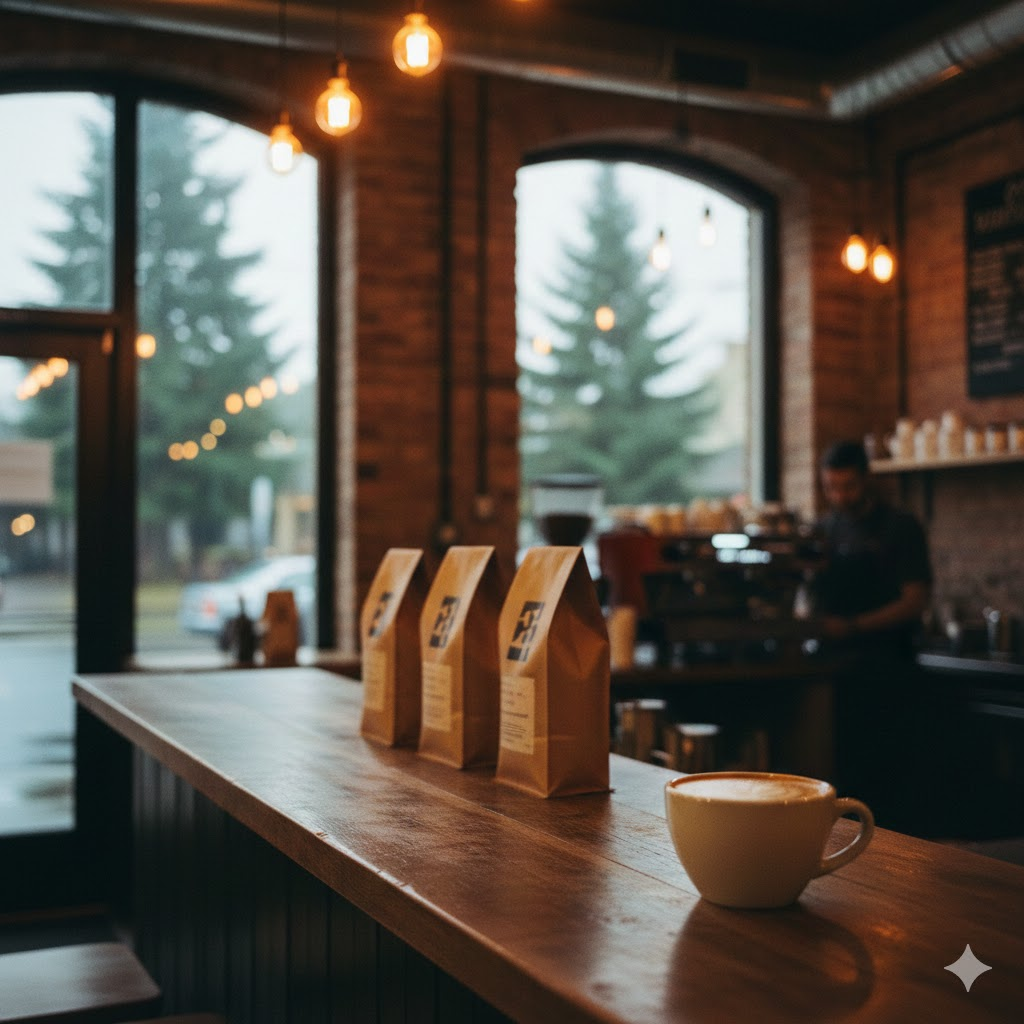
When a former hair salon on Portland’s Division Street became a coffee shop in November 1999, nobody could have predicted it would help transform an entire city—and an industry—into what it is today. But that’s exactly what Stumptown Coffee Roasters did, and the story is as rich and complex as their signature Hair Bender blend.
The Birth of Third Wave Coffee
Founded by Duane Sorenson, a self-described “heavy-metal-loving stoner from Washington,” Stumptown opened at a pivotal moment in coffee history. Portland had always fancied itself a coffee town, but Sorenson had a different vision: he wanted to prove that exceptional coffee required more than just good beans—it demanded obsessive attention to sourcing, relationships with producers, and a willingness to pay premium prices for quality.
The name “Stumptown” itself is a nod to Portland’s 19th-century nickname, earned when rapid growth in the 1800s left so many tree stumps scattered around the muddy streets that residents allegedly jumped from stump to stump to avoid the unpaved roads. It’s a fitting metaphor for a company that would help Portland leap into the forefront of the specialty coffee movement.
Pioneering Direct Trade
What set Stumptown apart from day one was Sorenson’s radical approach to sourcing. In 2003, he pioneered what the company calls “Direct Trade”—a model built on three core principles:
- Pay strong prices tied to quality – Sorenson famously paid three to four times fair trade prices, once setting the record for the highest price ever paid for coffee beans
- Work directly with producers – Transparency on both sides of the supply chain
- Maintain long-term relationships – Stumptown doesn’t call it Direct Trade unless they’ve sourced from a producer for at least three consecutive years
The company’s foundational relationship with the Aguirre family of Finca El Injerto in Guatemala, established in 2003, continues to this day. By 2024, over 90% of Stumptown’s coffee purchases came through Direct Trade relationships of three or more years.
From Punk Rock to Peet’s
In its early days, Stumptown was as much a cultural statement as a coffee company. Punk rock blared from the speakers, punk rockers worked behind the counters, and the obsessive pursuit of quality extended beyond the beans to every aspect of the experience. Cafes hoping to serve Stumptown had to survive what amounted to a “barista boot camp” and invest in approved equipment before they could display the coveted Stumptown sign.
The company expanded strategically—Seattle in 2007, New York’s Ace Hotel in 2009—and became credited as the creator of the cold brew coffee category with their innovative nitro cans. But in 2015, in a move that shocked the third-wave coffee industry, Stumptown was acquired by Peet’s Coffee (which is itself owned by JAB Holding Company). Despite the corporate backing, the company has maintained its commitment to quality and direct relationships with coffee producers.
The Iconic Coffees
Hair Bender – The Blend That Started It All
The name comes from the beauty parlor that previously occupied Stumptown’s first location. Sorenson adopted the name for his signature espresso blend, and the original Hair Bender sign still hangs in the company’s headquarters today, watching over each roasting session.
This is Stumptown’s most complex blend, featuring coffee from three major growing regions: Central and South America, East Africa, and Indonesia. The result is a harmonious flavor profile with notes of jasmine, orange, cherry, caramel, and dark chocolate. One Stumptown employee noted, “I’ve been making espresso drinks with Hair Bender for well over a decade, and I never tire of its flavor profile.”
Hair Bender serves as the go-to espresso in all Stumptown cafes, but it’s versatile enough to shine through any brew method.
Holler Mountain – The Hometown Favorite
Stumptown’s signature organic blend has been beloved since day one. It combines the chocolatey flavors and textures from Central and South American coffees with the brightness of East African beans, delivering notes of citrus zest, caramel, berry jam, and hazelnut.
As one Stumptown team member puts it: “If someone asks me for a bag of coffee, nine times out of ten, I’ll give ’em some Holler to brew. The acidity is lively, but the roast level is the perfect medium where perceived sweetness is at its maximum.”
Holler Mountain is the perfect crowd-pleaser—complex enough for espresso, yet versatile enough for daily drip coffee.
Founder’s Blend – The Easy Drinker
Described as “a dose of Central American sunshine in a cup,” Founder’s Blend is Stumptown’s answer to comfort coffee. Simple and chocolate-forward, with notes of vanilla, cocoa, and honey, it combines certified organic coffees from Central and South America with the depth of an organic Sumatran coffee.
One staff member calls it “a tried and true workhorse”—balanced, approachable, and perfect any time of day.
The Legacy
Today, Stumptown operates cafes in Portland, Seattle, New York, Los Angeles, and even Kyoto, with coffee and cold brew available in thousands of grocery stores and wholesale partners across the United States. The company is a Certified B Corporation, meeting the highest standards of social and environmental impact.
But perhaps Stumptown’s greatest achievement is harder to quantify: it helped transform Portland from a coffee town into the coffee town (Seattleites might disagree), inspiring a generation of roasters to adopt restrained roasting, obsessive sourcing, and hip styling. The next time you’re enjoying a carefully sourced, expertly roasted cup from any third-wave roaster, you’re experiencing the ripple effects of what Duane Sorenson started in that former hair salon back in 1999.
As one coffee writer put it: “Other Portland roasters have taken the baton and run with it, but the next time you’re enjoying a pourover micro-lot from an organic nano-roaster powered by unicycle and located inside a hollowed-out Douglas fir tree, toast a demitasse to Sorenson, the guy who made it all possible.”
References:
- Stumptown Coffee Roasters. (2025). “The Stumptown Coffee Roasters Story.” Retrieved from stumptowncoffee.com
- Wikipedia. (2025). “Stumptown Coffee Roasters.”
- Willamette Week. “Nov. 1, 1999: A new coffee shop opens on Southeast Division Street.”
- Business Wire. (2023). “Stumptown Coffee’s West End Cafe to Move to New 11W Building.”
- Stumped in Stumptown. (2021). “Why is Portland named Stumptown?”
Hair Bender appears alongside other current specialty blends in our gourmet coffee buying guide.