
In 1995, while most of America was still content with supermarket cans and drive-thru chains, two business school friends in Durham, North Carolina had a different vision for coffee. Brett Smith and Fred Houk weren’t just looking to roast beans—they wanted to fundamentally reimagine the relationship between coffee drinkers, roasters, and the farmers who make it all possible.
Nearly 30 years later, Counter Culture Coffee stands as one of the most influential specialty roasters in the United States, not just for the quality of their coffee, but for how they’ve made transparency, education, and sustainability the cornerstone of everything they do.
The Birth of a Philosophy
The origin story begins at an unlikely place: the 1995 Sustainable Coffee Congress hosted by the Smithsonian. Smith and Houk found themselves among 250 members of the coffee community, grappling with a fundamental question—how could the coffee industry address its environmental, social, and economic challenges simultaneously?
This conference introduced them to the concept of “triple-bottom-line sustainability”—the idea that a business could (and should) be profitable while also benefiting people and the planet. As Smith would later reflect, “A focus on sustainability is not charity. It’s not just about the environment. It’s the best business model for Counter Culture to embrace for long-term success.”
Armed with this philosophy, they started small, selling their first bag of custom-blended coffee to Pop’s Restaurant in Durham. But the vision was always bigger than just making good coffee—it was about creating a sustainable model for the entire industry.
Pioneering Practices That Changed the Game
Counter Culture didn’t just talk about sustainability—they systematically built it into every aspect of their business:
1997: Launched “Sanctuary Coffee,” one of the first bird-friendly, shade-grown coffee lines in the industry
2002: Became the first certified organic roaster in North Carolina
2003: Released a comprehensive vision statement committing to “real social, environmental, and fiscal sustainability”
2008: Formalized their Direct Trade Certification program, establishing rigorous standards for quality, sustainability, and fairness throughout the supply chain
2009: Began publishing annual Transparency Reports—a groundbreaking move that laid bare their purchasing practices, prices paid to farmers, and environmental impact
This last innovation is perhaps their most significant contribution to the industry. While other companies might casually throw around terms like “ethical sourcing,” Counter Culture publishes actual data: what coffees they bought, from whom, at what prices, and how those prices compare to commodity markets. In their 2021 report, for example, they paid a weighted average FOB price of $3.10 per pound when the C market average was just $1.42.
Education as Mission
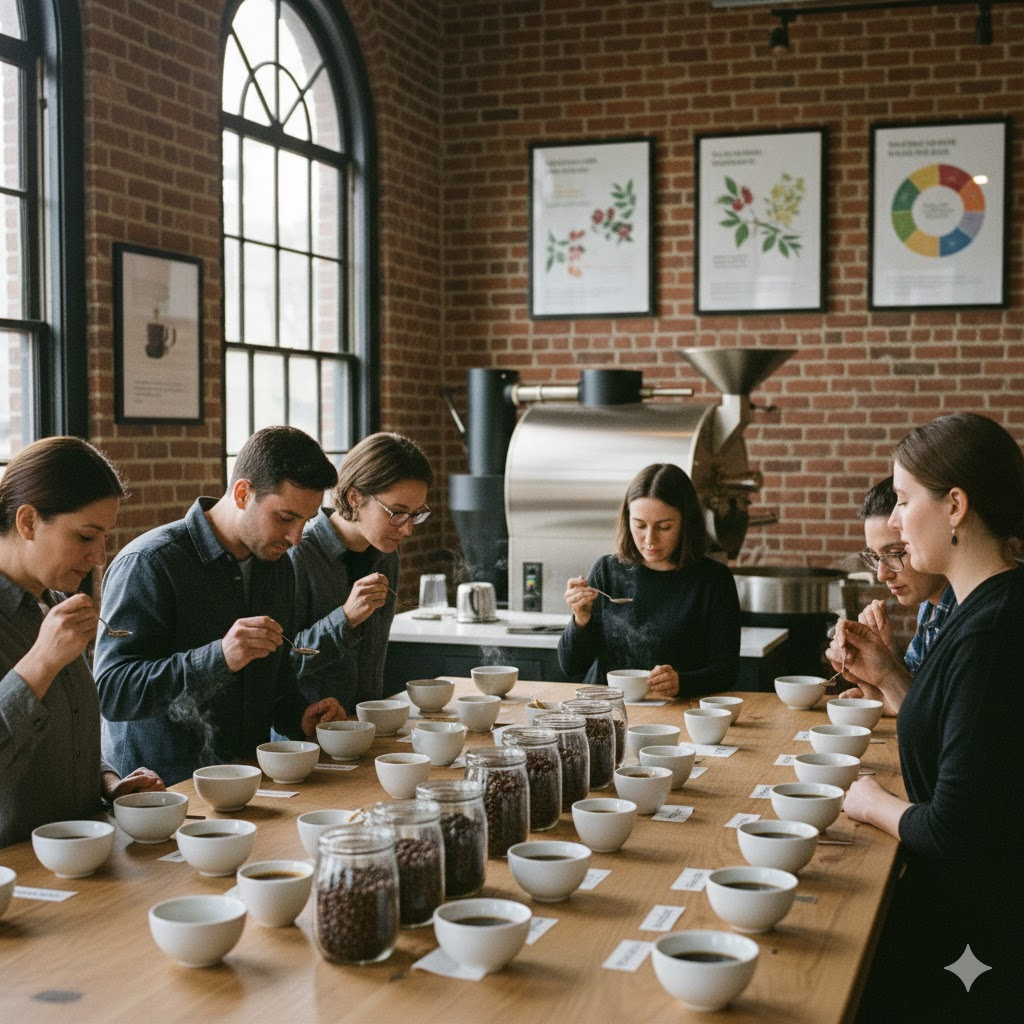
If you’ve ever attended a free coffee tasting on a Friday morning at 10 AM, you’ve experienced one of Counter Culture‘s longest-running traditions. Since 2002, they’ve hosted weekly “Tastings at Ten” at their training centers—and anyone can attend, no experience necessary.
But the education mission goes far deeper. Counter Culture operates 13 training centers across the United States—from Durham and Atlanta to New York, Chicago, and San Francisco. These aren’t just marketing spaces; they’re genuine educational hubs offering courses in:
- Barista Fundamentals
- Brewing Science
- Cupping Fundamentals
- Coffee Origins
- Advanced Technique & Troubleshooting
Here’s the remarkable part: these courses aren’t just for Counter Culture wholesale partners. They’re open to anyone in the coffee industry—even competitors. This commitment to elevating the entire specialty coffee community, rather than hoarding knowledge, has made Counter Culture a respected leader that transcends typical business rivalries.
The Coffees That Define Them
Big Trouble – The Crowd Pleaser
Despite its ominous name, Big Trouble is Counter Culture’s most approachable and best-selling coffee. With notes of caramel, nuts, and chocolate, it was originally called “Espresso Toscano” as a nod to classic northern Italian coffee.
So where does the “trouble” come in? The challenge lies in sourcing. Creating a year-round blend with consistent low acidity, sweetness, and clean flavors from smallholder producers requires meticulous supply chain work. Currently featuring coffees from Guatemala, this medium-dark roast adapts flawlessly to any brewing method—pour-over, French press, or espresso.
Flavor Profile: Nutty, caramel, chocolate | Medium-dark roast
Best For: Everyone—it’s the perfect gateway to specialty coffee
Apollo – A Love Letter to Ethiopia
Released in 2010, Apollo is Counter Culture’s homage to the birthplace of coffee. This year-round blend features certified organic, washed coffees from Yirgacheffe, Ethiopia—the region that gave coffee to the world.
Roasted slightly darker than typical single-origin Ethiopian coffees, Apollo strikes a balance between showcasing Ethiopia’s characteristic bright, floral, citrus notes while remaining approachable for newcomers to African coffees. It’s silky, complex, and leaves a lingering sweetness that keeps you coming back.
Flavor Profile: Citrus, floral, silky body | Medium roast
Best For: Those seeking classic Ethiopian brightness in a balanced package
Hologram – The Complexity Champion
Named for its ability to reveal surprising three-dimensional complexity, Hologram is Counter Culture’s update on the classic Mocha Java flavor profile. This captivating blend combines natural sun-dried coffees (delivering punchy fruit notes and full body) with washed coffees (adding layers of pastry and rich chocolate).
The current composition features 30% natural Ethiopian, 60% Colombian, and 10% Kenyan coffees. One enthusiast described it as their “desert island coffee,” noting: “It has layers of flavor! I can drink it on any brew method over and over and always be interested and satisfied.”
Flavor Profile: Ripe fruit, milk chocolate, syrupy | Medium roast
Best For: Coffee geeks who want complexity without pretension
Forty-Six – The Dark Roast Done Right
In an era when many specialty roasters abandoned dark roasts entirely, Counter Culture took a different approach. Forty-Six isn’t just “dark”—it’s an expertly crafted blend of some of their best certified organic coffees, roasted to create a profile that’s sweet, clean, smoky, and nuanced.
The name comes from Counter Culture’s early days when they had over 100 blends in rotation. When tastings with wholesale partners and chefs revealed that blend #46 was consistently a favorite, they knew they had something special. It’s proof that dark roasting and quality aren’t mutually exclusive.
Flavor Profile: Dark chocolate, smoky, sweet | Dark roast
Best For: Dark roast lovers who refuse to compromise on quality
Fast Forward – The Seasonal Rotation
Fast Forward represents Counter Culture’s innovative approach to blending. Rather than forcing the same coffee origins year-round, they curate similar certified organic coffees from different harvest periods, ensuring peak freshness regardless of season.
The result is a consistently nutty, sweet, and creamy experience that changes composition but not character—always organic, always fresh, always delicious.
Flavor Profile: Nutty, sweet, creamy | Medium roast
Best For: Subscription lovers who want consistency with seasonal variation
The Long-Term Impact
The numbers tell a compelling story about Counter Culture’s model:
- Over 29 years of consistent growth
- More than 15 years of quarterly profit sharing for employees
- In 2024, over 90% of coffee purchases came through Direct Trade relationships of 3+ years
- 100% of purchases verified by Enveritas, a nonprofit that monitors sustainability across 30 criteria
- Annual production of over 5 million pounds of coffee
But perhaps the most significant impact can’t be measured in pounds or dollars. Counter Culture helped normalize practices that were once considered radical: paying farmers premium prices, publishing transparent pricing data, offering profit sharing to employees, and treating education as a public good rather than a competitive advantage.
In August 2025, founder Brett Smith transitioned to Executive Chairman, naming Joe Prewett as the new CEO—a sign that the company’s mission has grown bigger than any single individual.
The Counter Culture Effect
Today, when specialty roasters talk about direct trade, transparency reports, and sustainability scorecards, they’re often following a path that Counter Culture helped pioneer. The company proved that you don’t have to choose between profitability and principles—you can build a thriving business while paying farmers fairly, educating your community, and publishing your practices for all to see.
Every Friday at 10 AM, rain or shine, they still gather at their training centers to taste coffee with whoever shows up. It’s this commitment to sharing knowledge, building community, and elevating coffee as a whole—not just their own bottom line—that makes Counter Culture more than just a roaster. They’re a movement.
And that movement started in a modest Durham warehouse with two friends who believed coffee could be a force for good.
References:
- Counter Culture Coffee. “History.” Retrieved from counterculturecoffee.com
- Counter Culture Coffee. “Our 2021 Transparency Report.”
- Wikipedia. (2025). “Counter Culture Coffee.”
- Daily Coffee News. (2025). “Counter Culture Coffee Names New CEO as Founder Brett Smith Transitions.”
- Counter Culture Coffee. “Coffee Basics: Year-Round Coffee.”
- Grokipedia. “Counter Culture Coffee.”
Counter Culture Hologram is one of the documented starting points in our gourmet coffee comparison.