
I stared at my glass coffee pot — the one with a burnt ring so dark it looked like it was painted on — and decided to settle this once and for all. Instead of guessing which cleaning method works best, I tested five different approaches on the same pot, one section at a time, and documented the results.
If you’ve ever searched “how to clean burnt coffee pot” and gotten a dozen conflicting answers, this is the definitive comparison. I rated each method on three criteria: effort required, time invested, and how clean the pot actually got. One method came out on top by a wide margin.
Why Coffee Pots Get Burnt Stains in the First Place
That dark ring isn’t just dried coffee — it’s coffee oils that have been heated repeatedly on the warming plate until they’ve polymerized into a hard, resin-like coating. Think of it like seasoning on a cast iron pan, except you don’t want it. Every time the warming plate heats an empty or near-empty carafe, it bakes another layer onto the glass or steel. Over weeks and months, this builds into that stubborn burnt ring that regular dish soap won’t touch.
Understanding this matters because it tells you what kind of cleaning power you need: you’re not removing a surface stain. You’re breaking down a polymerized oil coating that’s bonded to the surface. That’s why some gentle methods fail completely while others cut right through it.
What You’ll Need
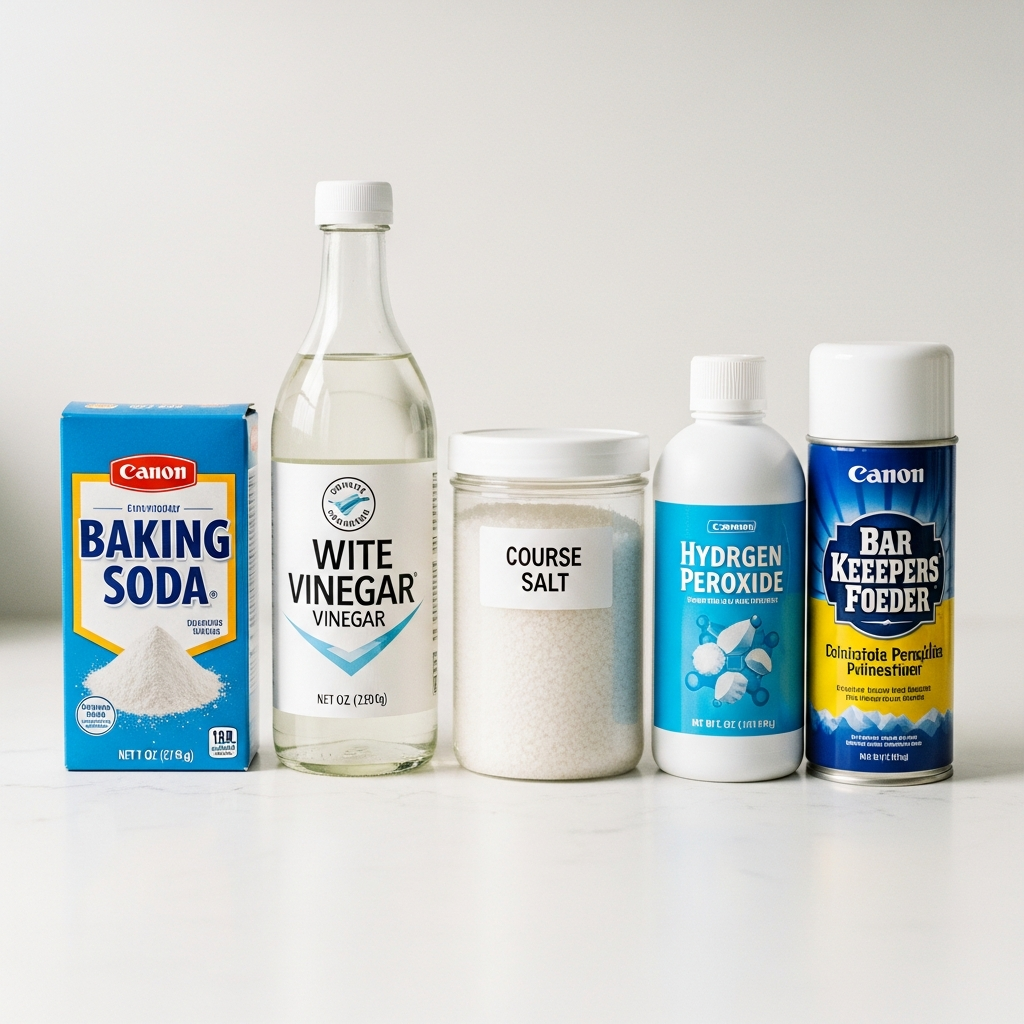
- Baking soda (the box in your fridge works fine)
- Coarse salt (kosher or sea salt)
- Ice cubes
- One lemon
- White distilled vinegar
- Hydrogen peroxide (3% from the drugstore)
- Bar Keeper’s Friend powder
- A soft sponge — no steel wool
- Warm water
The Test Setup
I used a 12-cup glass carafe that had been abused on a warming plate for three months without proper cleaning. The burnt ring covered the bottom inch of the pot and was completely opaque — you couldn’t see through the glass where the staining was heaviest. I divided the pot into five test zones and applied one method per zone, following each technique exactly as commonly recommended online.
Method 1: Baking Soda Paste
The Process
I mixed 3 tablespoons of baking soda with just enough warm water to make a thick paste — about the consistency of toothpaste. I spread this paste over the burnt area with my fingers, making sure to get full coverage. Then I let it sit for 30 minutes, as recommended by most cleaning guides.
After 30 minutes, I scrubbed with a soft sponge using circular motions and moderate pressure. I rinsed, checked the results, and repeated the process one more time for stubborn spots.
Results
The baking soda paste removed roughly 60% of the burnt staining after two applications. Light discoloration remained, especially where the burning was thickest at the very bottom. The paste works as a mild abrasive combined with a gentle alkaline cleaner, which breaks down some of the polymerized oils. Good for maintenance cleaning, but not enough muscle for serious burns.
- Effort: Low — mixing and spreading paste is easy
- Time: 45 minutes total (including wait time and two applications)
- Effectiveness: 6/10 — noticeable improvement but stain remained
Method 2: Salt, Ice, and Lemon Juice
The Process
I added a handful of ice cubes to the pot, poured in 2 tablespoons of coarse salt, and squeezed the juice of half a lemon over everything. Then I swirled the pot vigorously in a circular motion for about 2 minutes. The idea is that the ice and salt act as scrubbing agents while the lemon juice provides acid to break down the stains.
Results
This method was surprisingly satisfying — you can hear and feel the salt grinding against the glass as you swirl. It removed about 70% of the staining, doing better than baking soda alone. The mechanical scrubbing action of the salt and ice gets into the burnt layer more aggressively. However, the lemon juice alone isn’t acidic enough for a long soak, and once the ice melts, you lose your scrubbing power.
This technique works especially well for glass coffee pots because the salt won’t scratch glass the way it would scratch a non-stick coating.
- Effort: Medium — requires active swirling for several minutes
- Time: 5 minutes active work
- Effectiveness: 7/10 — good for moderate burns, struggled with the worst spots
Method 3: White Vinegar Overnight Soak
The Process
I filled the burnt section of the pot with undiluted white vinegar — enough to cover all the staining. I covered the top with plastic wrap to prevent evaporation and left it on the counter overnight (about 10 hours).
In the morning, I scrubbed with a soft sponge, dumped the vinegar, and rinsed thoroughly.
Results
The overnight vinegar soak removed about 80% of the staining. The acetic acid had hours to work on the polymerized oils, and the burnt ring was visibly lighter and partially gone in many areas. The downside is the time commitment — this isn’t a method for when you need a clean pot in 20 minutes. It also required scrubbing afterward to finish the job.
If you want to learn about using vinegar across your whole brewing setup, I have a full guide on cleaning your coffee maker without vinegar that covers effective alternatives.
- Effort: Very low — fill and forget
- Time: 10+ hours (overnight soak) plus 5 minutes scrubbing
- Effectiveness: 8/10 — very good but not complete removal
Method 4: Hydrogen Peroxide and Baking Soda
The Process
I poured about a half cup of 3% hydrogen peroxide into the pot, then added 2 tablespoons of baking soda. It fizzes immediately — this is the reaction producing oxygen gas, which is what makes this combination effective. I let the fizzing mixture sit on the burnt area for 30 minutes, then scrubbed with a soft sponge.
Results
This combination removed about 85% of the staining — better than either ingredient alone. The oxygen released by the peroxide-baking soda reaction gets underneath the burnt layer and lifts it from the glass surface. This is the same chemistry behind OxiClean and similar oxygen-based cleaners. Two applications with a scrub in between got the pot noticeably cleaner than any previous method.
The limitation is that it still requires some elbow grease for the thickest deposits, and the fizzing reaction loses potency after about 15 minutes, so timing your applications matters.
- Effort: Low to medium — mixing is easy, some scrubbing needed
- Time: 40 minutes (including two 15-minute soaks)
- Effectiveness: 8.5/10 — excellent, nearly complete removal
Method 5: Bar Keeper’s Friend (The Winner)
The Process
I wet the burnt area of the pot, sprinkled Bar Keeper’s Friend powder directly onto the stain, and let it sit for 1 minute (the label says not to leave it longer than that on glass). Then I scrubbed with a wet soft sponge using moderate pressure. Rinsed, inspected, and did one more quick application on the remaining spots.
Results
Bar Keeper’s Friend destroyed the burnt stain. After two quick applications totaling maybe 5 minutes of actual work, the pot looked almost new. I’d estimate 95% stain removal — the only remaining evidence was the faintest shadow where the thickest burn had been, and honestly that might have come off with a third pass.
The active ingredient is oxalic acid combined with a fine abrasive mineral (feldspar). The acid dissolves the polymerized coffee oils while the mineral abrasive physically removes the residue. It’s the combination of chemical and mechanical cleaning that makes it so much more effective than either approach alone.
This is the clear winner, and it wasn’t even close.
- Effort: Low — sprinkle, wait, scrub lightly
- Time: 5 minutes total
- Effectiveness: 9.5/10 — near-complete removal with minimal effort
Side-by-Side Rankings
Here’s how all five methods stack up:
- Bar Keeper’s Friend — 9.5/10 effectiveness, 5 minutes, low effort. The undisputed winner.
- Hydrogen peroxide + baking soda — 8.5/10 effectiveness, 40 minutes, low-medium effort.
- White vinegar overnight soak — 8/10 effectiveness, 10+ hours, very low effort.
- Salt + ice + lemon — 7/10 effectiveness, 5 minutes, medium effort.
- Baking soda paste — 6/10 effectiveness, 45 minutes, low effort.
Glass vs. Stainless Steel: Key Differences
Everything above was tested on a glass carafe, but stainless steel pots have different rules. Here’s what changes:
Bar Keeper’s Friend works even better on stainless steel. The material is harder than glass, so you can apply slightly more pressure without worrying about scratching. On stainless steel, Bar Keeper’s Friend removes the burnt layer and leaves a polished finish. If you have a stainless steel coffee pot, this should be your go-to.
The salt and ice method is less effective on steel. The salt slides more freely on the smoother stainless surface and doesn’t grip the burnt residue the same way it does on glass.
Vinegar works the same on both materials. An overnight soak is equally effective on glass or stainless steel. However, don’t leave acidic solutions on stainless steel for more than 24 hours — extended acid exposure can cause pitting on lower-grade steel.
Never use steel wool on either material. It scratches glass permanently and can leave metal residue on stainless steel that causes rust spots later. Stick with a soft sponge regardless of pot material.
How to Prevent Burnt Coffee Stains
The best cleaning method is prevention. Follow these three rules and you’ll rarely deal with serious burnt stains:
- Turn off the warming plate after 30 minutes. Most warming plates hold coffee at 165-175°F, which continues to cook the coffee and bake residue onto the pot. Transfer leftover coffee to a thermal carafe or just brew less.
- Never put an empty pot on a hot warming plate. This bakes on whatever residue is in the pot in minutes. If the pot is empty, turn off the machine.
- Rinse the pot immediately after pouring the last cup. Don’t let the dregs sit and dry — a quick rinse with hot water takes 10 seconds and prevents 90% of burnt stain buildup.
Frequently Asked Questions
Will Bar Keeper’s Friend scratch my glass coffee pot?
No, when used correctly. The abrasive in Bar Keeper’s Friend (feldspar) is softer than glass on the Mohs hardness scale. Use a wet sponge, don’t use excessive pressure, and don’t leave the powder sitting dry on the glass for more than a minute. I’ve used it on glass carafes dozens of times with zero scratching.
Can I use bleach to clean a burnt coffee pot?
I don’t recommend it. Bleach is difficult to rinse completely from a carafe, and any residue is a health concern. It also won’t work as well as the methods above because bleach is a disinfectant, not a degreaser — it’s designed to kill bacteria, not dissolve polymerized oils. Stick with one of the five methods I tested.
My coffee pot has hard water stains AND burnt coffee stains. How do I tackle both?
Handle them separately. First, use Bar Keeper’s Friend to remove the burnt coffee stains. Then, fill the pot with a 50/50 vinegar-water solution and soak for 2-4 hours to dissolve the white mineral deposits. Rinse thoroughly. Trying to tackle both at once with a single product usually means neither problem gets fully solved.
How often should I deep clean my coffee pot to prevent burning?
If you rinse immediately after every use and don’t leave coffee sitting on the warming plate, you’ll only need a deep clean once a month. If you’re guilty of leaving coffee on the burner for hours (no judgment — we’ve all done it), clean weekly with baking soda to prevent the buildup from getting out of hand.
Does this work on coffee-stained mugs too?
Bar Keeper’s Friend works exceptionally well on ceramic coffee mugs. However, if you’re dealing with stained mugs, thermoses, or carafes, the cleaning approach varies by material. I cover all of those scenarios in detail in my separate guide to removing coffee stains from mugs and other drinkware.