
Quick answer: La Colombe is our best ready-to-drink black cold brew, Wandering Bear is best for a fridge-friendly concentrate, and STōK is the easiest budget bottle to find. The right choice depends on whether you want a single can, a multi-serve bottle, or concentrate you dilute yourself.
Shop the top cold brew picks
Best ready-to-drink option: see La Colombe cold brew on Amazon.
Best fridge-friendly concentrate: see Wandering Bear cold brew on Amazon.
Best budget bottled option: see STōK cold brew on Amazon.
“Best cold brew coffee” can describe several different products. Ready-to-drink coffee goes straight over ice. Concentrate must be mixed with water or milk. Cold-brew grounds are simply beans or ground coffee intended for brewing at home. Comparing their sticker prices—or caffeine numbers—without accounting for prepared servings is misleading.
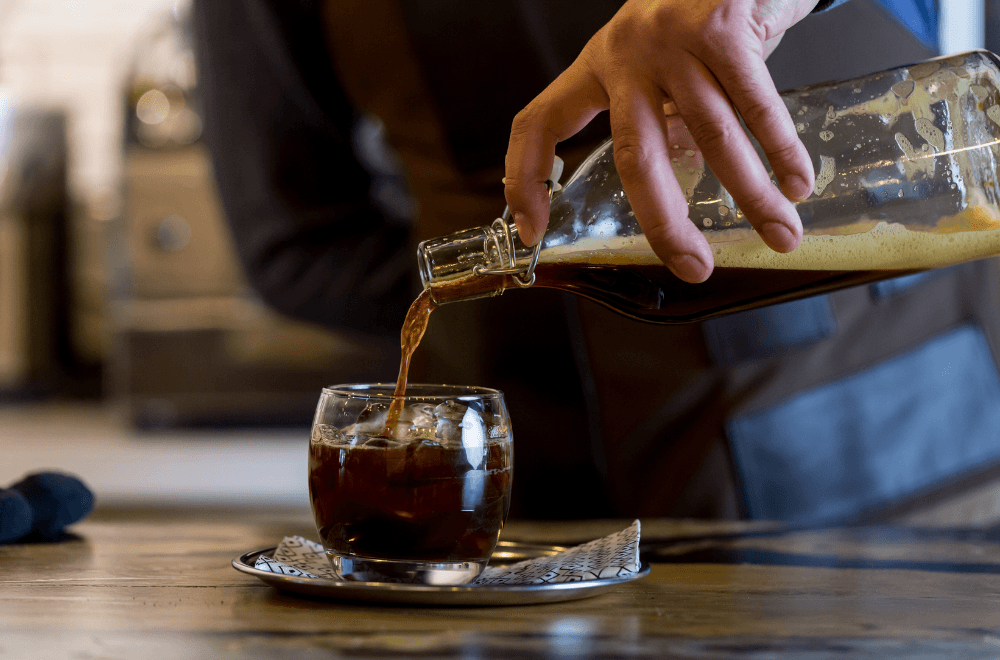
Best cold brew coffee brands at a glance
| Brand | Best for | Format | Sweetened? |
|---|---|---|---|
| La Colombe | Best overall black cold brew | Single-serve cans | No sugar added in Black |
| Wandering Bear | Best concentrate | 32-oz concentrate or boxes | Straight Black is unsweetened |
| STōK | Best budget multi-serve bottle | 48-oz fridge bottle | Unsweetened and flavored choices |
| Chameleon | Best flexible concentrate | Concentrate | Varies by product |
| La Colombe Draft Latte | Best creamy canned option | Single-serve can | Yes; check flavor label |
| High Brew | Best portable variety | Single-serve cans | Black and flavored choices |
| Califia Farms | Best plant-based range | Bottles and concentrates | Varies by product |
| Bizzy | Best for brewing at home | Beans, grounds, or concentrate | Unsweetened base options |
1. La Colombe Cold Brew: best overall ready-to-drink cold brew
La Colombe Black Cold Brew is a straightforward option for people who want coffee rather than a dessert drink. The current product is unsweetened, dairy-free, and sold in single-serve cans. La Colombe lists 180 mg of caffeine for the can, making the serving easy to understand without doing concentrate math.
Choose it for commuting, travel, or an office refrigerator. Its main disadvantage is cost per ounce compared with a multi-serve bottle. If you drink cold brew every day at home, one of the larger formats below is more economical.
2. Wandering Bear: best cold brew concentrate
Wandering Bear’s 3-to-1 concentrate is designed to be mixed one part coffee with three parts water or milk. The Straight Black version is organic, unsweetened, and dairy-free. The company lists 150 mg of caffeine per prepared serving, not per full glass of undiluted concentrate.
The boxed packaging is useful when several people drink cold brew or when you want a tap-style refrigerator supply. Keep the distinction clear: Wandering Bear also sells ready-to-drink coffee, so follow the exact directions on the format you buy.
3. STōK: best budget fridge bottle
STōK offers 48-ounce bottles in several profiles, including Un-Sweet, Not Too Sweet, Espresso Blend, Extra Bold, and decaf. That variety and broad grocery distribution make it a practical first cold-brew brand.
The brand says its products generally contain about 120–170 mg of caffeine per serving, depending on the variety. Check the bottle rather than applying one number to the entire line. Choose Un-Sweet if you want to control milk and sweetener yourself; choose a flavored version only after comparing added sugar and serving size.
4. Chameleon Cold-Brew: best customizable concentrate
Chameleon Black Cold-Brew Concentrate is built for flexibility: dilute it for an iced latte, use water for a longer black coffee, or blend it into a smoothie. The current 32-ounce organic concentrate makes up to 64 ounces and the company recommends starting with one part concentrate to one part water or milk. Availability and flavors change, so confirm the current bottle’s dilution ratio, caffeine, and sugar information.
A concentrate can look expensive beside a ready-to-drink bottle, but that comparison ignores yield. Divide the package price by the number of prepared servings after dilution.
5. La Colombe Draft Latte: best creamy canned cold coffee
La Colombe’s Draft Latte line combines espresso-roast cold brew with milk or plant-based alternatives and a foamy texture. It is a better match for someone seeking a chilled café drink than for someone who wants plain black cold brew.
Because the line includes several flavors and formulations, compare calories, added sugar, allergens, and caffeine on the exact can. Do not treat Draft Latte nutrition as interchangeable with the brand’s unsweetened Black Cold Brew.
6. High Brew Coffee: best portable flavor variety
High Brew focuses on shelf-stable cans that are easy to carry and store. Its lineup commonly includes black, milk-based, and flavored options, so it suits households that want variety without a large open bottle in the refrigerator.
Judge each can separately. “Cold brew” does not mean sugar-free, dairy-free, or equally caffeinated across a product family. The front label tells you the flavor; the nutrition and ingredient panels tell you what you are actually drinking.
7. Califia Farms: best plant-based cold coffee range
Califia Farms is useful for shoppers who want almond- or oat-based chilled coffee alongside black cold brew and concentrate options. Its current Pure Black Medium Roast is an unsweetened ready-to-drink coffee made from water and Arabica coffee. The wider plant-based range is convenient, but “dairy-free” does not automatically mean unsweetened. Some lattes are sweetened beverages, while black coffee and concentrate serve different needs.
Choose by the exact format: black ready-to-drink for simplicity, concentrate for customization, or a plant-milk latte for a creamy finished drink.
8. Bizzy Coffee: best for making cold brew at home
Bizzy spans cold-brew grounds, whole beans, and prepared formats. The grounds are a good fit if you want the lower cost and control of home brewing without selecting and grinding beans yourself. A coarse, consistent grind makes filtration easier and reduces sediment.
Home brewing takes 12–18 hours in many recipes, but it lets you adjust roast, ratio, and dilution. See our guide to choosing coffee for cold brew if you prefer beans rather than a bottled brand.
How to choose cold brew coffee
Ready to drink or concentrate?
Ready-to-drink coffee is convenient and has a clear single serving. Concentrate offers more servings per package and lets you control strength, but it must be diluted. Never drink a large quantity of concentrate as though it were ordinary bottled coffee. Our cold-brew concentrate ratio guide explains how dilution changes the finished drink.
Black coffee or latte?
Black cold brew makes the roast and brewing quality easier to judge and lets you add your own milk or syrup. A canned latte is a finished beverage; compare ingredients, added sugar, calories, and allergens as well as coffee flavor.
Compare prepared cost
For a concentrate, calculate the final volume after the recommended dilution. Then divide the price by the number of 8- or 12-ounce prepared servings. This is the only fair way to compare it with cans and refrigerator bottles.
Check caffeine per serving
Caffeine varies substantially by brand and product. Compare the labeled milligrams and serving size, and remember that a multi-serve bottle may contain several servings. The FDA notes that caffeine amounts and container sizes vary and that sensitivity differs by person, medication, and health condition. If you are sensitive to caffeine, start smaller, count caffeine from other sources, and avoid assuming that “smooth” means weak.
Cold brew vs. iced coffee
Cold brew is made by extracting coffee with cool or room-temperature water over many hours. Iced coffee is normally brewed hot and then chilled or poured over ice. Cold brew often tastes rounder and less sharp, while iced coffee can preserve more of a hot-brewed coffee’s aroma and acidity. Neither method is automatically stronger; the recipe and dilution determine concentration. See our detailed cold brew versus iced coffee comparison for method, flavor, and serving differences.
Frequently asked questions
What is the best cold brew coffee brand?
La Colombe is our best overall ready-to-drink choice, Wandering Bear is best for concentrate, and STōK is the best widely available multi-serve bottle. Your ideal brand depends on whether you value portability, price per serving, sweetness, or customization.
Do you drink cold brew concentrate straight?
Usually not. Follow the package directions; common ratios call for one part concentrate with two or three parts water or milk. Both flavor intensity and caffeine per glass depend on dilution.
Does cold brew have more caffeine than iced coffee?
Not necessarily. Cold-brew concentrate can be highly caffeinated before dilution, but ready-to-drink products vary. Compare equal serving sizes and the labeled caffeine on the finished drink.
Bottom line
Choose La Colombe for a dependable single black cold brew, Wandering Bear when you want customizable concentrate, or STōK for an affordable bottle in the refrigerator. Treat cans, multi-serve bottles, concentrates, and home-brew grounds as separate formats, and the best value becomes much easier to identify.