
Quick answer: For drip coffee, start with 2 level tablespoons of ground coffee per 8 fluid ounces of water. For a 6-ounce coffee serving, use about 1½ tablespoons. If your machine calls 5 fluid ounces “one cup,” use about 1¼ tablespoons per marked cup.
For the most repeatable result, weigh the coffee: use roughly 55–60 grams of coffee per liter of water, a brewing ratio near 1:18 to 1:17. Tablespoons are convenient, but the weight inside a spoon changes with roast, grind size, and how tightly the grounds are packed.
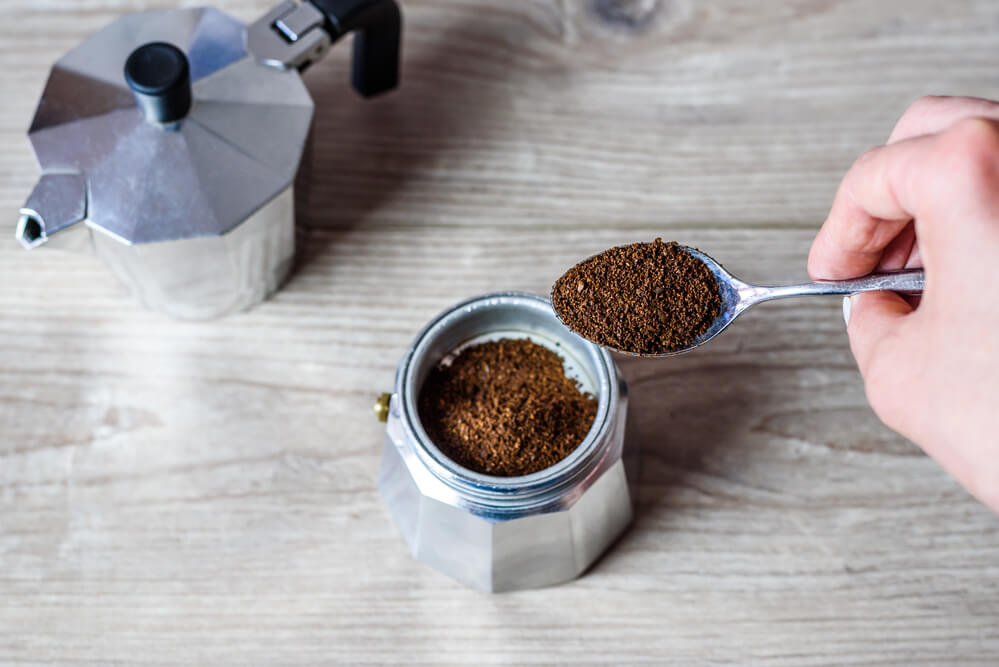
Tablespoons of coffee per cup: quick chart
| Water | Ground coffee | Approximate weight |
|---|---|---|
| 5 fl oz / 148 mL | 1¼ tbsp | 8–9 g |
| 6 fl oz / 177 mL | 1½ tbsp | 10–11 g |
| 8 fl oz / 237 mL | 2 tbsp | 13–14 g |
| 10 fl oz / 296 mL | 2½ tbsp | 16–18 g |
| 12 fl oz / 355 mL | 3 tbsp | 20–21 g |
| 16 fl oz / 473 mL | 4 tbsp | 26–28 g |
These are starting points for standard drip or pour-over coffee. If the cup tastes weak, increase the coffee slightly. If it tastes overwhelmingly strong, reduce the dose. Sourness or harsh bitterness may require a grind adjustment rather than a completely different ratio.
First, what does “one cup” mean?
This question produces conflicting answers because “cup” has three common meanings:
- U.S. measuring cup: 8 fluid ounces, equal to 16 volume tablespoons.
- Coffee serving: often treated as 6 fluid ounces in brewing guidance.
- Coffee-maker cup: commonly around 5 fluid ounces, although the exact carafe marking varies by manufacturer.
So, if you meant a kitchen conversion, there are 16 tablespoons of liquid volume in one U.S. cup. If you meant how much ground coffee to brew, use the ratio chart above. Coffee grounds do not fill the entire drinking cup.
How many tablespoons for a full coffee maker?
The following chart assumes each numbered mark on the brewer equals 5 fluid ounces and uses 1¼ level tablespoons per marked cup.
| Coffee-maker setting | Approximate water | Ground coffee | Approximate grams |
|---|---|---|---|
| 2 cups | 10 fl oz | 2½ tbsp | 16–18 g |
| 4 cups | 20 fl oz | 5 tbsp | 33–35 g |
| 6 cups | 30 fl oz | 7½ tbsp | 49–53 g |
| 8 cups | 40 fl oz | 10 tbsp | 65–70 g |
| 10 cups | 50 fl oz | 12½ tbsp | 82–88 g |
| 12 cups | 60 fl oz | 15 tbsp | 98–105 g |
Before using the table, check the manual or measure how much water reaches one carafe mark. Some brewers define their cups differently. If your machine’s “cup” is 6 ounces, use 1½ tablespoons for every mark instead.
Why weighing coffee is more accurate
A tablespoon measures volume, not mass. A spoonful of fine, dense coffee can weigh more than the same spoonful of coarse or dark-roasted grounds. Depending on the coffee and how you fill the spoon, one level tablespoon may weigh roughly 5–8 grams.
A digital scale removes that uncertainty. The Specialty Coffee Association’s home-brewer requirements reference a Gold Cup dose of about 55 grams per liter. A common home range is 55–60 grams per liter:
- Milder: 55 g coffee per 1,000 g water, about 1:18.
- Balanced starting point: 60 g per 1,000 g water, about 1:16.7.
- Stronger: 65 g per 1,000 g water, about 1:15.4.
Water is conveniently close to one gram per milliliter, so you can place the brewer on a scale, tare it, and measure both ingredients by weight.
Tablespoons, teaspoons, scoops, and grams
- 1 U.S. tablespoon = 3 teaspoons.
- 1 standard coffee scoop often = 2 tablespoons, but verify your scoop.
- 1 level tablespoon of ground coffee ≈ 5–8 grams.
- 2 level tablespoons ≈ 10–16 grams.
Because that gram range is wide, do not treat tablespoons as a laboratory conversion. If you repeat the same coffee, grind, and leveling method, spoon measurements can still be consistent enough for daily brewing.
How many teaspoons of coffee per cup?
Since one tablespoon equals three teaspoons:
- For 5 ounces of water, use about 3¾ teaspoons.
- For 6 ounces, use about 4½ teaspoons.
- For 8 ounces, use 6 teaspoons.
- For 12 ounces, use 9 teaspoons.
A tablespoon or scale is usually easier for anything larger than a single serving.
How to adjust a coffee-to-water ratio
If the coffee tastes weak or watery
Add slightly more coffee while keeping the water fixed. Move from 2 tablespoons per 8 ounces to 2¼ tablespoons, then taste again. A finer grind can also increase extraction, but going too fine may slow the brew and add bitterness.
If the coffee tastes too strong
Use slightly less coffee or add a small amount of hot water to the finished cup. If the flavor is bitter or drying rather than simply concentrated, try a coarser grind.
If the coffee tastes sour
Sourness often signals under-extraction. Try a slightly finer grind, ensure the water is adequately hot, or lengthen contact time. Adding more grounds alone can make extraction less even.
Our coffee-grounds guide explains grind sizes, while the moka pot size guide covers a brewer that uses a different, more concentrated recipe.
Does the same ratio work for every brewing method?
No. The chart is for filter and immersion-style brewed coffee. Espresso is measured by the mass of dry coffee and finished beverage, often near a 1:2 beverage ratio. Cold brew frequently begins as a concentrated recipe that is diluted after steeping. A moka pot has a fixed basket and water chamber rather than a tablespoon-per-mug formula.
- Drip and pour-over: start near 55–60 g/L.
- French press: a similar ratio works, with a coarse grind.
- Cold brew concentrate: follow a dedicated recipe and dilute before drinking.
- Espresso: weigh the dose and beverage output.
Frequently asked questions
Is one tablespoon of coffee enough for one cup?
It can work for a small 5- to 6-ounce cup if you prefer mild coffee, but it is below our balanced starting point. Use about 1¼ tablespoons for 5 ounces, 1½ for 6 ounces, or 2 for 8 ounces.
How many tablespoons of coffee should I use for 4 cups?
For a coffee maker that uses 5-ounce cup markings, use about 5 level tablespoons for four cups. If you mean four 8-ounce measuring cups, use about 8 tablespoons.
How many tablespoons of coffee should I use for 12 cups?
For a 12-cup machine holding about 60 fluid ounces, start with 15 level tablespoons, or approximately 100 grams. For twelve full 8-ounce cups, you would need about 24 tablespoons, and many household brewers cannot hold that volume.
How much ground coffee is in a scoop?
Many coffee scoops hold 2 tablespoons, but there is no guarantee. Fill the scoop with water and transfer it to a standard tablespoon measure, or check the manufacturer’s instructions.
Bottom line
For an ordinary 8-ounce mug, start with 2 level tablespoons of ground coffee. For a 6-ounce serving, use 1½ tablespoons; for a coffee maker whose marks equal 5 ounces, use 1¼ tablespoons per marked cup. A scale and a 55–60 g/L recipe will always be more repeatable than a scoop.