
I’m writing this from seat 23C on a cross-country flight, and I’ll admit something embarrassing: I just turned down the flight attendant’s offer of coffee. Not because I’m trying to sleep, and not because I’m being difficult—but because I spent the last week researching airplane water quality, and what I discovered changed everything.
Let me back up.
As a coffee enthusiast who travels frequently, I’ve always been that person who gratefully accepts the in-flight coffee, despite knowing it tastes like hot cardboard water. But after a conversation with a flight attendant friend who casually mentioned, “Oh, I never drink the coffee on planes,” I went down a rabbit hole that led me to some unsettling discoveries about what’s really in that cup.
Here’s what I’ve learned—and more importantly, how I’ve adapted my travel routine to make sure I never have to choose between caffeine and safety again.
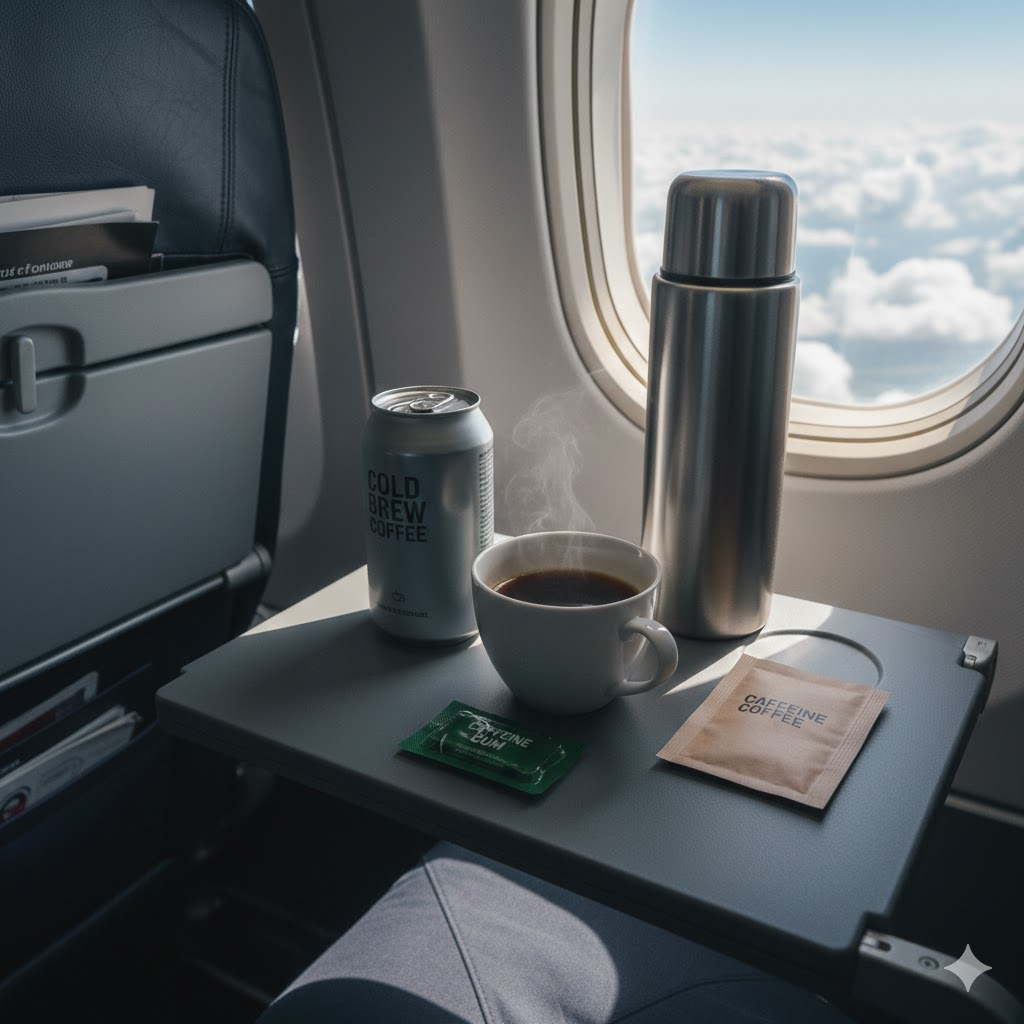
Six Ways to Get Your Coffee Fix Without Airplane Water
Before we dive into the horror show of airplane water tanks, let me give you the solutions first. Because if you’re reading this on your way to the airport, you don’t have time for the full story—you need actionable options.
1. The Cold Brew Shortcut
This is now my go-to method. After clearing security, I grab a can or bottle of cold brew from a terminal shop. Brands like Stumptown, La Colombe, and Chameleon are widely available in airport convenience stores. Sealed, safe, and often better than anything you’d get from the beverage cart anyway.
Cost: $4-6 per can Convenience: Maximum Caffeine content: Usually 150-200mg per container
2. The Flight Attendant’s Secret: The Hot Water Flask
This is the method I learned from the pros. Bring an empty insulated flask through security (TSA allows empty containers). Once you’re past security, stop at any coffee shop and ask them to fill it with hot water. Pack instant coffee, and you’re set for the entire flight.
Travel expert Jay Robert swears by this approach: “I actually keep a flask that I get filled with hot water once I’m through security. I use that hot water with my nanopresso to make my own coffee.”
Pro tip: A quality insulated flask like a Hydro Flask or YETI will keep water hot for 6-12 hours—plenty of time even for international flights.
3. Coffee Chews: The Space-Saving Solution
Hawaiian Kona Coffee Chews have become a permanent fixture in my personal item bag. Each chew delivers about 40mg of caffeine (roughly half a cup of coffee) without requiring any liquid whatsoever. They’re TSA-friendly, take up almost no space, and you can pop one discreetly without waiting for the beverage service.
Other options include Go Cubes (gummy-style caffeine with added vitamins) or caffeine gum. For the purists among us, these aren’t “real coffee,” but they solve the problem efficiently.
4. The Terminal Coffee-to-Go Strategy
Simple but effective: order your coffee from a terminal café before boarding and bring it on in an insulated travel mug. A well-designed thermos can keep coffee hot for several hours—more than enough for most domestic flights.
The key is investing in a truly leak-proof mug. Nothing will make you more unpopular with your seatmates than spilling hot coffee during turbulence.
5. Portable Espresso Makers for the Dedicated
If you’re really serious about your coffee, compact devices like the Nanopresso, Wacaco Minipresso, or AeroPress Go allow you to brew actual espresso or coffee at your seat. Combined with hot water from a terminal flask, you can make café-quality drinks at 35,000 feet.
Caveat: This requires the most gear and effort, but coffee snobs will appreciate having control over every variable.
6. Caffeine Pills: The Utilitarian Approach
If you’re purely after the stimulant effect and don’t care about the ritual, caffeine tablets (typically 100-200mg) are the most space-efficient option. Just be sure to take them with plenty of bottled water to stay hydrated.
The Bad News About Airplane Water
So why all these workarounds? What’s actually wrong with airplane coffee?
The issue isn’t the coffee beans or the brewing process—it’s the water source. Airplane water comes from onboard tanks that are filled at various airports around the world, each with wildly different water quality standards and maintenance protocols.
What’s Really in Those Tanks?
Research has found some genuinely disturbing contaminants in airplane water samples:
- E. coli bacteria (a marker of fecal contamination)
- Salmonella strains
- Staphylococcus bacteria (causes staph infections)
- Other coliform bacteria
- In one infamous case: insect eggs
A 2002 Wall Street Journal investigation found these contaminants through actual laboratory testing of airplane water samples. While the EPA established the Aircraft Drinking Water Rule (ADWR) in 2011 to address these issues, enforcement remains spotty.
One flight attendant told TIME Magazine: “We only truly clean [the water systems] once a year. I’ve been on planes that are constantly running. It’s almost like a subway in New York. We know things are dirty in the system and it takes a little while to clean it out.”
The “Boiling Kills Everything” Myth
You might be thinking: “But doesn’t boiling water kill bacteria?”
Yes and no. The water used for coffee is heated to approximately 195°F—hot enough to kill many bacteria, but this achieves pasteurization, not sterilization. Some hardy bacteria and their spores can survive this temperature. Plus, the coffee pots, kettles, and carafes themselves may harbor bacteria if not properly cleaned between flights.
Another flight attendant notes: “The very first flights of the day are restocked with fresh and clean coffee pots. If you are getting on an afternoon flight and notice the coffee pot looks a little ‘used,’ that’s because the previous flight used them.”
Which Airlines Actually Have Clean Water?
A recent study by the Center for Food as Medicine and Longevity analyzed EPA data from 21 airlines over three years, grading them on water safety. The results were eye-opening.
If you must drink airplane coffee, here’s where your odds are best:
Only one airline achieved a perfect safety score: Delta, with a flawless 5.0 rating. Close behind were Frontier (4.80) and Alaska Airlines (3.85). These carriers had no E. coli violations and maintained consistent disinfection protocols.
Where you should definitely stick to bottled water:
The bottom performers included American Airlines (scored just 1.75 among major carriers) and JetBlue, which racked up the most regulatory violations. Nearly every regional airline performed poorly, with only GoJet Airlines managing a respectable grade.
The study evaluated multiple factors: violations per aircraft, public health notices, E. coli contamination levels, and cleaning frequency. What’s particularly concerning is that researchers noted the EPA “still only rarely levies civil fines at airlines that regularly violate” water safety regulations.
Translation: Airlines can get away with poor water quality because there’s little accountability.
The Hand-Washing Problem You Haven’t Considered
Here’s something most travelers don’t think about: the water you use to wash your hands in the airplane bathroom comes from the same tanks as the coffee water.
Yes, really.
The study’s authors recommend using hand sanitizer with at least 60% alcohol instead of washing your hands with airplane tap water—especially on long-haul flights. I now keep a small bottle of hand sanitizer in my pocket for this exact reason.
What Else Should You Avoid?
Beyond coffee and tea, here’s my updated in-flight beverage strategy:
Never Touch:
- Tap water in any form (including from flight attendant’s pitcher)
- Coffee or tea made onboard (unless you’re on Delta or Frontier and feeling optimistic)
- Ice cubes (made from the same questionable water)
- Anything that requires you to wash your hands with airplane tap water
Safe Bets:
- Sealed bottled water (always)
- Canned or bottled beverages (sodas, juices in factory-sealed containers)
- Your own herbal tea made with water from your terminal flask
- Coconut water in sealed containers for electrolytes
Questionable but Common:
- Alcohol (safe from a contamination standpoint, but dehydrates you worse at altitude)
- Sugary sodas (safe but taste weird at altitude due to pressure changes)
My Current Flying Coffee Routine
After all this research, here’s what I actually do:
For morning flights: I grab a cold brew can after security. Simple, effective, no compromise on quality.
For afternoon/evening flights: I bring an insulated flask filled with hot water from a terminal coffee shop, plus a few packets of quality instant coffee (yes, good instant coffee exists now—try Swift Cup or Sudden Coffee).
For red-eyes: Coffee chews in my pocket. I can pop one without disturbing my seatmates or waiting for beverage service.
For international flights: All of the above, plus a small AeroPress Go in my carry-on for when I really want good coffee.
The Balanced Reality Check
Look, full transparency: I’ve drunk airplane coffee hundreds of times in my life without getting sick. Many pilots and flight attendants drink it daily and are fine. The risk of serious illness from a single cup is relatively low for most healthy adults.
But here’s the thing—why risk it when better alternatives are so easy?
The data shows that water quality varies dramatically by airline, and contamination happens more often than passengers realize. For anyone with a compromised immune system, pregnant travelers, young children, or people who just want to minimize unnecessary risk, avoiding airplane water entirely makes sense.
References:
- Gizmodo. (2026). “Think That Coffee’s Safe on a Plane? Think Again, Researchers Say.”
- Center for Food as Medicine and Longevity. (2026). “2026 Airline Water Study.”
- The Points Guy. (2019). “Is it really safe to drink airplane coffee and tea?”
- TODAY. (2018). “Is airplane coffee or tea safe to drink?”
- The Manual. (2025). “Should you drink airplane coffee? Here’s what experts say.”
- TravelAwaits. (2025). “The Truth About Airplane Drinks: Is Drinking Airplane Coffee Bad?”
- Frommers. (2025). “Is Airplane Water Safe? What You Should (and Should Not) Drink Aboard.”
- The Takeout. (2025). “The Airplane Drink Myth You Have To Stop Believing.”