
The Shark Tank Rejection That Created a Coffee Empire: The Super Coffee Story
In the specialty coffee world, we often talk about “God shots” and perfect extraction. But in the business of super coffee, the most important ingredient is often resilience.
Most entrepreneurs would crumble after being told “no” by five of the most successful investors on the planet. But for the DeCicco brothers, walking out of Shark Tank empty-handed was exactly the caffeine jolt their brand needed.
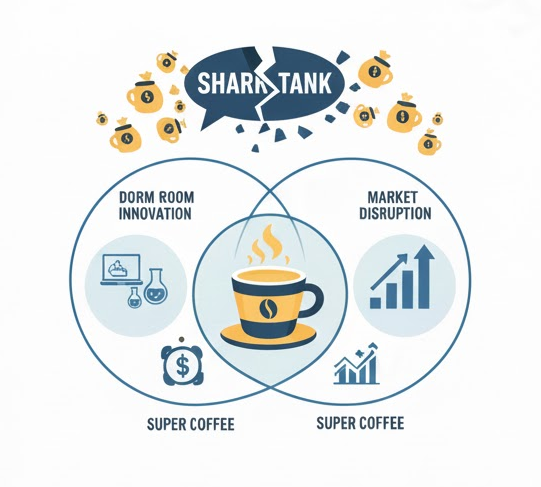
The Dorm Room Laboratory
The story begins in 2015 with Jordan DeCicco, a college athlete facing 5:00 AM practices and grueling classes. Stuck between sugary energy drinks and bitter cafeteria coffee, he started “brewing” a third option in his dorm room.
By blending organic Colombian Arabica beans with lactose-free protein and MCT oil (fats extracted from coconuts), he created a functional brew designed for sustained energy rather than a jagged spike and crash. When his brothers, Jake and Jim, joined him, they didn’t just see a drink; they saw a category-killer.
The “Tank” Cold Brews the Deal
By 2018, the brothers had achieved what most startups dream of: $600,000 in sales and shelf space in Whole Foods. They entered Shark Tank seeking $500,000 for 4.5% of the company.
The pitch, however, hit a wall of skepticism:
- The Taste Hurdle: Multiple Sharks cited a lingering aftertaste from the monk fruit and stevia.
- The Valuation Gap: Mark Cuban and Lori Greiner felt an $11 million valuation was far too aggressive for the “crowded” beverage aisle.
- The Industry Expert: Guest Shark Rohan Oza—the man behind Vitaminwater—passed, feeling the brand lacked a “unique” edge.
The brothers walked out with zero deals.
By the Numbers: From Rejection to Revenue
| Milestone | Status at Shark Tank (2018) | Status Today (2026) |
| Annual Revenue | ~$600,000 | ~$150M+ |
| Valuation | $11 Million (Estimated) | Over $400 Million |
| Retail Presence | Selective (Whole Foods/Target) | 70,000+ Stores Nationwide |
For the Purists: Super Grounds vs. Specialty Roasts
While Super Coffee made its name with Ready-to-Drink (RTD) bottles, they eventually moved into the bagged coffee market. For the enthusiast who usually buys single-origin light roasts, here is how “Super Grounds” stack up against your standard specialty bag:
| Feature | Traditional Specialty Coffee | Super Coffee “Super Grounds” |
| Ingredient List | 100% Coffee Beans | Coffee + MCT Oil + Vitamins + Monk Fruit |
| Flavor Focus | Terroir, acidity, and origin notes | Smoothness, sweetness, and “function” |
| Vitamins | Natural antioxidants only | Added Vitamins B6, B12, and Vitamin E |
| The “Oil” Factor | Natural coffee oils (lipids) | Infused with MCT for metabolic support |
The Enthusiast’s Take: Super Grounds are surprisingly effective for “functional brewing.” The infusion of MCT oil into the grounds themselves means you get a creamy mouthfeel without the oil slick often found when manually adding fats to a “bulletproof” style coffee.
Why the Market Voted “Yes”
Super Coffee carved out a “Goldilocks” zone by focusing on the macros of the cup:
- The Base: They use 100% Colombian Arabica, ensuring a smoother, less acidic foundation than the “robusta-heavy” blends often found in grocery-store cans.
- The Fuel: 10g of protein and MCT oil provide a “slow-burn” effect. In technical terms, the fats help slow the absorption of caffeine, extending the alertness window.
- The Sweetener: By using monk fruit, they removed the “sugar-crash” variable, appealing to the massive Keto and fitness communities.
The Last Laugh
The Sharks didn’t see the vision, but a roster of icons did. Since the show, the brand (under the parent name Kitu Life) has secured funding from Aaron Rodgers, Jennifer Lopez, and Alex Rodriguez.
The Super Coffee saga proves that in this industry, the “experts” aren’t always right. Today, they stand as the third-largest bottled coffee brand in the U.S., proving that a “no” in the Tank is sometimes just the first step toward a national takeover.